
About Salama Musa
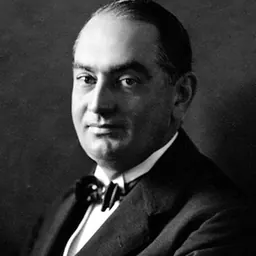
Lived 1887 – 1958 (aged 71). Salama Musa was an Egyptian journalist, writer, journal editor, film editor, interpreter and literary critic.
Salama Moussa (or Musa; 4 February 1887 – 4 August 1958) was an Egyptian journalist, writer and political theorist. Salama Moussa was an avowed secularist, he introduced the writings of Darwin, Nietzsche, and Freud to Egyptian readers. Salama Moussa campaigned against traditional religions and urged the Egyptian society to embrace European thought, he espoused the theory of evolution by natural selection. Salama Moussa is from Taha Hussein's generation; Naguib Mahfouz called Salama Moussa his "spiritual father", whereas Salama Moussa acknowledged his own intellectual debt to Ahmed Lutfi el-Sayed.
Early life Salama Moussa was born in 1887 into a Coptic family in a village called Kafr al-Afi near Zagazig, Egypt. In Cairo during the early 20th century there was a rising anti-British sentiment rooted in the nationalist movement, and Qasim Amin's movement for the liberation of women was creating a stir. While in Cairo, Moussa was exposed to writers such as Farah Antun, Jurji Zaydan, and Ahmad Lutfi Al-Sayyid that discussed modern and at the time radical ideas such as Social Darwinism, women's rights, and nationalism. Growing up in a religious minority in Muslim dominated Egypt he was attracted to these ideas. After secondary school Moussa was interested in studying European literature and science, he was unable to study Arabic at a higher level, because the study of Arabic was the monopoly of the Azhar and Dar al-‘Ulum, both of which required students to be Muslim.
His travel to Europe and other activities In 1907, Moussa traveled to France to continue his education and he was exposed to a modern, secularized Europe rampant with socialist ideologies. Moussa observed the empowerment and social freedoms that French women enjoyed. In Montlhéry, a small village near Paris, he started studying socialism and evolution, and the French language.
Moussa studied Egyptian civilization upon his return to Egypt in 1908. The same year he published articles in Al Liwa, a newspaper published by Mustafa Kamil Pasha. In 1909 he moved to England to improve his knowledge of the English language, and briefly studied law at Lincoln's Inn. In England, socialism was on the rise as well as ideas of Social Darwinism, and Moussa had a lot of interactions with members of the Fabian Society and became a member in July 1909. Moussa embraced Fabian ideas of getting rid of the landed classes and empowering the peasant, and he wanted to realize them in Egypt. In the same year, he proceeded to establish the Egyptian Academy for Scientific Education, which was, after only 10 years of operation, shut down by the government as well. Moussa worked as a managing editor of a magazine, Kull shay, which was published in Cairo from 1925 to 1927. In 1929 he started his magazine Al Majalla Al Jadida which existed until 1944. Moussa also contributed to Al Siyasa, newspaper of the Liberal Constitutional Party.
In 1936, he proclaimed that socialism would sweep Egypt before he turned 100 years old. He spent a brief stint as editor for the social affairs ministry. In 1942, Moussa was jailed on charges of sabotage, which were trumped up charges for criticizing the monarchy. His outspokenness on women's issues was shown in many of his works including his 1955 work al-Mar'a laysat lu'bat al-rajul (women are not the toys of men).
Salama Moussa looked for political and economic independence of Egypt from the British occupation, to this end he corresponded with Gandhi who provided him with his tools of economic struggle against the British hegemony over the Indian textile industry. Moussa made use of his contact with Gandhi in helping out the national Egyptian industrialist Tala'at Harb (1867–1941) to set up independent outlets for the Egyptian textile industry nationwide in Egypt, an attempt that was vehemently resisted by the British colonial powers of the time. In 1935 he formed Jam'iyyat al-Misri li al-Misri (The Society of the Egyptian for the Egyptian) to introduce Gandhi's idea of national self-sufficiency into Egypt.
Salama Moussa wanted Egypt to embrace European thought and to abandon religious traditions and customs. Salama Moussa advocated secularism and scientific thought. He wrote or translated 45 published books. His writings are still influential in Egypt and are frequently cited.
Salama Moussa became seriously ill and died on 4 August 1958, a few months after turning 71.
Publications Divine Thoughts and Their Origin (1912) Treatise about Socialism (1913) The Most Well-known Love Affairs in History (1925, revised and renamed Love in History around 1949) Reading Matters on Elections (1926) Dreams of a Philosopher (1926) Freedom of Thought and Its Representatives (1927) Secrets of the Inner Life (1927, revised in 1948) History of Art and the Most Well-known Pieces of Work (1927) Today and Tomorrow (1928) Descent and Development of Mankind (1928, revised in 19523) Stories (1939) About Life and Culture (1930, revised and renamed in 1956: Culture and Life) Our Duties and the Tasks of Foreign Countries (1931) Gandhi and the Indian Revolution (1934) Renaissance in Europe (1935, in 1962 posthumously revised and renamed What Is Renaissance) Egypt, a Place Where Civilization Began (1935, expanded edition in 1948) The World in 30 Years (1936) Modern English Culture (1936, expanded ed. in 1956) Our Life as from 50 (1944, expanded ed. in 1956) Freedom of Thought in Egypt (1945, this piece of work clearly shows, how much Salama Moussa was influenced by the European culture, in particular by Voltaire.) Eloquence and the Arabic Language (1945, expanded ed. in 1953 as well as posthumously in 1964) My and Your Intellect (1947, expanded ed. 1953) The Years of Salama Moussa's Apprenticeship (1947, posthumously expanded 3ed. in 19589 This piece of work is of the first renowned autobiographies of the Arabic Language Area) The True Path of the Young People (1949) Psychological Attempts (1953, changed to Attempts in 1963) These are My Mentors (1953, among them a very obstinate discussion on Goethe's works, posthumously expanded ed. in 1965) The Book of Revolutions (1955) Psychological Studies (1956) The Woman Is not the Plaything of the Man (1956, a very early dispute about the liberation (emancipation) of the woman at that time, especially in the orient) George Bernhard Shaw (1957, who he has met and got to know in England, posthumously expanded ed. in 1977) Attempts of the Young People (posthumously 1959) Forbidden Writings (posthumously 1959) Mankind is the Pride of Creation (posthumously 1961)
Don’t just read it —
keep it.
Full-length biographies made to live with: read them, listen on the way to work, watch them tonight.
- E-book
- Audio
- Video
Instant download · yours to keep · every purchase keeps this site free
Important facts
People in Salama Musa's life
Named in this biography and alive at the same time
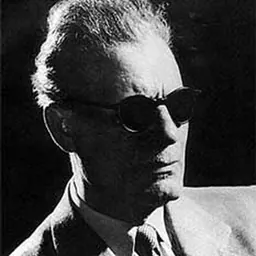
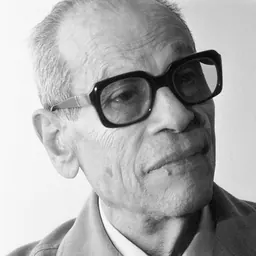


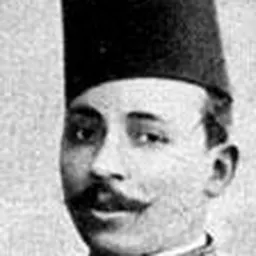


Related people
Same field, nearest in time




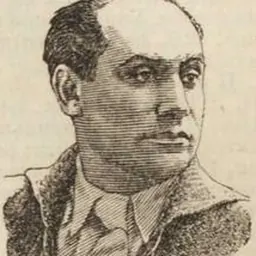
Contemporaries
People whose lives overlapped Salama Musa's





Frequently asked questions
Who was Salama Musa?
Egyptian newspaper editor (1887–1958)
When was Salama Musa born?
Salama Musa was born on 4 February 1887 in Zagazig.
When did Salama Musa die?
Salama Musa died on 4 August 1958 in Cairo.
What was Salama Musa's occupation?
Salama Musa was a journalist, writer, journal editor, film editor, interpreter and literary critic.
What nationality was Salama Musa?
Salama Musa was Egyptian.
Sources & further reading
Cite this page
APA: Biography.guide. (2026). Salama Musa. https://biography.guide/salama-musa/
MLA: "Salama Musa." Biography.guide, https://biography.guide/salama-musa/.
Chicago: "Salama Musa." Biography.guide. https://biography.guide/salama-musa/.
Data last updated: 2026-09-20 · Spot an error? Report a correction.
Page generated 2026-09-27 05:30 UTC