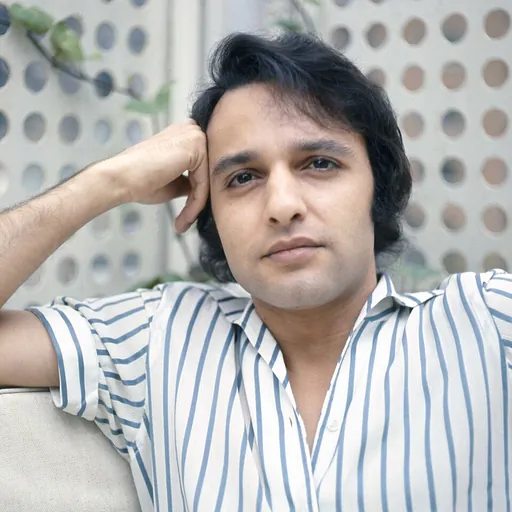
About Sal Mineo
Lived 1939 – 1976 (aged 37). Sal Mineo was an American film actor, singer, stage actor, television actor and actor.
Acting career Child actor Mineo's mother enrolled him in dancing and acting school at an early age. He had his first stage appearance in Tennessee Williams's play The Rose Tattoo (1951). He also played the young prince opposite Yul Brynner in the stage musical The King and I. Brynner took the opportunity to help Mineo better himself as an actor.
On May 8, 1954, Mineo portrayed the Page (lip-synching to the voice of mezzo-soprano Carol Jones) in the NBC Opera Theatre's production of Richard Strauss's Salome (in English translation), set to Oscar Wilde's play. Elaine Malbin performed the title role, and Peter Herman Adler conducted Kirk Browning's production.
As a teenager, Mineo appeared on ABC's musical quiz program Jukebox Jury. Mineo made several television appearances before making his screen debut in the Joseph Pevney film Six Bridges to Cross (1955). He beat out Clint Eastwood for the role. Mineo successfully auditioned for a part in The Private War of Major Benson (1955), as a cadet colonel opposite Charlton Heston.
Rebel Without a Cause and stardom
Mineo's breakthrough as an actor came in Rebel Without a Cause (1955), in which he played John "Plato" Crawford, a sensitive teenager smitten with main character Jim Stark (played by James Dean).
In Giant (1956), Mineo played Angel Obregon II, a Mexican boy killed in World War II. Many of his subsequent roles were variations of his role in Rebel Without a Cause, and he was typecast as a troubled teen. In the Disney adventure Tonka (1958), for instance, Mineo starred as a young Sioux named White Bull who traps and trains a clear-eyed, spirited wild horse named Tonka. Later the horse is bought by the US Army and renamed Comanche. He was injured but survived Custer's Last Stand; afterward he was treated and honored by Army officials.
By the late 1950s, Mineo was a major celebrity. He was sometimes referred to as the "Switchblade Kid", a nickname he earned from his role as a criminal in the movie Crime in the Streets (1956). The more popular of the two, "Start Movin' (In My Direction)", reached No. 9 on Billboards pop chart. It sold over one million copies and was awarded a gold disc.
He starred as drummer Gene Krupa in the movie The Gene Krupa Story (1959), directed by Don Weis with Susan Kohner, James Darren, and Susan Oliver. He appeared as the celebrity guest challenger on the June 30, 1957, episode of What's My Line?
Mineo made an effort to break out of the typecasting. In addition to his roles as an Indian brave in Tonka (1958), he played a Jewish Holocaust survivor in Exodus (1960) who immigrated to Palestine and joined armed resistance to British authority. For his work in Exodus, he won a Golden Globe Award and received his second Academy Award nomination for Best Supporting Actor.
Mineo was the model for Harold Stevenson's painting The New Adam (1963). Now in the Guggenheim Museum's permanent collection, the painting is considered "one of the great American nudes".
Mineo appeared on the Season 2 episode of The Patty Duke Show: "Patty Meets a Celebrity" (1964).
Mineo's role as a stalker in Who Killed Teddy Bear (1965), which co-starred Juliet Prowse, did not seem to help his career. Although his performance was praised by critics, he found himself typecast again—this time as a deranged criminal. The high point of this period was his portrayal of Uriah in The Greatest Story Ever Told (1965). Mineo guest-starred in an episode of the TV series Combat! in 1966, playing the role of a GI wanted for murder. He appeared in two more episodes of this series, including one featuring Fernando Lamas.
In 1969, Mineo directed a Los Angeles production of the gay-themed play Fortune and Men's Eyes (1967), featuring then-unknown Don Johnson as Smitty and Mineo as Rocky. The production received positive reviews, although its expanded prison rape scene was criticized as excessive and gratuitous. Mineo's last role in a motion picture was a small part in the film Escape from the Planet of the Apes (1971); he played the chimpanzee Dr. Milo.
In December 1972, Mineo stage-directed the Gian Carlo Menotti short opera The Medium in Detroit. Muriel Costa-Greenspon portrayed the title character, Madame Flora, and Mineo played the mute, Toby. In 1975, Mineo appeared as Rachman Habib, the assistant to a murderous consular head (portrayed by Hector Elizondo) of a Middle Eastern country, in the Columbo episode "A Case of Immunity," on NBC-TV. One of his last roles was a guest spot on the TV series S.W.A.T. (1975), in which he portrayed a cult leader similar to Charles Manson.
By 1976, Mineo's career had begun to turn around. While playing the role of a bisexual burglar in a series of stage performances of the comedy P.S. Your Cat Is Dead in San Francisco, Mineo received substantial publicity from many positive reviews; he moved to Los Angeles along with the play.
Personal life In a 1972 interview with Boze Hadleigh, Mineo confirmed his bisexuality.
Mineo met English-born actress Jill Haworth on the set of the film Exodus in 1960, in which they portrayed young lovers. She was then 15 years old. Mineo and Haworth were in an on-and-off relationship for many years. They were engaged to be married at one point. According to Mineo biographer Michael Gregg Michaud, Haworth cancelled the engagement after she caught Mineo having sexual relations with a man. The two remained very close friends until Mineo's death.
Mineo expressed disapproval of Haworth's brief relationship with television producer Aaron Spelling, because he was 22 years older than she. One night, when Mineo found Haworth and Spelling at a private Beverly Hills nightclub, he punched Spelling in the face, yelling, "Do you know how old she is? What are you doing with her at your age?"
In 2010, Michael Gregg Michaud published a biography of Sal Mineo. He received critical acclaim for his depth of research and the contributions he gained from Sal's friends, family, acquaintances and co-stars. Michaud dedicated the book to Jill Haworth and Courtney Burr III: both were significant partners to Mineo and they remained close friends until Haworth's death. After parking his car in the carport below the West Hollywood apartment that he shared with Courtney Burr III, he was attacked and fatally stabbed in the heart by a mugger. Mineo was found lying and bleeding profusely in the parking alley by his neighbor Raymond Evans, who had heard his cries and helped him to his feet. Mineo walked only a few steps before he collapsed. He was pronounced dead at the scene at the age of 37, due to massive hemorrhage. Mineo was buried at Gate of Heaven Cemetery in Hawthorne, New York.
In March 1979, Lionel Ray Williams, who had a long criminal record, was convicted and sentenced to 51 years in prison for killing Mineo, and for committing ten robberies. He has long asserted his innocence in Mineo's death, including after being released from prison in 1990. A documentary film titled Unseen Innocence (2024) sought to raise awareness of Williams' case and his unsuccessful efforts to gain exoneration.
Filmography
Film
Television Year Title Role Notes1952 The Vision of Father Flanagan Les TV movie A Woman for the Ages Charles TV movie 1953 Omnibus Paco "The Capitol of the World" 1954 Janet Dean, Registered Nurse Tommy Angelo "The Magic Horn" 1955 Big Town "Juvenile Gangs" Omnibus "The Bad Men" The Philco Television Playhouse "The Trees" Frontiers of Faith "The Man on the 6:02" 1956 Look Up and Live "Nothing to Do" The Alcoa Hour Paco "The Capitol of the World", "The Magic Horn" Westinghouse Studio One "Dino" Look Up and Live "Nothing to Do" Lux Video Theatre "Tabloid" Screen Directors Playhouse "The Dream" Climax! Miguel "Island in the City" 1957 The Ed Sullivan ShowHimselfEpisodes 10.42, 10.48 Kraft Suspense Theatre Tony Russo "Barefoot Soldier", "Drummer Man" Kraft Music Hall Himself Episode 10.8 1958 The DuPont Show of the Month Aladdin "Cole Porter's Aladdin" Pursuit Jose Garcia "The Garcia Story" 1959 The Ann Sothern Show Nicky Silvero "The Sal Mineo Story" 1962 The DuPont Show of the Week Coke "A Sound of Hunting" 1963 The Greatest Show on Earth Billy Archer "The Loser" 1964 Kraft Suspense Theatre Ernie "The World I Want" Dr. Kildare Carlos Mendoza "Tomorrow is a Fickle Girl" Combat! Private Kogan "The Hard Way Back" 1965 The Patty Duke Show Himself "Patty Meets a Celebrity" Burke's Law Lew Dixon "Who Killed the Rabbit's Husband?" 1966 Combat! Vinnick "Nothing to Lose" Combat! Marcel Paulon "The Brothers" Mona McCluskey "The General Swings at Dawn" Run for Your Life Tonio "Sequestro!: Parts 1 and 2" Court Martial Lt. Tony Bianchi "The House Where He Lived" The Dangerous Days of Kiowa Jones Bobby Jack WilkesTV movie 1967 Bob Hope Presents the Chrysler Theatre Doctoroff "A Song Called Revenge" Stranger on the Run George BlaylockTV movie 1968 Hawaii Five-O Bobby George "Tiger By The Tail" 1969 The Name of the Game Sheldon"A Hard Case Of The Blues" 1970 Mission Impossible Mel Bracken Flip Side The Challengers Angel de Angelo TV movie The Name of the Game Wade Hillary"So Long, Baby, and Amen" 1971 My Three Sons Jim Bell "The Liberty Bell" The Immortal Tsinnajinni"Sanctuary" Dan August Mort Downes "The Worst Crime" In Search of America Nick ABC Movie of the Week How to Steal an Airplane Luis Ortega TV movie 1972 The Family RicoNick Rico TV movie 1973 GriffPresident Gamal Zaki"Marked for Murder" Harry O Walter Scheerer "Such Dust as Dreams Are Made On" 1974 TenaflyJerry Farmer "Man Running" Police Story Stippy "The Hunters" 1975 Columbo Rachman Habib "A Case of Immunity" Hawaii Five-OEddie "Hit Gun for Sale" Harry O Broker "Elegy for a Cop" S.W.A.T. Roy "Deadly Tide: Parts 1 and 2" S.W.A.T. Joey Hopper "A Coven of Killers" Police Story Fobbes "Test of Brotherhood" 1976 Ellery Queen James Danello "The Adventure of the Wary Witness" Joe Forrester Parma "The Answer", (final appearance)
Awards and nominations Institution Category Year Work Result Academy Awards Best Supporting Actor 1956 Rebel Without a Cause 1961 Exodus Golden Globe Awards Best Supporting Actor 1961 Primetime Emmy Awards Best Single Performance by an Actor 1957 Studio One Laurel Awards Top Male Supporting Performance 1961 Exodus
Don’t just read it —
keep it.
Full-length biographies made to live with: read them, listen on the way to work, watch them tonight.
- E-book
- Audio
- Video
Instant download · yours to keep · every purchase keeps this site free
Important facts
People in Sal Mineo's life
Named in this biography and alive at the same time

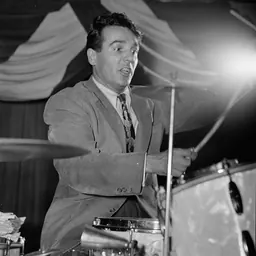

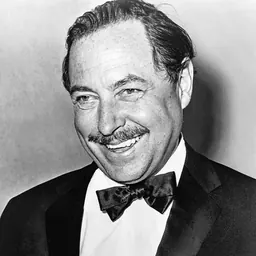
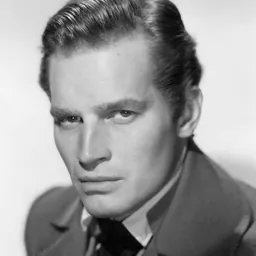



Related people
Same field, nearest in time

Contemporaries
People whose lives overlapped Sal Mineo's




Frequently asked questions
Who was Sal Mineo?
American actor (1939-1976)
When was Sal Mineo born?
Sal Mineo was born on 10 January 1939 in New York City.
When did Sal Mineo die?
Sal Mineo died on 12 February 1976 in West Hollywood.
What was Sal Mineo's occupation?
Sal Mineo was a film actor, singer, stage actor, television actor and actor.
What nationality was Sal Mineo?
Sal Mineo was American.
Sources & further reading
Cite this page
APA: Biography.guide. (2026). Sal Mineo. https://biography.guide/sal-mineo/
MLA: "Sal Mineo." Biography.guide, https://biography.guide/sal-mineo/.
Chicago: "Sal Mineo." Biography.guide. https://biography.guide/sal-mineo/.
Data last updated: 2026-09-22 · Spot an error? Report a correction.
Portrait: Wikimedia Commons · author & licence
Page generated 2026-09-27 05:02 UTC