
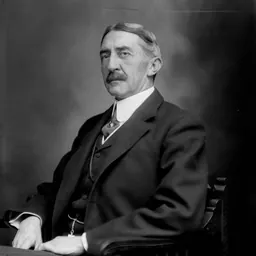
About Sakae Kubo
Lived 1900 – 1958 (aged 57). Sakae Kubo was a Japanese playwright, novelist, impresario, translator, writer and translation.
was a Japanese playwright and director. Kubo studied and translated German literature at Tokyo Imperial University and then soon he became the disciple of another famous playwright and theatre director, Kaoru Osanai. From his mentor, Kubo had adopted Shingeki theater, a new type of drama that developed in Japan in the early 20th century under the influence of Western-style theater. To honor the death of his teacher, Kubo began to write one of his most famous works, which was The Land of Volcanic Ash: A Play in Two Parts, translated by David Goodman. This play was most recognized for its focus on socialism that was depicted in pre-war Japan. It is seen as realist drama, for it describes the struggles of a reform-minded intellectual in the Hokkaido countryside which took place during the Soviet famine of 1932–33.
Early life Kubo was the second son if seven children in his family, born to his father Hyotaro Kubo. The Kubo family had migrated to Hokkaido in 1898 because they had to assist in their family's brick foundry business. Once Kubo was old enough to start his education, he was placed into care from his father's youngest brother and spent his first three years of grade school in Tokyo. Later, Sakae was reunited with his family of birth and resided back in Hokkaido, but quickly returned to Tokyo for high school. Sakae's father wished for him to become a doctor, but he refused and dropped out of High School in Tokyo in 1919. Instead of studying the physical sciences, he began publishing poetry in Hototogisu and Mizugame, which were two leading magazines for poetry during this time. After joining the literary department of the Tsukiji Little Theatre in March 1926, he met Kaoru Osanai, the founder of this new theater. After Kubo and became interested in Osanai's new Japanese modern drama, also known as Shingeki style, he soon began to write The Land of Volcanic Ash. This was one of Kubo's most well known works and was dedicated to his mentor, Osanai. Unfortunately, Osanai died shortly after on December 25, 1928, at the age of 47, causing the Tsukiji theater group to split into literary and political camps. After Kubo had finally finished writing The Land of Volcanic Ash, the government had found this play to be problematic, for it showed highly accurate detail of the agricultural conditions of Hokkaido in the mid 1930s. Since Japan was shortly pushed into war with China, the government arrested members of the Shinkyo troupe. in 1940, Kubo was arrested alongside the other group members, and they were imprisoned for their plays, which violated the government's censorship laws.
The Land of Volcanic Ash The Land of Volcanic Ash was Kubo Sakae's most prized works was written in 1937. It was translated into English by David Goodman in December 1993. Kubo had tried to present a play that was scientifically accurate, but also something that would change people's opinions on social issues. This play accurately portrayed the agricultural decline in Japan during the same period of time. Because of the crop failures in Japan in the years 1931–35, causing a great depression in Japan's economy, This play shows the hardships that society dealt with.
Death Ever since Kubo had strayed away from his father's wishes for him to become a doctor and had instead pursued a literary life, he began to experience nervous breakdowns which became an issue throughout Kubo's life. There wasn't a valid reason for his anxiety attacks, but it was noted that he felt unyielding pressure for becoming both a successful writer and fulfilling his father's dream of becoming a scientist. Kubo's death had made an impact in Japanese theater and society because it had regenerated the Shingeki movement. It also rewarded him with one of his motives to overthrow Communism in Japan after the mass arrest of Communists in Japan several years prior of the same date of his suicide.
Major works Kubo Sakae's writing style was influenced from German literature. He had translated over 30 plays from various renowned German authors.
Don’t just read it —
keep it.
Full-length biographies made to live with: read them, listen on the way to work, watch them tonight.
- E-book
- Audio
- Video
Instant download · yours to keep · every purchase keeps this site free
Important facts
People in Sakae Kubo's life
Named in this biography and alive at the same time
Related people
Same field, nearest in time




Contemporaries
People whose lives overlapped Sakae Kubo's



Frequently asked questions
Who was Sakae Kubo?
Japanese playwright and novelist
When was Sakae Kubo born?
Sakae Kubo was born on 28 December 1900 in Sapporo.
When did Sakae Kubo die?
Sakae Kubo died on 15 March 1958.
What was Sakae Kubo's occupation?
Sakae Kubo was a playwright, novelist, impresario, translator, writer and translation.
What nationality was Sakae Kubo?
Sakae Kubo was Japanese.
Sources & further reading
Cite this page
APA: Biography.guide. (2026). Sakae Kubo. https://biography.guide/sakae-kubo/
MLA: "Sakae Kubo." Biography.guide, https://biography.guide/sakae-kubo/.
Chicago: "Sakae Kubo." Biography.guide. https://biography.guide/sakae-kubo/.
Data last updated: 2026-09-20 · Spot an error? Report a correction.
Page generated 2026-09-27 05:26 UTC