
About Said Halim Pasha
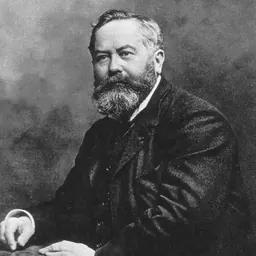
Lived 1864 – 1921 (aged 57). Said Halim Pasha was a Turkish politician, writer and grand vizier.
Mehmed Said Halim Pasha (; ; 18 or 28 January 1865 or 19 February 1864 – 6 December 1921) was a writer and statesman who served as the Grand Vizier of the Ottoman Empire from 1913 to 1917. He is said to be one of the perpetrators of the Armenian genocide and he was later assassinated by Arshavir Shirakian as part of Operation Nemesis, a retribution campaign to kill genocidiers. It is unsure if he was actually involved, as he did not hold much political power and was kept in the dark on most matters of state by members of the Central Committee of the CUP.
Early life Mehmed Said Halim was born at the palace of Shubra in Cairo, Egypt to , one of the sons of Muhammed Ali Pasha, the founder of the Khedivet of Egypt. He was of Albanian origin. In 1870, he and his family settled in Istanbul. He was educated by private teachers, and learned Arabic, Persian, English, and French. He later studied political science in Switzerland.
In 1890 or 1895, he married Emine İnci Tosun, daughter of Mehmed Tosun Pasha.
In the late 1890s the Prince Said Halim Pasha Palace in Downtown Cairo was built for him by the Italian architect Antonio Lasciac.
Political career In 1888, Said Halim was appointed a member of the Council of State with the rank of Mir-i Mîran, making him a civil Pasha. In 1900 he became Beylerbeyi of Rumeli. During this time he had good relations with Sultan Abdul Hamid II. Jealous courtiers spread rumors of Halim's disloyalty and propensity to read dangerous literature. Falling out of favor, he retired to his mansion, though his position in the Council of State was never officially terminated, As the war went on, he was increasingly sidelined by Talaat Bey and Enver Pasha.
He lost his Foreign Ministry to Halil Menteşe in 1915. Said Halim's premiership lasted until 1917, cut short because of continuous clashes between him and the CUP. Talaat, who was Interior Minister, succeeded him.
Arrest and assassination
Said Halim was accused of treason during the court martial trials after World War I in the Ottoman Empire for his role in deporting Armenian civilians and signing a secret alliance with Germany. He was exiled on 29 May 1919 to a prison on Malta. He was acquitted from the accusations and set free in 1921, and he moved to Sicily. He wanted to return to Istanbul, the capital of the Ottoman Empire, but this request was rejected. He was assassinated soon after in Rome by Arshavir Shirakian, an agent of the Armenian Revolutionary Federation, for his role in the Armenian genocide.
Political writings and views
Under the nom de plume "Mehmed", Said Halim Pasha wrote several works of social commentary, comparative politics, and political philosophy during the Hamidian Era and Second Constitutional Era. He was a frequent contributor to Sebîlürreşâd, a pro-CUP Islamist journal.
As a social scientist In a historical analysis, he claimed Islam was appropriate in the Western world's movement for equality due to (Sunni) Islam's lack of clergy and aristocracy, therefore in a civilizational sense, Islamic civilization was more egalitarian than the West. Indeed, he believed the West suffered from inherent inequalities inherent to their social structure, while Islamic civilization suffered from too much equality, leading to an Islamic civilization turning increasingly elitist and exclusive. He identified the origin of materialism emerged from the gap between the Church and the new discoveries of science and technology. The idea that Islam essentially discouraged technological innovation was refuted by Halim, though he did identify western materialism for having destroyed family values. Using the framework of historical materialism, he identified the cause of feminism appropriate among bourgeois women in developed Western-European societies, in contrast to upper-class Ottoman women which he believed were uninterested in further rights.
In 1916 he published Buhrân-ı İçtimaîmiz, where he castigates Ottoman society for leaving behind their past religion and culture.
While Western nation-states feature homogeneous societies of different classes that are always in conflict with each other, the Ottoman Empire's heterogeneity meant an Ottoman nationalism did not exist.
As a commentator In the 1911 essay Meşrutiyet, he gave a retrospective analysis of the failures of the First Constitutional Era, particularly blaming the lack of a civic political culture developed by many peoples in the Empire. A desire among the Tanzimat statesmen for westernization for the sake of westernization veiled the fact that the Empire didn't much resemble France, Turkey's model. Despite the modern cosmopolitanism of the cities like Constantinople, Smyrna, or Salonica, much of the empire was still in a socio-economic state of feudalism, and not sufficiently "enlightened" for representative and constitutional government.
He was skeptical of the CUP's governance following the 31 March Incident, noting that the people toppling a dictator does not guarantee freedom.
Cultural depictions Iqbal writes in his Javid Nama how Rumi guides him to Mercury, where he sees Said Halim Pasha and Jemaluddin al-Afghani in prayer.
Works
Essays Mukallidliklerimiz – 1910 Meşrutiyet – 1911 Buhrân-ı İçtimaîmiz – 1916 Kubbealtı Sahaf Ta'assup – 1917 İnhitât-i Islam Hakkinda bir Tecrübe-i Kalemiyye – 1917 İslâmlaşmak – 1918 İslâm da Teşkîlât-ı Siyâsiyye/Les Institutions politiques dans la société musulmane/The Reform of Muslim Society – 1921
Other
Buhranlarımız ve Son Eserleri – İz Yayıncılık Said Halim Paşa – Bütün Eserleri Anka Yayınları 2003
Don’t just read it —
keep it.
Full-length biographies made to live with: read them, listen on the way to work, watch them tonight.
- E-book
- Audio
- Video
Instant download · yours to keep · every purchase keeps this site free
Important facts
People in Said Halim Pasha's life
Named in this biography and alive at the same time



Related people
Same field, nearest in time



Contemporaries
People whose lives overlapped Said Halim Pasha's




Frequently asked questions
Who was Said Halim Pasha?
Ottoman grand vizier (1865–1921)
When was Said Halim Pasha born?
Said Halim Pasha was born on 19 February 1864 in Cairo.
When did Said Halim Pasha die?
Said Halim Pasha died on 5 December 1921 in Rome.
What was Said Halim Pasha's occupation?
Said Halim Pasha was a politician, writer and grand vizier.
What nationality was Said Halim Pasha?
Said Halim Pasha was Turkish.
Sources & further reading
Cite this page
APA: Biography.guide. (2026). Said Halim Pasha. https://biography.guide/said-halim-pasha/
MLA: "Said Halim Pasha." Biography.guide, https://biography.guide/said-halim-pasha/.
Chicago: "Said Halim Pasha." Biography.guide. https://biography.guide/said-halim-pasha/.
Data last updated: 2026-09-27 · Spot an error? Report a correction.
Page generated 2026-09-27 05:16 UTC