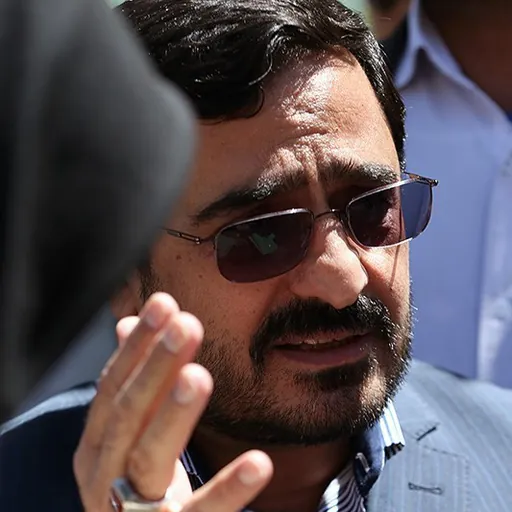
About Saeed Mortazavi
Born 1967. Saeed Mortazavi is an Iranian judge.
Saeed Mortazavi (, born 26 November 1967 ) is an Iranian conservative politician, former judge and former prosecutor. He was the prosecutor of the Islamic Revolutionary Court, and Prosecutor General of Tehran, a position he held from 2003 to 2009. Mortazavi has been accused of the torture and death in custody of Iranian-Canadian photographer Zahra Kazemi by the Canadian government
Death of Zahra Kazemi
Mortazavi is notable for his involvement in the case of Zahra Kazemi, an Iranian-Canadian photographer who died in the custody of Iranian officials in 2003. As a judge, Mortazevi was involved in some unknown capacity in Kazemi's interrogation. He was later assigned to investigate the disputed circumstances of her death. However, it was subsequently reported that Mortazevi had decided to let a military court perform the investigation. In late 2003, the Iranian Parliament issued a report accusing Mortazavi of trying to cover up Kazemi's death and forcing witnesses to the event to change their stories. Murtazevi strongly denied the accusations, although the government of Canada continues to claim that not only did Mortazavi order Kazemi's arrest, but he also supervised her torture and was present when she was killed.
Suppression of press Mortazavi is often portrayed in the Western media as a symbol of problems within the judicial system of Iran. It has been reported that Iranians call him the "butcher of the press". As a judge, he shut down 60 pro-reform newspapers.
In 2005, journalists reported receiving death threats after testifying about their alleged torture at the command of Mortazevi. In a press conference, Mortazevi denied the journalists had been mistreated. At the same time, in state custody. Also in 2005, Murtazevi ordered Iran's major ISPs to block access to Orkut and other blogging and social networking websites.
On 15 February 2008, it was announced that Mortazavi had banned five Iranian websites that comment on politics and current events. Mortazevi said they were "poisoning the electoral sphere" before Iran's mid-March parliamentary elections.
United Nations visit In 2006, Mortazavi was sent to Geneva as part of the Iranian delegation to the United Nations Human Rights Council, a decision that was met with some criticism at home and abroad due to Mortazavi's controversial human rights record. Human Rights Watch urged Iran to remove him from the delegation and other countries to decline to meet with the Iranian delegation until his removal. Mortazevi's first official meeting was with the also-controversial Zimbabwe a minister of justice Patrick Chinamasa. Mortazavi took advantage of his position on the delegation to advocate the right of access to high technology, including nuclear power, for all nations. He also warned the council that it should avoid being manipulated into doing the bidding of powerful states and that it should investigate human rights abuses perpetrated by Western powers, notably human rights abuses in the war on terror, extraordinary rendition, Islamophobia, criticism of the Islamic dress code and veil, and the suppression of the freedom of speech of Holocaust deniers.
Student protesters In 2009, it was reported that Mortazavi had detained students due to a protest against Mahmoud Ahmadinejad's government; the students alleged abuse while in jail. He has been involved in more contentious cases since then as well. Mortazavi was a prosecutor on the cases of Roxana Saberi, an American-Iranian journalist accused of spying, and Iranian-Canadian blogger Hossein Derakhshan, whose posts were critical of the establishment.
Arrests of 2009 election protesters During the 2009 election dispute across Iran, Mortazavi actively suppressed the demonstrations. He has signed arrest warrants for reformers, such as Saeed Hajjarian, and is believed to be instrumental in the more than 600 arrests nationwide.
Deputy prosecutor-general On 31 August 2009, Mortazavi was demoted to deputy prosecutor-general – "one of six deputies for prosecutor-general Gholam-Hossein Mohseni-Eje'i" – by the new judiciary chief Ayatollah Sadeq Larijani. Do observers disagree over whether the post was a promotion to "deputy to the nation's top prosecutor," with "a fancy title and protection from future legal action," or "a demotion" that strips him of powers he had enjoyed, such as the ability to order an arrest or halt to political activities. Saeed Mortazavi is facing a potential investigation into his conduct of post-vote trials.
Task Force Against Smuggling In 2010 Mortazavi was appointed head of Iran's Task Force Against Smuggling, shortly after he was discredited by the release of a report by the Iranian parliament naming him as the man largely responsible for the abuse of political prisoners committed in July 2009 by state security forces at the Kahrizak detention center.
Social Security Organization Mortazavi was "head of Iran's Social Security Organization", a presidentially-appointed post. In January 2013, Iran's parliament successfully "lobbied to have him removed" from this position, but following that, Ahmadinejad reappointed him as head of the organization in a "caretaker role".
Trial In late August 2010, Saeed Mortazavi and two judges were suspended from office after a judicial investigation into the deaths of three men from torture On 5 February 2013 a statement posted on the Tehran prosecutor's website announced Mortazavi's arrest. Two days later he was released. No explanation was given for the detention or his release at the time. On the opening day of proceedings, the presiding Judge—Siamak Modir Khorasani—announced the trial would be held behind closed doors.
The lack of transparency in the trial has been criticized by Shirin Ebadi and others. According to Ebadi, The accused in this case, particularly former prosecutor Said Mortazavi, received direct orders from officials above him – including the Leader. Therefore, [the authorities] would never dare publicly put him on trial.
According to journalists Golnaz Esfandiari and Mohammad Zarghami and other sources, the trial is "widely seen as an indirect move against Ahmadinejad", since he had "used Mortazavi to bring corruption charges against his political rivals" in the past. The arrest came a day after Ahmadinejad "released a secret video in parliament where Mortazavi allegedly discussed a fraudulent business deal, implicating Iran's highly influential Larijani family".
Don’t just read it —
keep it.
Full-length biographies made to live with: read them, listen on the way to work, watch them tonight.
- E-book
- Audio
- Video
Instant download · yours to keep · every purchase keeps this site free
Important facts
People in Saeed Mortazavi's life
Named in this biography and alive at the same time

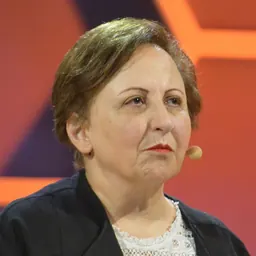






Related people
Same field, nearest in time


Contemporaries
People whose lives overlapped Saeed Mortazavi's


Frequently asked questions
Who is Saeed Mortazavi?
Iranian jurist
When was Saeed Mortazavi born?
Saeed Mortazavi was born on 26 November 1967 in Meybod.
What is Saeed Mortazavi's occupation?
Saeed Mortazavi is a judge.
What nationality is Saeed Mortazavi?
Saeed Mortazavi is Iranian.
Sources & further reading
Cite this page
APA: Biography.guide. (2026). Saeed Mortazavi. https://biography.guide/saeed-mortazavi/
MLA: "Saeed Mortazavi." Biography.guide, https://biography.guide/saeed-mortazavi/.
Chicago: "Saeed Mortazavi." Biography.guide. https://biography.guide/saeed-mortazavi/.
Data last updated: 2026-09-23 · Spot an error? Report a correction.
Portrait: Wikimedia Commons · author & licence
Page generated 2026-09-27 05:05 UTC