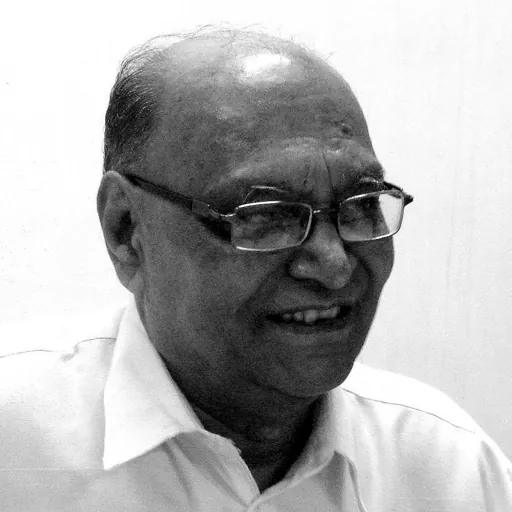
S. R. Ramaswamy
Indian Journalist, Writer, Biographer, Translator, Social Activist and Environmentalist
About S. R. Ramaswamy
Lived 1937 – 2026 (aged 88). S. R. Ramaswamy was an Indian translator, journalist, environmentalist and social activist, known for Svetoslav Roerich.
Sondekoppa Ramachandrasastri Ramaswamy (29 October 1937 – 10 April 2026) was an Indian writer, journalist, biographer, social activist and environmentalist. He authored more than 50 books and a thousand articles both in Kannada and English. He was recipient of the Karnataka Sahitya Academy Award for the year 1992's best work in social sciences. In 2015, he was honoured by Kannada University, Hampi, with the Nadoja Award. An avid campaigner for environmental issues and people's rights, Ramaswamy led numerous movements both at state and national level for conservation of vast tracts of rich flora and fauna from ill-planned Government policies. His years as a writer and chronicler brought him under the influence of doyens of literature and public life such as D. V. Gundappa, V. Sitaramayya, Rallapalli Ananta Krishna Sharma, Yadava Rao Joshi and P. Kodanda Rao. His writings essentially mirror the literary, cultural, nationalist and developmental problems that are contemporaneous to the present day scenario. Ramaswamy also served as honorary editor-in-chief of Kannada monthly Utthana and Rashrothana Sahitya in Bangalore.
Early life and education S. R. Ramaswamy was born to Mulukanadu Brahmin parents S. Ramachandra Sastri and Sarasvatamma on 29 October 1937 at Bangalore. He came from a scholarly lineage and was the nephew of the historian and polyglot S. Srikanta Sastri as well as Asthan Vidwan Motaganahalli Subramanya Sastri who was editor of "Ranga Bhoomi" and is credited with "Karnata Malavikagnimitra" and translation of Valmiki's Ramayana from Sanskrit to Kannada. He was the great-grand-nephew of Maha Asthan Vidwan Motaganahalli Ramasesha Sastri who was the first person to translate Bhagavata from the original Sanskrit to Kannada and Asthan Vidwan Motaganahalli Shankara Sastri who is credited with the composition of "Vedanta Panchadarshi", a work extensively quoted by D. V. Gundappa. Ramaswamy's ancestor Yagnapathi Bhatta or Yagnam Bhatta was a court poet in the court of Immadi Kempegowda. Ramaswamy's older brother was the journalist S. R. Krishnamurthy.
Ramaswamy had his preliminary schooling at Bangalore High School at Bangalore. He later on studied the intermediate course at The National College, Basavanagudi, Bangalore in the years 1953–54.
Career
Journalism Ramaswamy began his career in journalism as an assistant editor at the William Quan Judge (W. Q. Judge) Press at Bangalore in the late 1950s. Following a brief interlude, he joined the Kannada weekly Sudha as the chief sub-editor in 1972, a position he held until 1979. In 1980, he was made Honorary editor-in-chief at Rashrothana Sahitya and Kannada monthly Utthana in Bangalore. Ramaswamy also actively delivered lectures at seminars and conferences across the country concerning a wide range of social, cultural and literary topics.
Ramaswamy came to prominence when he authored an "Art Catalogue" on famous Russian painter Svetoslav Roerich chronicling his many paintings and exhibitions that the painter hosted in different countries across the world. The book has in it some rare photographs depicting the acclaimed Russian painter explaining and often showcasing his works to leaders such as Nikita Khrushchev and Pandit Jawaharlal Nehru among others. Printed in limited numbers, the book is seldom found in libraries and is a collector's item today. Ramaswamy also came into contact with such eminent personalities as art critic Venkataram and internationally renowned Gandhian economists Lakshmi Chand Jain and Sri Kumarappa.
Public life and social activism
Ramaswamy was active in literature and journalism for over five decades and was a staunch advocate of the Swadeshi movement in India. Over the last few decades, Ramaswamy spearheaded Voluntary Rural Development Initiatives in Karnataka with the aim of empowering the rural population for self-governance and better administration. He spoke for various environmental causes, both at state and national levels, often culminating in landmark legal battles before the Supreme Court of India. Most memorable of these was a Public Interest Litigation (PIL) he fought along with noted Kannada Litterateur Shivaram Karanth against Government of Karnataka concerning the conservation of nearly 30,000 hectares of reserve forest which was set aside to be handed over to a paper industry.
His association with noted composer, singer and writer Rallapalli Ananta Krishna Sharma enabled him to acquire proficiency in Carnatic as well as Hindustani classical music. – an independent, non-party and non-communal organization established to function as a centre for education of the public towards a constructive democratic citizenship was founded in the year 1949 by noted Kannada writer and philosopher D. V. Gundappa. After Gundappa's tenure, the administration fell on the shoulders of retired Chief Justice of the Karnataka High Court – Nittoor Srinivasa Rau who subsequently bequeathed the administrative responsibilities to Ramaswamy, who headed the organization in the position of Secretary. Ramaswamy had the distinction of organizing four programmes a month over 12 months, almost a year in advance.
He consistently declined requests to visit foreign countries in connection with various conferences and seminars. In fact, he declined an invitation from the United Nations Office for a Global Environmental Summit at Rio de Janeiro in the 1990s citing personal reasons. However, Ramaswamy involved himself in the Indian setting and delivered papers at over 100 seminars and workshops on topics such as Sharathchandra (1977), Towards Understanding Hindu Society (1990), Gandhian Concept of Ecology (1992), Netaji Subhas Chandra Bose (1996), The Regime of Sir Mirza Ismail (1998), Life and Work of V. Sitaramaiah, Swadeshi movement of 1905: Historic Turning Point (2005), Saga of Patriotism: Martyrs in the Freedom Movement (2007), Contribution of Rallapalli Ananta Krishna Sharma to Kannada and Telugu (2010), Life and Work of D. V. Gundappa (2011), Contribution of Sanskritist Professor S. K. Ramachandra Rao (2013) and Belagere Krishna Sastri (2013).
Death Ramaswamy died in Bengaluru on 10 April 2026, at the age of 88.
Don’t just read it —
keep it.
Full-length biographies made to live with: read them, listen on the way to work, watch them tonight.
- E-book
- Audio
- Video
Instant download · yours to keep · every purchase keeps this site free
Important facts
People in S. R. Ramaswamy's life
Named in this biography and alive at the same time


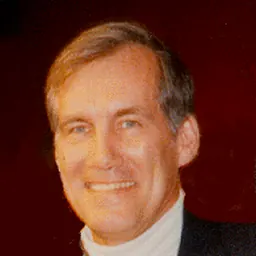
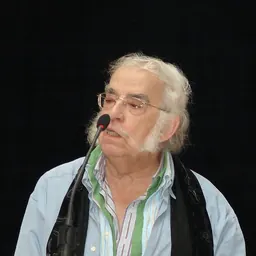
Related people
Same field, nearest in time




Contemporaries
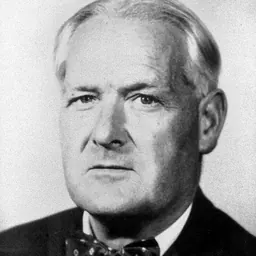
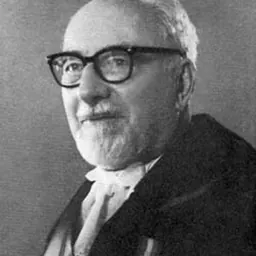
People whose lives overlapped S. R. Ramaswamy's




Frequently asked questions
Who was S. R. Ramaswamy?
Indian Journalist, Writer, Biographer, Translator, Social Activist and Environmentalist
When was S. R. Ramaswamy born?
S. R. Ramaswamy was born on 29 October 1937 in Bengaluru.
When did S. R. Ramaswamy die?
S. R. Ramaswamy died on 10 April 2026.
What was S. R. Ramaswamy's occupation?
S. R. Ramaswamy was a translator, journalist, environmentalist and social activist.
What was S. R. Ramaswamy known for?
S. R. Ramaswamy was known for Svetoslav Roerich.
What nationality was S. R. Ramaswamy?
S. R. Ramaswamy was Indian.
Sources & further reading
Cite this page
APA: Biography.guide. (2026). S. R. Ramaswamy. https://biography.guide/s-r-ramaswamy/
MLA: "S. R. Ramaswamy." Biography.guide, https://biography.guide/s-r-ramaswamy/.
Chicago: "S. R. Ramaswamy." Biography.guide. https://biography.guide/s-r-ramaswamy/.
Data last updated: 2026-09-21 · Spot an error? Report a correction.
Portrait: Wikimedia Commons · author & licence
Page generated 2026-09-27 05:00 UTC