
S. K. Sikka
Indian nuclear physicist and crystallographer
About S. K. Sikka
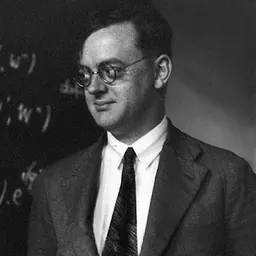
Lived 1942 – 2023 (aged 80). S. K. Sikka was an Indian physicist, nuclear physicist, crystallographer and crystallography.
Satinder Kumar Sikka (22 November 1941 – 21 June 2023) was an Indian nuclear condensed matter physicist, crystallographer and a former Scientific Secretary to the Principal Scientific Advisor to the Government of India. He was known to have played a crucial role, along with Raja Ramanna, Rajagopala Chidambaram and Basanti Dulal Nagchaudhuri, in the design and development of a hydrogen bomb by India, which was tested at the Pokhran Test Range in May 1998, under the code name, Operation Shakthi. He was also involved in the Smiling Buddha tests, conducted in 1974. He was awarded the fourth highest civilian award of the Padma Shri, by the Government of India, in 1999.
Biography Satinder Kumar Sikka was born in Jhang Maghiana (now in Pakistan) in undivided India on 22 November 1942, three months after the Quit India Movement was launched. While at BARC, he did research under Rajagopala Chidambaram, the renowned nuclear physicist who would later become his associate in the Pokhran tests, and secured a doctoral degree (PhD) from Mumbai University in 1970. His research during this period were centered around the topics of neutron diffraction, X-ray crystallography, and high pressure and shock wave physics. He was the Homi Bhabha Chair Professor at the Bhabha Atomic Research Centre from 2010 to 2013. He died on 21 June 2023.
Legacy Sikka's early research on neutron diffraction and his studies of the Phase problem employing anomalous and direct scattering methods have been accepted by the International Union of Crystallography and has been incorporated in their teaching aids. It is reported that Rajagopala Chidambaram, his mentor at BARC, entrusted the responsibility of the development of the thermonuclear test device to Sikka, after consultation with the then Prime Minister of India, P. V. Narasimha Rao. Sikka, receiving the instructions, set up a laboratory with facilities for static pressure generation employing diamond anvil cells and shock waves generation with gas guns, the first such laboratory in India.
Sikka served as a member of the Executive Committee of the International Association for Advancement of Research and Technology under High Pressure from 1997 to 2000 and as a consultant to the Commission on High Pressure of International Union of Crystallography from 2002 to 2006. one year before he received the fourth highest Indian civilian award of the Padma Shri. Indian National Science Academy honoured him with Homi Jehangir Bhabha Medal for Experimental Physics in 2005. Indian Nuclear Society gave him the Homi Bhabha Lifetime Achievement Award of in 2007.
Don’t just read it —
keep it.
Full-length biographies made to live with: read them, listen on the way to work, watch them tonight.
- E-book
- Audio
- Video
Instant download · yours to keep · every purchase keeps this site free
Important facts
People in S. K. Sikka's life
Named in this biography and alive at the same time
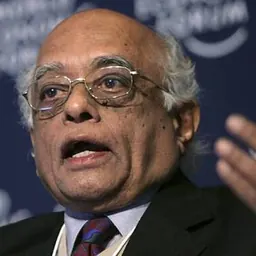



Related people
Same field, nearest in time

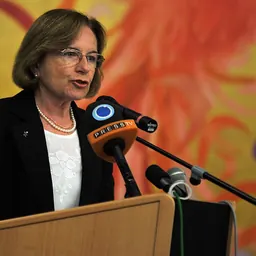

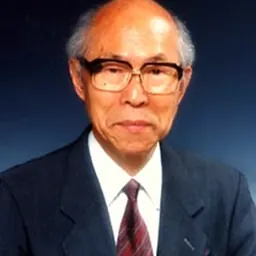
Contemporaries
People whose lives overlapped S. K. Sikka's
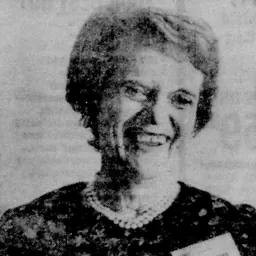

Frequently asked questions
Who was S. K. Sikka?
Indian nuclear physicist and crystallographer
When was S. K. Sikka born?
S. K. Sikka was born on 22 November 1942 in Jhang.
When did S. K. Sikka die?
S. K. Sikka died on 21 June 2023.
What was S. K. Sikka's occupation?
S. K. Sikka was a physicist, nuclear physicist, crystallographer and crystallography.
What nationality was S. K. Sikka?
S. K. Sikka was Indian.
Sources & further reading
Cite this page
APA: Biography.guide. (2026). S. K. Sikka. https://biography.guide/s-k-sikka/
MLA: "S. K. Sikka." Biography.guide, https://biography.guide/s-k-sikka/.
Chicago: "S. K. Sikka." Biography.guide. https://biography.guide/s-k-sikka/.
Data last updated: 2026-09-22 · Spot an error? Report a correction.
Page generated 2026-09-27 05:29 UTC