
About S. Barry Cooper
Lived 1943 – 2015 (aged 72). S. Barry Cooper was a British philosopher, mathematician, university teacher and computer scientist, known for Alan Turing Year and Computability in Europe.
S. Barry Cooper (9 October 1943 – 26 October 2015) was an English mathematician and computability theorist. He was a professor of pure mathematics at the University of Leeds.
Early life and education Cooper grew up in Bognor Regis and attended Chichester High School for Boys, during which time he played scrum-half for the under-15s England rugby team.
Cooper graduated from Jesus College, Oxford, in 1966 and in 1970 received his Ph.D. from the University of Leicester under the supervision of Reuben Goodstein and C.E.M. Yates, with a thesis entitled Degrees of Unsolvability.
Academic career Cooper was appointed Lecturer in the School of Mathematics at the University of Leeds in 1969, where he remained for the rest of his career. He was promoted to Reader in Mathematical Logic in 1991 and to Professor of Pure Mathematics in 1996. In 2011, he was awarded an honorary doctorate at the University of Sofia "St. Kliment Ohridski".
His book Computability Theory made the technical research area accessible to a new generation of students. He was a leading mover of the return to basic questions of the kind considered by Alan Turing, and of interdisciplinary developments related to computability. He was President of the Association Computability in Europe, and Chair of the Turing Centenary Advisory Committee (TCAC), which co-ordinated the Alan Turing Year. The book Alan Turing: His Work and Impact, edited by Cooper and Jan van Leeuwen, won the Association of American Publishers' R. R. Hawkins Award.
Cooper was a member of the editorial board for The Rutherford Journal.
Interests Cooper was a keen long-distance runner, and was also interested in jazz and improvised music, founding Leeds Jazz and being involved in the Termite Club.
In the 1970s, he was also a leading figure in the Chile Solidarity Campaign, welcoming Chilean refugees to Leeds.
Death Cooper died on 26 October 2015 after a short illness.
Selected publications S. B. Cooper, 2004. Computability Theory, Chapman & Hall/CRC. S. B. Cooper; J. van Leeuwen (eds.), 2013. Alan Turing – His Work and Impact, New York: Elsevier, S. B. Cooper, B. Löwe, A. Sorbi (eds.), 2008. New Computational Paradigms – Changing Conceptions of What is Computable, Springer.
Don’t just read it —
keep it.
Full-length biographies made to live with: read them, listen on the way to work, watch them tonight.
- E-book
- Audio
- Video
Instant download · yours to keep · every purchase keeps this site free
Important facts
People in S. Barry Cooper's life
Named in this biography and alive at the same time
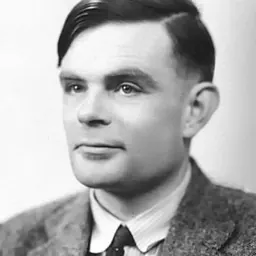
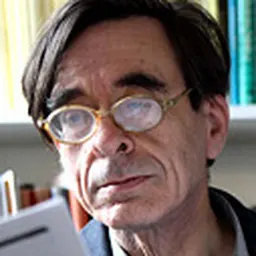



Related people
Same field, nearest in time
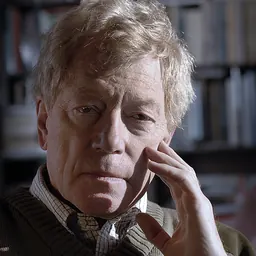

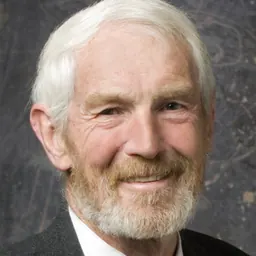

Contemporaries
People whose lives overlapped S. Barry Cooper's


Frequently asked questions
Who was S. Barry Cooper?
British philosopher
When was S. Barry Cooper born?
S. Barry Cooper was born on 9 October 1943 in Bognor Regis.
When did S. Barry Cooper die?
S. Barry Cooper died on 26 October 2015.
What was S. Barry Cooper's occupation?
S. Barry Cooper was a philosopher, mathematician, university teacher and computer scientist.
What was S. Barry Cooper known for?
S. Barry Cooper was known for Alan Turing Year and Computability in Europe.
What nationality was S. Barry Cooper?
S. Barry Cooper was British.
Sources & further reading
Cite this page
APA: Biography.guide. (2026). S. Barry Cooper. https://biography.guide/s-barry-cooper/
MLA: "S. Barry Cooper." Biography.guide, https://biography.guide/s-barry-cooper/.
Chicago: "S. Barry Cooper." Biography.guide. https://biography.guide/s-barry-cooper/.
Data last updated: 2026-09-26 · Spot an error? Report a correction.
Page generated 2026-09-27 05:16 UTC