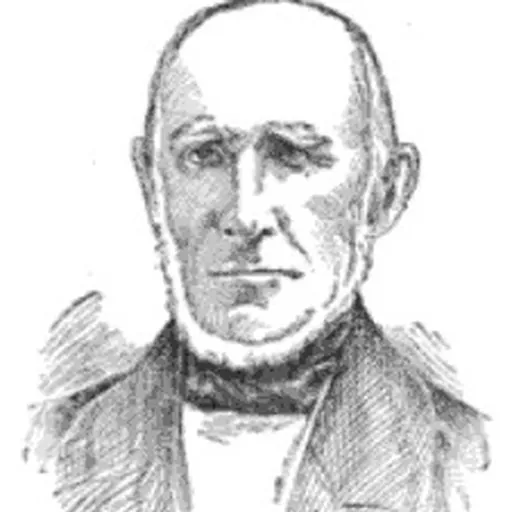
About Ryland Fletcher
Lived 1799 – 1885 (aged 86). Ryland Fletcher was an American politician and farmer.
Ryland Fletcher (February 18, 1799 – December 19, 1885) was an American farmer, politician, the 20th lieutenant governor of Vermont from 1854 to 1856, and then was the 24th governor of Vermont from October 10, 1856, to October 10, 1858.
Early life Fletcher was born in Cavendish, Vermont, a son of Dr. Asaph Fletcher and Sally (Green) Fletcher. He attended the local schools of Cavendish and worked on his father's farm. He attended Norwich University while teaching school, and graduated in 1824.
Military service
In 1817, Fletcher became a member of the Vermont state militia. He was almost immediately promoted to sergeant, and he continued to advance through the ranks, becoming a first lieutenant in 1818 and a captain in 1820. He was promoted to major in 1826 and lieutenant colonel in 1828. In 1830, Fletcher was promoted to colonel as commander of 3rd Regiment, 2nd Brigade, 1st Division. He was promoted to brigadier general in 1835 as commander of the brigade, and he served until resigning his commission in 1836.
Career Fletcher was the owner and operator of his family's Cavendish farm, which included horse and cattle breeding. During his career, Fletcher was active in the Windsor County and Vermont Agricultural Societies, and he won prizes for his horses and cows.
He was a noted anti-slavery and temperance advocate, and changed his party affiliation as the anti-slavery movement grew and coalesced from the 1830s to the 1850s, moving from the National Republican Party to the Whigs, Liberty Party, Know Nothing Party, Free Soil Party, and Republican Party. Fletcher was a leader of the Vermont State Temperance Society and the Vermont Anti-Slavery Society, and was known to be active with the Underground Railroad.
As a Know-Nothing, Fletcher opposed mass immigration to the United States, arguing that "immigrants brought with them the 'mortal disease (of) monarchy and despotism, of Romanism and heathenism... which left unchecked would sweep away our most cherished liberties and dearist institutions.'" From the 1830s to the 1850s, Fletcher was frequently chosen as a delegate to the county and state conventions of the parties to which he belonged, and served on his party's county and state committees. In addition, he was an unsuccessful candidate for various offices, including the Vermont Senate and presidential elector. His unsuccessful candidacies served to enhance popular awareness of the movement against slavery and enhanced his own name recognition and reputation.
In 1851, Fletcher was the unsuccessful Free Soil nominee for Lieutenant Governor of Vermont. In 1852, he was the unsuccessful Free Soil nominee for Congress in Vermont's 2nd District. In 1854, Fletcher was the successful lieutenant governor nominee of a coalition that included the Whig, Free Soil and Liberty Parties. Nominated by the newly formed Republican Party, he was re-elected in 1855. He was a strong proponent of biennial rather than annual gubernatorial elections and was a tireless worker for the anti-slavery and temperance causes. After the State House burned down in an 1857 fire, he called a special legislative session to plan for rebuilding. In 1858, he called the first muster and training of the Vermont militia since the Mexican War. That training proved useful at the start of the Civil War.
After leaving the governorship, Fletcher served in the Vermont House of Representatives from 1861 to 1863, and a Presidential Elector for Vermont in 1864. He received the honorary degree of Master of Arts from Dartmouth in 1869.
Family He married Mary May on June 11, 1829, and they had three children.
Don’t just read it —
keep it.
Full-length biographies made to live with: read them, listen on the way to work, watch them tonight.
- E-book
- Audio
- Video
Instant download · yours to keep · every purchase keeps this site free
Important facts
Family & relationships
Related people
Same field, nearest in time



Contemporaries
People whose lives overlapped Ryland Fletcher's






Frequently asked questions
Who was Ryland Fletcher?
American politician (1799–1885)
When was Ryland Fletcher born?
Ryland Fletcher was born on 18 February 1799 in Cavendish.
When did Ryland Fletcher die?
Ryland Fletcher died on 19 December 1885 in Proctorsville.
What was Ryland Fletcher's occupation?
Ryland Fletcher was a politician and farmer.
What nationality was Ryland Fletcher?
Ryland Fletcher was American.
Sources & further reading
Cite this page
APA: Biography.guide. (2026). Ryland Fletcher. https://biography.guide/ryland-fletcher/
MLA: "Ryland Fletcher." Biography.guide, https://biography.guide/ryland-fletcher/.
Chicago: "Ryland Fletcher." Biography.guide. https://biography.guide/ryland-fletcher/.
Data last updated: 2026-09-23 · Spot an error? Report a correction.
Portrait: Wikimedia Commons · author & licence
Page generated 2026-09-27 05:08 UTC