
About Ruth Underhill
Lived 1883 – 1984 (aged 100). Ruth Underhill was an American anthropologist and novelist.
Ruth Murray Underhill (August 22, 1883 – August 15, 1984) was an American anthropologist. She was born in Ossining-on-the-Hudson, New York, and attended Vassar College, graduating in 1905 with a degree in Language and Literature. In 1907, she graduated from the London School of Economics and began travelling throughout Europe. During World War I, she worked for an Italian orphanage run by the Red Cross.
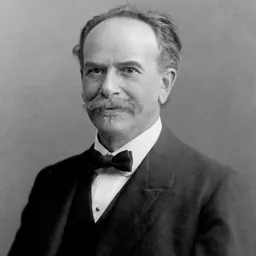
After the war, she married Charles C. Crawford and published her first book The White Moth. Her marriage ended in 1929, and by 1930, she decided to go back to school to learn more about human behavior. After speaking with Franz Boas and Ruth Benedict in the Anthropology Department at Columbia University, she decided to pursue the field, graduating with a doctorate in 1937. She wrote numerous books on Native American tribes and helped to dispel many myths about their cultures.
Life and family Underhill was born in Ossining, New York, on August 22, 1883, to Abram Sutton Underhill, a lawyer, and mother Anna Taber Murray Underhill. The oldest of four children, she had two sisters and a brother. Her sister Elizabeth was a suffragist, law school graduate and one of the first female bank directors, while her brother Robert was a professor at Harvard and mountaineer. The family were brought up as Quakers.
In 1919, Ruth Underhill married Charles Cecil Crawford and they had 2 children and they divorced amicably in 1929.
Education Ruth grew up attending Ossining School for Girls. After wandering from department to department taking classes in economics, sociology, and philosophy she eventually found herself in encouraged to pursue anthropology by Ruth Benedict. She also received research funding from the Columbia University Social Science and Humanities Council.
Careers
Social Worker In 1905, Underhill taught Latin at a boys’ school. She then took a social worker position with the Massachusetts Society for the Prevention of Cruelty to Children working with Italian cases. She was also honored by the Gila River Reservation O'odhams in 1980. On October 28, 1981, she was presented with an award from the Colorado River Indian Tribes for her sincere, devoted and untiring effort in the gathering of information about their culture. In addition, she received a Friendship Award from the White Buffalo Council of American Indians.
She received an honorary Doctor of Laws from the University of Denver in 1962 and honorary Doctor of Science degree from University of Colorado in 1965. In 1985 The Denver Women's Press Club established a scholarship in Underhill's honor; this award is given to a University of Colorado student for accomplishment in creative writing.
Published works "Victory in Olive-Gray" The Atlantic Monthly Vol. 124, 1919, pp. 62. (Article) The White Moth (novel), 1920 Ethnobiology of the Papago Indians, with Edward Castetter, University of New Mexico Bulletin #275, 1935 Autobiography of a Papago Woman, 1936 (Originally published as Memoir 46 of the American Anthropological Association) Social Organization of the Papago Indians, 1937 Singing for Power, 1938 First Penthouse Dwellers of America, 1938 A Papago Calendar Record, University of New Mexico, 1938 Social Organization of the Papago Indians, Columbia University Press, 1939 Hawk Over Whirlpools (fiction), 1940 The Papago Indians of Arizona and their Relatives the Pima, 1941 "Papago Child Training," Marriage and Family Living, Nov. 1942 Pueblo Crafts, United States Indian Service, 1946 Papago Indian Religion, Columbia University Press, 1946 Workaday Life in the Pueblos, 1946 (reprinted in 1991) Indians of the Pacific Northwest, 1946 Ceremonial Patterns in the Greater Southwest, 1948 Red Man's America, 1953 Here Come the Navajo!, circa 1934–1947 The Navajos, 1956 Religion Among American Indians, 1957 Beaverbird (fiction), 1959 Antelope Singer (fiction), 1961 Withdrawal as a Means of Dealing with the Supernatural, 1961 , 1965 "The Papago Family," in Comparative Family Systems, 1965 First Came the Family, 1967 So Many Kinds of Navajo, 1971 The Papago and Pima Indians of Arizona, 1979 (reprint of The Papago Indians of Arizona and their Relatives the Pima, 1941) Religious Practices of the Papago Indians, unknown publication date
Don’t just read it —
keep it.
Full-length biographies made to live with: read them, listen on the way to work, watch them tonight.
- E-book
- Audio
- Video
Instant download · yours to keep · every purchase keeps this site free
Important facts
People in Ruth Underhill's life
Named in this biography and alive at the same time

Related people
Same field, nearest in time



Contemporaries
People whose lives overlapped Ruth Underhill's



Frequently asked questions
Who was Ruth Underhill?
American anthropologist
When was Ruth Underhill born?
Ruth Underhill was born on 22 August 1883 in Ossining.
When did Ruth Underhill die?
Ruth Underhill died on 15 August 1984 in Denver.
What was Ruth Underhill's occupation?
Ruth Underhill was an anthropologist and novelist.
What nationality was Ruth Underhill?
Ruth Underhill was American.
Sources & further reading
Cite this page
APA: Biography.guide. (2026). Ruth Underhill. https://biography.guide/ruth-underhill/
MLA: "Ruth Underhill." Biography.guide, https://biography.guide/ruth-underhill/.
Chicago: "Ruth Underhill." Biography.guide. https://biography.guide/ruth-underhill/.
Data last updated: 2026-09-22 · Spot an error? Report a correction.
Page generated 2026-09-27 05:23 UTC