
About Ruth Shipley
Lived 1885 – 1966 (aged 81). Ruth Shipley was an American civil servant.
Ruth Bielaski Shipley (April 20, 1885 – November 3, 1966) was an American government employee who served as the head of the Passport Division of the United States Department of State for 27 years, from 1928 to 1955. Her decisions to refuse passports were widely seen as undemocratic, dictatorial, whimsical and often personal.
Early life and education
Shipley was born Ruth Bielaski on April 20, 1885, in Montgomery County, Maryland, the daughter of a Methodist minister. In 1924, she became assistant chief of the Office of Coordination and Review.
Passport Division
She became head of the Passport Division in 1928, the first woman to hold the position, after twice declining the appointment. and initially headed a staff of more than 70. In 1930, she joined the United States delegation to the Hague conference on the codification of international law. Three years later, she led a successful campaign over the objections of some at the State Department, to prevent a magazine's advertising campaign from using the word "passport" to identify its promotional literature. She believed it "cheapened...the high plane to which a passport had been raised."
In 1937, she altered the Passport Division's policies and began issuing passports in a married woman's maiden name alone if she requested it, no longer followed by the phrase "wife of". She noted that the passports of married men never carried "husband of" as further identification.
The Neutrality Act of 1939 restricted travel by American citizens to certain areas and forbade transport on the ships of nations involved in hostilities. Shipley reviewed every application personally and the number of passports issued fell from 75,000 monthly in 1930 to 2,000. She also oversaw the issuance of new passports to all citizens abroad and the incorporation of new anti-counterfeiting measures into their design.
In 1945, Fortune called her "redoubtable" and in 1951 Time described her as "the most invulnerable, most unfirable, most feared and most admired career woman in Government." That same year Reader's Digest wrote that: "No American can go abroad without her authorization. She decides whether the applicant is entitled to a passport and also whether he would be a hazard to Uncle Sam's security or create prejudice against the United States by unbecoming conduct."
In 1942, she was criticized for issuing a passport to a Polish-American Catholic priest who visited Joseph Stalin to plead for a democratic post-war Poland. Her decision was defended by President Roosevelt. By the end of World War II, her staff included more than 200 employees.
Because of her personal role in issuing passports, many important figures corresponded with and met with her to document their reasons for travel abroad, including W. E. B. Du Bois, playwright Lillian Hellman, and Manhattan Project physicist Martin David Kamen.
Upon her retirement, an editorial in the New York Times attributed her reputation for "arbitrary" decision to the fact that she had to enforce newly restrictive government policies. Despite the conflict between individual freedom and government policies, it said, "there was never any doubt that Mrs. Shipley did her duty as she saw it."
She retired on April 30, 1955, The State Department awarded her its Distinguished Service Medal upon retirement. Her decisions to withhold issuance of great numbers of passports were seen as arbitrary, and her actions presented unwarranted difficulties impeding the travel of many U.S. citizens. Bill Donovan of the Office of Strategic Services (OSS) first tried to win favor with Shipley by hiring her brother. When she nevertheless insisted on identifying OSS agents by noting "on Official Business" on their passports, Donovan had to get President Roosevelt to reverse her. Her efforts to deny travel privileges to the children of U.S. diplomats were similarly overridden in the years following World War II.
In the 1950s, she became the object of controversy when critics accused her of denying passports without due process on the basis of politics, while critics defended her actions as attempts to support the fight against Communism. Senator Wayne Morse called her decisions "tyrannical and capricious" for failure to disclose the reasons for the denial of passport applications. Her supporters included Secretary of State Dean Acheson and Senator Pat McCarran. In 1953, she refused Linus Pauling a passport for travel to travel to accept the Nobel Prize in Chemistry because, using the standard language of her office, it "would not be in the best interests of the United States," but was overruled.
Personal life She married Frederick W. van Dorn Shipley in 1909. She died in Washington, D.C., on November 3, 1966. She is buried in the Congressional Cemetery in Washington, D.C.
Family Shipley's grandfather Alexander Bielaski died fighting for the Union at the Battle of Belmont and her uncle Oscar Bielaski was a professional baseball player. Her brother A. Bruce Bielaski headed the Bureau of Investigation, later the Federal Bureau of Investigation, in the Department of Justice during World War I.
Footnotes
Don’t just read it —
keep it.
Full-length biographies made to live with: read them, listen on the way to work, watch them tonight.
- E-book
- Audio
- Video
Instant download · yours to keep · every purchase keeps this site free
Important facts
People in Ruth Shipley's life
Named in this biography and alive at the same time




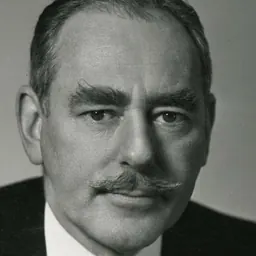

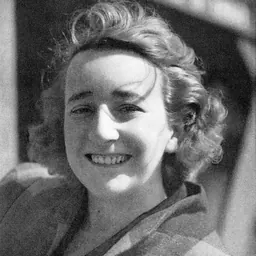
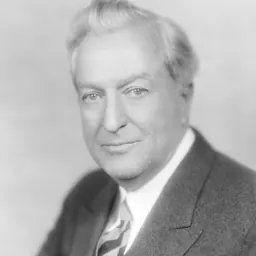
Related people
Same field, nearest in time


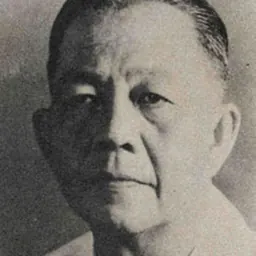
Contemporaries
People whose lives overlapped Ruth Shipley's


Frequently asked questions
Who was Ruth Shipley?
American civil servant (1885-1966)
When was Ruth Shipley born?
Ruth Shipley was born on 20 April 1885 in Montgomery County.
When did Ruth Shipley die?
Ruth Shipley died on 3 November 1966 in Washington, D.C..
What was Ruth Shipley's occupation?
Ruth Shipley was a civil servant.
What nationality was Ruth Shipley?
Ruth Shipley was American.
Sources & further reading
Cite this page
APA: Biography.guide. (2026). Ruth Shipley. https://biography.guide/ruth-shipley/
MLA: "Ruth Shipley." Biography.guide, https://biography.guide/ruth-shipley/.
Chicago: "Ruth Shipley." Biography.guide. https://biography.guide/ruth-shipley/.
Data last updated: 2026-09-20 · Spot an error? Report a correction.
Page generated 2026-09-27 05:19 UTC