
About Ruth Moore
Lived 1903 – 1989 (aged 85–86). Ruth Moore was an American novelist, poet and writer.
Ruth Moore (1903–1989) was an important Maine writer of the twentieth century. She is best known for her honest portrayals of Maine people and evocative descriptions of the state. Now primarily thought of as a regional writer, Moore was a significant literary figure on the national stage during her career. Her second novel Spoonhandle spent fourteen weeks on the New York Times bestseller list in the company of George Orwell, W. Somerset Maugham and Robert Penn Warren. In her time, Moore was hailed as "New England's only answer to Faulkner".
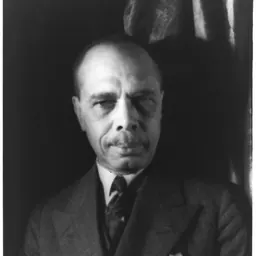
Life The Moore Homestead on Gotts Island, Maine, c. 1910. Photographer unknown.Moore's family first settled the Maine midcoast region in the late 18th century. She was born in 1903 on Gotts Island, a small island just off the southwestern tip of Mount Desert Island, Maine. Moore attended Albany State Teacher's College (now SUNY Albany) and majored in English and economics. In 1926, Moore moved to New York City where she worked as personal secretary to Mary White Ovington, one of the founders of the NAACP. Ovington had spent many summers at her brother's cottage on Gotts Island and had gotten to know the Moore family. In 1929 Moore accepted a position as Assistant Campaign Manager with the NAACP working directly for the organization's head James Weldon Johnson. In the summer of 1930, she traveled to the south as an NAACP investigator, where she successfully unearthed evidence that led to the freeing of two African American youths falsely accused of murder.
Moore's first published work, a poem "Voyage", appeared in a 1929 issue of the Saturday Review of Literature. Moore returned to Maine in late 1930. She enrolled in a master's program at the University of Maine, but left after one semester and returned to New York City. Moore and Mayo moved back to the East Coast in 1941. After a brief stay on Gotts Island, the couple moved to New York City. Moore quickly found a job at Reader's Digest. Moore's debut novel, The Weir, was published in 1943. Her story "It Don't Change Much" was published in The New Yorker in 1945.
In 1946, Moore followed her earlier success with her sophomore novel, Spoonhandle. She sold the film rights to 20th Century Fox. The film, retitled Deep Waters, was filmed on location in Vinalhaven, Maine and released in 1948. The sale of Spoonhandle gave Moore the financial success she needed to return to Maine. She and Mayo purchased land on the west side of Mount Desert Island and set about building their house. Though the couple traveled extensively, they never again moved away from their beloved Maine. By 1979, Moore had published 13 novels including The Walk Down Main Street (1960), The Sea Flower (1965), and The Gold and Silver Hooks (1969). She also published 3 books of poetry—one of which, Cold as a Dog and the Wind Northeast, was published by folklorist and singer-songwriter Gordon Bok of Camden, Maine.
Moore died in nearby Bar Harbor in December 1989.
The regional label For much of her literary life, Moore resisted being classified as a "regional" author. In a 1980 letter to author Sanford Phippen, she described "regional" as one of only two dirty words — the other being "interview." In the same letter, she stressed her belief that Maine "is a microcosm of everywhere else." Editor Sven Davisson writes in the introduction to Foley Craddock, "[Moore] was a regional writer only in the sense that one could call Faulkner regional, in that he wrote of his 'postage stamp of soil.' Both writers had the gift of capturing the universal in the local... A novel about New York City or Chicago is ever and always about New York City or Chicago, while a novel about Maine or Jefferson, Mississippi, in adept hands, could be about any place in the world."
Assessment of her writing Though lauded by the reviewers of the New York Herald and Saturday Review, Moore drew mixed reviews from the New York Times. Eventually the Times quit reviewing her books.. Her book sales came, for the most part, from book clubs and through serialization in magazines. Her book sales diminished appreciably within her lifetime, and Moore was eventually dropped by her publisher. Today her books are re-printed by a small press in Maine, and her books are often sold in Maine book and souvenir shops.
Don’t just read it —
keep it.
Full-length biographies made to live with: read them, listen on the way to work, watch them tonight.
- E-book
- Audio
- Video
Instant download · yours to keep · every purchase keeps this site free
Important facts
People in Ruth Moore's life
Named in this biography and alive at the same time




Related people
Same field, nearest in time




Contemporaries
People whose lives overlapped Ruth Moore's

Frequently asked questions
Who was Ruth Moore?
American fiction writer (1903-1989)
When was Ruth Moore born?
Ruth Moore was born in 1903 in Tremont.
When did Ruth Moore die?
Ruth Moore died in 1989 in Bar Harbor.
What was Ruth Moore's occupation?
Ruth Moore was a novelist, poet and writer.
What nationality was Ruth Moore?
Ruth Moore was American.
Sources & further reading
Cite this page
APA: Biography.guide. (2026). Ruth Moore. https://biography.guide/ruth-moore/
MLA: "Ruth Moore." Biography.guide, https://biography.guide/ruth-moore/.
Chicago: "Ruth Moore." Biography.guide. https://biography.guide/ruth-moore/.
Data last updated: 2026-09-20 · Spot an error? Report a correction.
Page generated 2026-09-27 05:24 UTC