
About Rūta Vanagaitė
Born 1955. Rūta Vanagaitė is a Russian and Lithuanian theatrologist, journalist, writer, politician, theatre critic and social activist.
Rūta Vanagaitė (born January 25, 1955) is a public figure in Lithuania, who is also a theatre critic, writer, and journalist.
She is controversial for her comments in 2017 about the Lithuanian anti-Soviet resistance leader Adolfas Ramanauskas, where she claimed that he was not a hero and that his wounds, which included his genitals, were not the result of interrogation by the KGB, but self-inflicted. She later retracted her statements and admitted herself that they were baseless. which was published a year later, and was translated into multiple languages (English, Polish, Russian, Hebrew). The book discusses the problem of participation of common Lithuanians in the execution of Jews and robbing of their property. She claims to have been shunned by some of her relatives and friends after the publication of the book.
She self published a book in cooperation with German historian Christoph Dieckmann about the Holocaust with the English title How Did It Happen?. The English edition was published by Rowman & Littlefield Publishers in 2021.
Apart from her native Lithuanian, she is fluent in Russian, English, Finnish, Polish Hebrew and French.
False claims about A. Ramanauskas–Vanagas ("The Hawk") Vanagaitė made false allegations against the leader of Lithuanian partisans Adolfas Ramanauskas (nicknamed "The Hawk") . A week after her initial statements, Vanagaitė issued an apology for having made "utterly misleading claims" based on KGB case files that relied on torture. She said she had been unaware of all the facts. His KGB file contained information that in his last speech he hailed the USSR, that he had self-injured, punctured his own eye and cut his own genitals. Vanagaitė further claimed he was a KGB agent. The claims were supported by her partner Efraim Zuroff, who accused Ramanauskas of taking part in the Holocaust in Lithuania, based on information he had found in the diaries of his main persecutor and torturer Nachman Dushanski.
Her claims were discredited by numerous Lithuanian historians and public figures as having been based on false confessions made under brutal torture, condition of coma, at some moments even physically unable to write his signature. Ramanauskas' biographer, historian Arvydas Anušauskas, observed dismissively that it's "no surprise to hear such claims from a person who has never researched history", is unaware of how such cases are made, how they're falsified and censured to fit the dictatorial regime. Vanagaitė's publisher Alma littera withdrew her book from the market. The Lithuanian General Attorney's office also started an investigation but found "no evidence that Vanagaitė intentionally spread false claims, therefore the false claims should be assessed in ethical and not legal terms". The Lithuanian Jewish Community implicitly accepted that the claims were false when they announced they had no problem with a monument for The Hawk. The ambassador of Israel visited Ramanauskas' daughter in 2017, reassuring her that Israel respects the Lithuanian fight for freedom and that the attacks by two people are "purely their personal [opinions]".
Books Ne bobų vasara. Vilnius: Alma littera, 2013. — 168 p., 2015. — 166 p. Pareigos metas. Vilnius: Alma littera, 2014. — 300 p. Jis. Vilnius: Alma littera, 2016. — 240 p. Ne bobų reikalai , 2017 Višta strimelės galva ("A Chicken with Herring's Head"), Alma littera, 2017, a biographical book; withdrawn from circulation by the publisher Mūsiškiai (co-authored with Efraim Zuroff) – translated: Our People (English), Nasi (Polish) Kaip tai įvyko? Christoph Dieckmann atsako Rūtai Vanagaitei ["How Did It Happen? Christoph Dieckmann answers to Rūta Vanagaitė"]. 2020 Renkuosi vasarą. 2021 English translation: How Did It Happen?: Understanding the Holocaust, 2021 Lukiškės: Tamsioji Vilniaus pusė Renkuosi vasarą, 2021
Don’t just read it —
keep it.
Full-length biographies made to live with: read them, listen on the way to work, watch them tonight.
- E-book
- Audio
- Video
Instant download · yours to keep · every purchase keeps this site free
Important facts
People in Rūta Vanagaitė's life
Named in this biography and alive at the same time

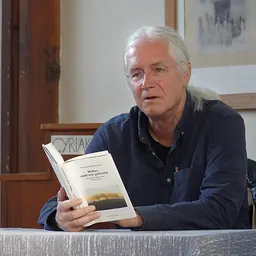
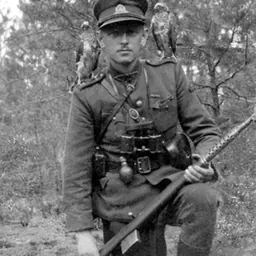

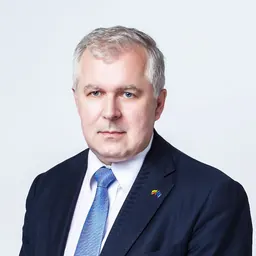

Related people
Same field, nearest in time





Contemporaries
People whose lives overlapped Rūta Vanagaitė's


Frequently asked questions
Who is Rūta Vanagaitė?
Lithuanian writer (born 1955)
When was Rūta Vanagaitė born?
Rūta Vanagaitė was born on 25 January 1955 in Šiauliai.
What is Rūta Vanagaitė's occupation?
Rūta Vanagaitė is a theatrologist, journalist, writer, politician, theatre critic and social activist.
What nationality is Rūta Vanagaitė?
Rūta Vanagaitė is Russian and Lithuanian.
Sources & further reading
Cite this page
APA: Biography.guide. (2026). Rūta Vanagaitė. https://biography.guide/ruta-vanagaite/
MLA: "Rūta Vanagaitė." Biography.guide, https://biography.guide/ruta-vanagaite/.
Chicago: "Rūta Vanagaitė." Biography.guide. https://biography.guide/ruta-vanagaite/.
Data last updated: 2026-09-20 · Spot an error? Report a correction.
Page generated 2026-09-27 05:07 UTC