
About Russell Barkley
Born 1949. Russell Barkley is an American psychologist, psychiatrist, neurologist, researcher and clinical psychologist, known for ADHD.
Russell Alan Barkley FAPA (born December 27, 1949) is a retired American clinical neuropsychologist who was a clinical professor of psychiatry at the VCU Medical Center until 2022 and president of Division 12 of the American Psychological Association (APA) and of the International Society for Research in Child and Adolescent Psychopathology. Involved in research since 1973 and a licensed psychologist since 1977, he is an expert on attention-deficit hyperactivity disorder (ADHD) and has devoted much of his scientific career to studying ADHD and related fields like childhood defiance. He proposed the renaming of sluggish cognitive tempo (SCT) to cognitive disengagement syndrome (CDS).
Besides his clinical work, he is also an expert in the neuropsychology of executive function and self-regulation. He is board certified in three clinical specialties: clinical neuropsychology, clinical psychology, and clinical child and adolescent psychology.
Early life and education
Russell Alan Barkley was born in Newburgh, New York. He was one of five children, born to US Air Force Colonel Donald Stuart Barkley (27 February 1916 – 15 June 1999) and Mildred Minerva née Terbush (10 September 1914 – 25 April 2008). Barkley served in the United States Air Force from 1968 to 1972, including a tour of duty in Vietnam. He had a fraternal twin brother, Ronald Foster Barkley, who was killed in a car crash on 24 July 2006. Barkley attributes his brother's history of dangerous and reckless behavior, including not wearing a seat belt and speeding at the time of his crash, to untreated ADHD. Ronald was several times over the legal alcohol limit, speeding and not wearing a seat belt at the time of his fatal crash.
Barkley earned an Associate of Arts from Wayne Community College in Goldsboro, North Carolina in June 1972, and a BA in psychology from the University of North Carolina at Chapel Hill. He earned an MA and Ph.D. in clinical psychology from Bowling Green State University in Bowling Green, Ohio. From July 1976 to 1977, Barkley was an intern at the University of Oregon Health Sciences Center in Portland, Oregon.
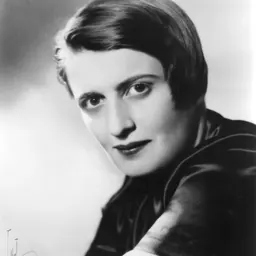
On the political spectrum, Barkley identifies as a libertarian, having been initially influenced by the scholarly writings of the Austrian School of Economics and Ayn Rand's philosophy of Objectivism, citing Atlas Shrugged as his earliest favourite book.
Career In 1977, Barkley began his professional career at the Medical College of Wisconsin and Milwaukee Children's Hospital, where in 1978, he founded the Neuropsychology Service and served as its chief until 1985. He then moved to the University of Massachusetts Medical School, where he served as Director of Psychology from 1985 to 2000. Barkley was professor of psychiatry and neurology at the University of Massachusetts Medical Center. In 2005, he joined the State University of New York Upstate Medical University (SUNY) in Syracuse, New York, where he was a consultant and research professor of psychiatry. He taught at the Medical University of South Carolina from 2003 to 2016 and then moved to Virginia Commonwealth University Medical Center in Richmond, Virginia, where he taught in the Department of Psychiatry until 2020.
Until 2022, he served as president of the Section on Clinical Child Psychology (Division 12) of the American Psychological Association (APA) and of the International Society for Research in Child and Adolescent Psychopathology.
Barkley led the first International Consensus Statement on ADHD. He is known for his research contributions including multiple papers from his longitudinal study in Milwaukee, Wisconsin; the persistence of ADHD into adulthood; his development of a theory of ADHD as a disorder of executive functioning and self-regulation; establishing the nature of emotional dysregulation in ADHD; early research on family interaction patterns in ADHD children; his more recent studies on the nature of ADHD in adults; initially researching the effects of stimulant medication; early intervention for children at risk for ADHD; training parents to manage ADHD and defiant behavior; the pervasiveness of impairments and long-term risks associated with ADHD; and the nature of cognitive disengagement syndrome.
He has given more than 800 invited lectures in more than 30 countries during his career, as part of his effort to disseminate science. He has performed his forever last invited public lecture at the Centro Archimede Medical Centre, where he discussed ADHD, CDS and related topics, in Italy, September 30, 2023.
Besides his books, he has published six clinical rating scales related to ADHD, executive functioning, and impairment One of Barkley's rating scales for adult ADHD evaluates CDS, a distinct syndrome from ADHD.
Views on medication
In 1978, Barkley wrote that "Stimulant drug studies based primarily on measures of teacher opinion have frequently concluded that these drugs improve the achievement of hyperkinetic children. However, a review of those studies using more objective measures of academic performance revealed few positive short-term or long-term drug effects on these measures. What few improvements have been noted can be readily attributed to better attention during testing. The major effect of the stimulants appears to be an improvement in classroom manageability rather than academic performance". In 1991, Barkley noted that "Psychostimulant medications (e.g., Ritalin) are highly effective treatments for the symptomatic management of children with ADHD as they can enhance significantly their attention span, impulse control, academic performance, and peer relationships".
Barkley believes that medications such as methylphenidate and dextroamphetamine should be downgraded to schedule III.
During an interview in 2001, Barkley said that "All of the research we have indicates that these drugs are some of the safest that we employ in the field of psychiatry and psychology. That's not to say that we know everything about them. But we know a lot more than we know about cough medicines and Tylenol and aspirins and other things that children swill whenever they come down with a common cold. Nobody asks those questions about those over-the-counter medications, yet we know substantially less about them".
Barkley has compared the symptomatic impairments of ADHD to a physical handicap, with accommodations and treatment being the equivalent of a wheelchair. On 16 November 1998 he said that "[methylphenidate] will be ranked as one of the leading developments in this century for helping individuals".
Disclosure Barkley declares royalties or licences from Guilford Publications, the American Psychological Association, Professional Education Systems Institute, ContinuingEdCourses; and payment or honoraria for lectures, presentations, speakers’ bureaus, consultancy, manuscript writing, or educational events from AstraZeneca, Takeda, the Medical College of Wisconsin, Eli Lilly, and Ochsner Medical Center.
Books Attention Deficit Hyperactivity Disorder: A Handbook for Diagnosis and Treatment.4th ed. New York: Guilford Press, 2015. . ADHD and the Nature of Self Control. New York: Guilford Press, 1997. . Taking Charge of ADHD: The Complete, Authoritative Guide for Parents. New York: Guilford Press, (3rd ed.) 2013. . With Kevin R Murphy and Mariellen Fischer. ADHD in Adults: What the Science Says. New York: Guilford Press, 2008. . Attention Deficit Hyperactivity Disorder in Adults: The Latest Assessment and Treatment Strategies. Sudbury, MA: Jones and Bartlett, 2010. . Taking Charge of Adult ADHD. New York: Guilford Press, 2010. . Executive Functions: What They Are, How They Work, and Why They Evolved. New York: Guilford Press, 2012. . Defiant Children: a Clinician's Manual for Assessment and Parent Training, 3rd ed. New York: Guilford Publications, 2013. . Managing ADHD in School: The Best Evidence-Based Methods for Teachers. Eau Claire, WI: PESI Publishing and Media, 2016. . When an Adult You Love Has ADHD. Washington, DC: American Psychological Association, 2017.
Awards C. Anderson Aldrich Award, 1996, from the American Academy of Pediatrics for outstanding research in child health and human development Distinguished Contribution Award to Research, 1998, by the Section of Clinical Child Psychology of the American Psychological Association Lifetime Career Achievement Award, Division 53 (Clinical Child and Adolescent Psychology), American Psychological Association, 2017 Lifetime Achievement Award, Children and Adults with ADHD (chadd.org), 2018
Don’t just read it —
keep it.
Full-length biographies made to live with: read them, listen on the way to work, watch them tonight.
- E-book
- Audio
- Video
Instant download · yours to keep · every purchase keeps this site free
Important facts
People in Russell Barkley's life
Named in this biography and alive at the same time



Related people
Same field, nearest in time






Contemporaries
People whose lives overlapped Russell Barkley's



Frequently asked questions
Who is Russell Barkley?
American psychologist and author
When was Russell Barkley born?
Russell Barkley was born on 27 December 1949 in United States.
What is Russell Barkley's occupation?
Russell Barkley is a psychologist, psychiatrist, neurologist, researcher and clinical psychologist.
What is Russell Barkley known for?
Russell Barkley is known for ADHD.
What nationality is Russell Barkley?
Russell Barkley is American.
Sources & further reading
Cite this page
APA: Biography.guide. (2026). Russell Barkley. https://biography.guide/russell-barkley/
MLA: "Russell Barkley." Biography.guide, https://biography.guide/russell-barkley/.
Chicago: "Russell Barkley." Biography.guide. https://biography.guide/russell-barkley/.
Data last updated: 2026-09-25 · Spot an error? Report a correction.
Page generated 2026-09-27 05:10 UTC