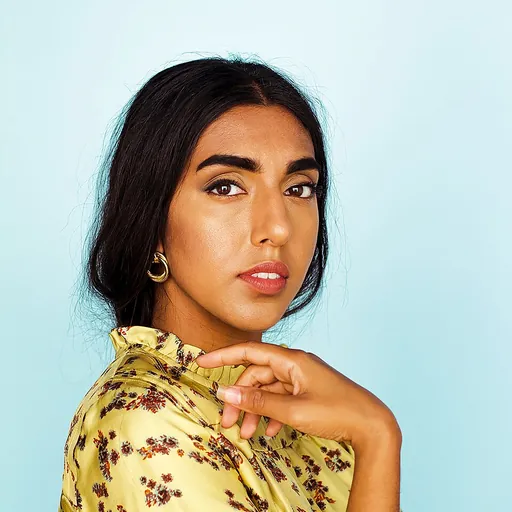
About Rupi Kaur
Born 1992. Rupi Kaur is a Canadian scrivener, illustrator, poet, writer and draftsperson.
Rupi Kaur (; born 4 October 1992) is an Indian-Canadian poet, illustrator, photographer, and author. Born in Punjab, India, Kaur immigrated to Canada at a young age with her family. She began performing poetry in 2009 and rose to fame on Instagram, eventually becoming a popular poet through her three collections of poetry.
In March 2015, Kaur posted a series of photographs to Instagram depicting herself with menstrual blood stains on her clothing and bedsheets. The photographs were taken as part of a visual rhetoric course at the University of Waterloo in Waterloo, Ontario, Canada. Instagram removed the images, in response to which Kaur wrote a viral critique of the company's actions. As a result of the incident, Kaur's poetry gained more traction and her initially self-published debut poetry collection, Milk and Honey (2014), was reprinted by Andrews McMeel Publishing to widespread commercial success. Considered to be at the forefront of the "Instapoetry" style, Kaur's work is simplistic in language and explores South Asian identity, immigration, and femininity. Her childhood and personal life serve as sources of inspiration. Line drawings accompany her poetry with stark subject matter.
After the success of Milk and Honey, Kaur describes struggling throughout the creation of her second collection, The Sun and Her Flowers (2017). Her third collection, Home Body (2020), is influenced by a desire to feel less pressure for commercial success and the COVID-19 pandemic.
Kaur has a large social media following, particularly on Instagram. Since its release in 2014, her collection Milk and Honey has sold over 11 million copies and has been translated into 43 languages. Kaur's poetry has had mixed critical reception, having been praised for her influence and derided for her verse. Kaur has been included on congratulatory year-end lists by the BBC and Elle; The New Republic controversially called her the "Writer of the Decade".
Early life Kaur was born into a Sikh family in Punjab, India, on 4 October 1992. At age three, she immigrated to Canada with her parents. Her father had left and was not present for Kaur's birth. Due to financial instability, he would send back supplies suitable for Kaur and her upbringing. At the age of five, Kaur was compelled to take up her mother's hobby of painting; she was given a paintbrush and forced to draw. Her mother wanted to instill this art in her since it was so close to home. As a child, Kaur would find herself embarrassed by her mother's accent and try to distance herself. Kaur was generally self-conscious about her identity. Her environment growing up led to her developing what she deemed "constant survival mode".
She performed kirtan and Indian classical music for several years. Kaur aspired to be an astronaut or a social worker or a fashion designer; her ambitions changed frequently and her father prohibited her from studying the latter subject in university. She expressed an interest in reading from a young age, finding it relieved her loneliness. Her confidence and social skills grew in fourth grade. Throughout middle school she partook in "speech competitions", winning one in seventh grade, thus helping her find progress and hope despite isolation and bullying. Kaur was subject to various comments about her appearance from her parents and peers. She experienced the low point of her education during high-school, as she sustained, what she considered, toxic care. Her feelings were relieved upon forgoing people who she described as "very dangerous for me". Poetry brought her comfort as she dealt with being self-conscious – of literature, she read, among others, Amrita Pritam, Maya Angelou, Roald Dahl, Dr. Seuss and J. K. Rowling. She taught creative-writing classes for high school and college students. Although she found spoken-word poetry "really natural", describing her first show as "Like a damn hug", she'd fidget with the paper above her face, leaving before audiences clapped due to her anxiety. Her poetry at first received a lukewarm reception, having been told that she was too aggressive for certain venues or made some people uncomfortable. "So many people around me early on thought it was absolutely ridiculous". Kaur started writing in an attempt to articulate her personal trauma, having just left an abusive relationship – which influenced her decision to perform poetry: "I wanted to find a voice, because I had been voiceless for so long". Kaur would often be in conflict with her parents over her choice to pursue poetry.
Throughout high school, Kaur shared her writing anonymously. From 2013 onward, she began sharing her work without a pseudonym on Tumblr before moving to Instagram in 2014 where she started adding simple illustrations. Her first poem posted on Instagram regarded a wife coping with her husband's alcoholism; she described the experience as cathartic.
Milk and Honey (2014–2016) At first submitted her poetry to literary anthologies, magazines and journals, to little success. She created the poems in Milk and Honey "entirely for [herself], with zero concept of book in mind", and sold more than 10,000 copies. Kaur recalled that she was hesitant to submit to magazines or journals because it "felt like I was taking apart [Milk and Honey] and throwing things at different walls, hoping they would stick. I feel like it only made sense when it was [collected] because this is a body of work". Internet trolls harassed Kaur over the photos, which were twice removed for not complying with the site's terms of service; Kaur claimed that she was not notified beforehand or given a reason and criticised their censorship as misogynistic and reaffirming what she sought to condemn – deeming the act an "attack on my humanity". Instagram apologized and brought back the images, citing a mistaken removal. That same year, she wrote 10 chapters of a yet unpublished novel. During a poetry reading in 2015, Kaur, upon seeing a line of her fans that extended four street blocks, fully realised the extent of her audience and grew more confident in her poetry as a result. Kirsty Melville, publisher and president of AMP, credits the book's success to Kaur's connection to her readers.
At age 22, she employed seven people to aid her, as a part of a company she founded. While writing, her team often manages her social media.
The Sun and Her Flowers (2017–2019)
Following a three-month writing trip in California, and in the same year as her induction into the Brampton Arts Walk of Fame, Kaur's second book, The Sun and Her Flowers, was published on 3 October 2017. She views it as a "one long continuous poem that goes on for 250 pages", "which while birthed in Instagram, is a concept that depends on being bound". That same year, she performed at the Jaipur Literary Festival: "It was as if I had waited my whole life for this moment. It was my only show, where I wasn't nervous. The crowd was energetic."
While touring the world, she experienced feelings of depression and anxiety. The process of creating The Sun and Her Flowers and trying to replicate her success affected her mental health, reporting "furious 12-hour [writing] stretches" and 72-hour migraines. She experienced months of writer's block and frustration at her work, ultimately calling its creation the "greatest challenge of my life". Following its release, she dealt with feelings of burnout – writing the poem "Timeless" in response. Kaur considers Gibran an influence and has dubbed The Prophet her "life bible".
Home Body and Healing Through Words (2020–present) Kaur released her third poetry collection, Home Body, on 17 November 2020. The collection features illustrations from Kaur and became one of the best-selling books of 2020. Kaur stated that she sought to feel less pressure for commercial profit while writing the collection. She reached out to fellow authors for guidance because she had imposter syndrome due to Milk and Honey 's success. To her students, she emphasizes a natural and therapeutic approach to writing. Explaining the impetus, Kaur recalled her separation of performance and prose, attempting to hide the former, and how her eventual marriage of the two styles "in maybe 2016" allowed the show to occur.
In 2022, she released her fourth book, Healing Through Words . The idea for the book was conceived at Instagram Live writing workshops that she held during the COVID-19 pandemic, and she realized that many of her readers "used writing as a form of self-care." An interactive book with free writing exercises dedicated to her readers, the book also shares "what my writing process is, how I overcome writer's block, my tips, my tricks."
Artistry and influences Since Gurmukhi script has no concept of separate lower and upper case, her work is written exclusively in lowercase, using only the period as a form of punctuation; Kaur writes this way to honour the Punjabi language, her first language that she can speak and read, but limited to write in. She said that she enjoys the equality of letters and that the style reflects her worldview. Kaur's childhood: her fickle temperament, her Sikh identity and her dad's activism – which included Kaur partaking in protests as a child – affected her poems. Lastly, it concludes after she has narrowed the poem to its main elements and she has received affirmation from her sister. Within the context of performance, her use of line breaks and periods represent where she would pause and where a new idea would be introduced, respectively. She often uses humour in her performances as a rhetorical device to tell personal stories of trauma and challenge social inequalities. Carol Muske-Dukes highlighted that, in being a "performative poet", Kaur continues a tradition of "the page enact[ing] [the performance] in the mind". They have been compared to outsider art; her drawings and poetry have seen allusions to childhood artistry. The style of drawing continues in The Sun and Her Flowers. Images that appear in her work include twisting bodies, crawling flowers, and fingers forming the shapes of hearts. Kaur explained that her style is intended to be recognisable and evoke a brand, akin to Apple's.
Alongside her peers – Nayyirah Waheed, Lang Leav, Warsan Shire – and other "Instapoets", Kaur's plainspoken and free verse poetry is delivered in a "bite-size" manner – some poems only composed of one line. With The Sun and Her Flowers, her poems expanded their length. Kaur, who dislikes the term "Instapoet", has also been said to belong to a "new generation of migrant writers, a generation who 'sits-in, tweets, posts and broadcasts'". She has been said to be possibly the "representative of an entire generation's values and ethos". Kaur has said that she writes for "the generation that's reading my work...I am writing something that is believable to that generation". Due to her usage of dry, open-ended, and colloquial language, Kaur has been said to break from and reject traditional standards and features of poetry which are held in importance. Matthew Zapruder, Becky Robertson of Quill & Quire and Kaur identified a universal quality in her work. Literature scholar Alyson Miller wrote that Kaur makes use of "gendered yet ostensibly universal themes relating to sexism, trauma, friendship, and violence".
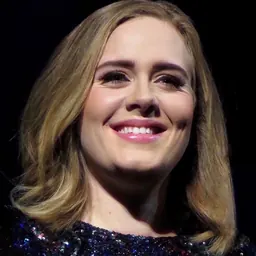
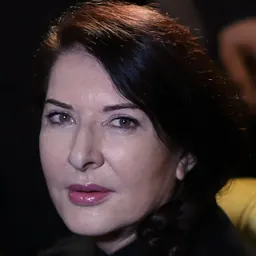
Following Milk and Honey, she became more selective in regards to publishing her poetry online, having extensively showcased her work online unless embarrassed by the content. Focusing upon "design, marketing, creative writing and branding", Kaur's Instagram account, with 4.5 million followers, fluctuates between photographs of Kaur and her poetry, with South Asian people and iconography as a prominent focus. Using The Sun and Her Flowers as a base, her poetry special had an "ethereal nature-driven aesthetic", featuring large yellow flower petals around the stage and projected. She refined her aesthetic into a more stylised manner following the release of Beyoncé (2013). Kaur has described Beyoncé as an influence, as well as Sharon Olds, Marina Abramović, Adele, Kahlil Gibran, Nizzar Qabbani, Amrita Sher-Gil and Frida Kahlo. Her mother is a subject she treats with reverence in her work and pays tribute to her parents in her poem Broken English – Kaur credits her mother, due to significant sacrifices made in Kaur's childhood, with her career as a poet.
Domestic and sexual violence were a particular focus of her initial work and rape related trauma became more explicit after Milk and Honey. She explored violence and trauma heavily in her early work because "I had this desire to unpack so many deeper emotions and issues that I'd seen affecting me and so many women around me". Kaur has admitted that writing about these heavy subjects can be both cathartic and troublesome to her mental wellbeing. She writes in the second person in her most solemn depictions of domestic abuse, "as if [she] is attempting to distance herself from her experience of physical abuse". Influenced by the COVID-19 pandemic, Home Body examines themes of capitalism, productivity and mental health, more than before. Agatha French, writing for the Los Angeles Times, compared reactions to the announcement of The Sun and Her Flowers, by Kaur's majority young and female fans, to "the fervent devotion of Beatles fans" – she's been credited with "spearhead[ing] the merging of poetry and pop culture". Her live performances routinely have hundreds of attendees, with turnout, at times, as high as 800 people. Regarded as a "pioneer" of the "Instapoet" style, Erica Wagner noted Kaur's influence in what she called the "biggest overall shift [in reading habits] we've seen in the past decade". Kaur has instigated greater focus on poetry by booksellers, American adults and young people.
Fans have praised her for writing about her personal trauma and elevating diversity in a "overwhelmingly" white literary scene. Her style of menstrual activism has become "more the norm than the exception", with many women of color generating similar media attention since Kaur. She has inspired various young poets to begin the practice.
Online reception
Her series of menstrual photographs elicited a very mixed reception. She received death threats, which led to emotional numbness and a subsequent distancing from social media. In retrospect, Amika George, a British activist who campaigns against period poverty in the United Kingdom, credits Kaur's menstrual photographs with being the "catalyst for opening up the conversation about periods". Various feminist artists defended Kaur when her menstrual photographs were taken down. Kaur noted an effect on her friends in Punjab, as they had frank discussions with their families regarding periods. Ahsan described Kaur as a "social media commodity", a status from which she prospers. Kaur considers disdain for the fame her work has garnered to be analogous to the reception of contemporary art, seeing both as disparaged for being "easy".
Waheed and Shire, among Kaur's influences, have accused her of plagiarism. Kaur has denied claims of plagiarism, speculating about the likelihood of similar experiences and that their similar themes and use of honey is a "by-product of our times", comparing contemporary concurrent artistic development to that in the Renaissance or Victorian periods – Kaur attributing their namesakes as said development. Her use of contemporary vernacular has drawn ire. Other criticisms include her work being formulaic, juvenile and attenuated. Kaur feels that her work can't be "fully reviewed or critiqued through a white lens or a Western one". Watts' criticism was both supported and attacked by other poets.
Watts considered Kaur to be more concerned with authenticity than the "traditional craft of poetry". In an essay for The Baffler, Soraya Roberts chastised Kaur as disingenuously representative of female South Asian oppression, when she is purportedly chiefly concerned with commodification; Pâquet echoed similar sentiments. Kaur's lack of distinction between her personal experiences and collective experiences of trauma has received further criticism. The next year she was included on Forbes and Elle's complimentary lists of emerging artists. In 2019, The New Republic named Kaur "Writer of the Decade", due to her impact on the medium of poetry; this led to a debate on whether the award was deserved, as well as about her work in general.
Politics During the 2020–2021 Indian farmers' protest, Kaur supported Punjabi farmers in their plight, citing that for "Sikhs, dissent against oppression is nothing new". November 2023, Kaur declined an invitation to attend a Diwali celebration hosted by US Vice President Kamala Harris in the White House, citing the Biden administration's continued support of Israel and its bombardment of Gaza, which she called "the collective punishment of a trapped civilian population".
Works Books
Healing Through Words. Simon & Schuster. 27 September 2022. .
Articles
Performance films Rupi Kaur Live (2021)
Short films Rise (2023)
Don’t just read it —
keep it.
Full-length biographies made to live with: read them, listen on the way to work, watch them tonight.
- E-book
- Audio
- Video
Instant download · yours to keep · every purchase keeps this site free
Important facts
People in Rupi Kaur's life
Named in this biography and alive at the same time


Related people
Same field, nearest in time



Contemporaries
People whose lives overlapped Rupi Kaur's



Frequently asked questions
Who is Rupi Kaur?
Canadian poet
When was Rupi Kaur born?
Rupi Kaur was born on 4 October 1992 in Punjab.
What is Rupi Kaur's occupation?
Rupi Kaur is a scrivener, illustrator, poet, writer and draftsperson.
What nationality is Rupi Kaur?
Rupi Kaur is Canadian.
Sources & further reading
Cite this page
APA: Biography.guide. (2026). Rupi Kaur. https://biography.guide/rupi-kaur/
MLA: "Rupi Kaur." Biography.guide, https://biography.guide/rupi-kaur/.
Chicago: "Rupi Kaur." Biography.guide. https://biography.guide/rupi-kaur/.
Data last updated: 2026-09-23 · Spot an error? Report a correction.
Portrait: Wikimedia Commons · author & licence
Page generated 2026-09-27 05:04 UTC