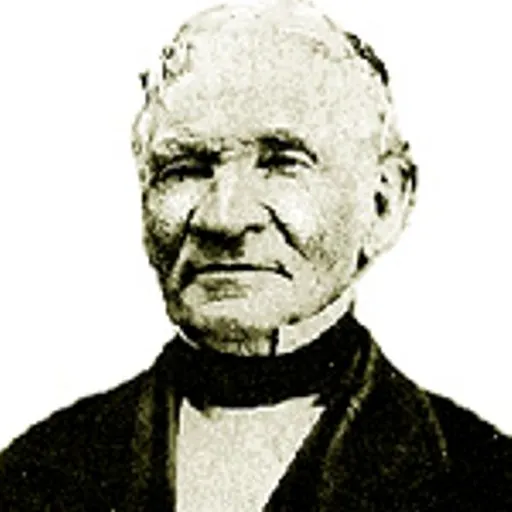
About Rufus Porter
Lived 1792 – 1884 (aged 92). Rufus Porter was an American painter and artist.
Rufus Porter (May 1, 1792 – August 13, 1884) was an American painter, inventor, and founder of Scientific American magazine.
Early life and education Porter descended from an old colonial New England family. The family's first immigrants to the U.S. were Mary and John Porter (–1676) who emigrated from Dorset, England, to Salem, Massachusetts in the early 17th century. When John died in 1676 he was the largest landowner around, owning property that included the modern cities of Salem, Danvers, Wenham, Beverly, Topsfield and Boxford, Massachusetts.
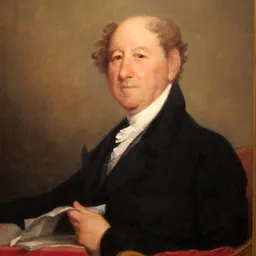
Later descendants included Benjamin Porter, who was Rufus' great-grandfather. Benjamin moved to West Boxford in 1716 and became the wealthiest man there. His descendants include ministers, doctors, lawyers, merchants, an army colonel, a ship's captain, a professor of mathematics and several legislative members. He was related by marriage to Henry Wadsworth Longfellow, the Honorable Rufus King (minister to England) and Harriet Porter Beecher, stepmother of Harriet Beecher Stowe. The family farm descended to Abigail and Tyler Porter, parents of Rufus Porter.
Porter was born in West Boxford, Massachusetts. He was one of six children. His father was Tyler Porter and his mother was Abigail Johnson. Rufus started school at age 4. The family farm was sold in 1801 and the family moved to Maine when Rufus was 9 years old. They lived in Pleasant Mountain Gore, now part of Denmark. At age 12 Rufus attended the Fryeburg Academy for six months.
In 1807, he was apprenticed to a shoemaker.
Marriage In 1815 Rufus married Eunice Twombly (–1848) of Portland, Maine, and they had ten children together, including: Stephen Twombly Porter (1816–1850); Rufus King Porter (1820–1903); Sylvanus Frederick Porter (1823–?); John Randolph Porter (1825–?); Edward Leroy Porter (1827–?); Nancy Adams Porter (1829–1877); Ellen Augusta Porter (1831–?); and Washington Irving Porter (1834–1836).
Travel By 1816, Porter was living in New Haven, Connecticut, where he had a dancing school and began painting portraits. In 1818 and 1819 he made a trading voyage to the Pacific Northwest and Hawaii, and in 1819 Porter had returned to painting. He traveled by coach and on foot, painting portraits throughout New York, New Jersey, Maryland, and Virginia. He became a prolific muralist between 1825 and 1845, decorating some 160 houses and inns in Connecticut, Massachusetts, Maine, New Hampshire, Vermont, and as far south as Virginia. From simple silhouettes to scenes of entire towns or harbors, Porter spread his art throughout New England. His murals were generally executed in a large scale on dry plaster walls by a combination of freehand painting and stenciling. Some murals were in full color, others in monochrome, with the foliage sometimes stamped in with a cork stopper instead of being painted with a brush. Often he would do portraits of the principal household members where he was doing the murals.
Second marriage In 1849, he married Emma Tallman Edgar (1820–?) of Roxbury, Massachusetts, and fathered an additional six children. All the children died in infancy except Rufus Frank Porter (1859–?), also known as Frank Rufus Porter.
Inventor During much of this time, and afterwards, Porter was a prolific inventor. His obituary described his "long career of usefulness as an inventor of turbine water wheels, windmills, flying ships, rotary engines, and sundry contrivances for abolishing as far as possible agricultural labor."
In 1845 he started a new weekly, Scientific American, but 10 months later sold it to Orson Desaix Munn and Alfred Ely Beach.
Airship In 1849 Porter planned to build an 800-foot steam-powered airship with accommodations for 50 to 100 passengers, aiming to convey miners to the California Gold Rush. He had already built and flown several scale models in Boston and New York. He advertised New York-to-California service, asking a $50 down payment for a $200 fare, and began building immediately. His first "aeroport" was 240 feet long; it was destroyed by a tornado. Later that year, he began a 700-foot version with new backers, but during a showing of the almost-complete dirigible on Thanksgiving Day, rowdy visitors tore the hydrogen bag and destroyed it. In 1854 his third attempt ended with technical troubles.
Personal life Porter proclaimed his Christian faith, as for example in the first issue of Scientific American:
First, then, let us, as rational creatures, be ever ready to acknowledge God as our Creator and daily Preserver; and that we are each of us individually dependant on his special care and good will towards us, in supporting the wonderful action of nature which constitutes our existence; and in preserving us from the casualties, to which our complicated and delicate structure is liable.
Death and legacy Porter died on August 13, 1884, at the home of his son, Rufus Frank Porter (1859-?), in West Haven, Connecticut.
Porter's obituary in the Scientific American described his remarkable life and "abnormally busy career", which had seen 21 American presidents take office. The magazine pronounced "he has gone to the grave leaving a name 'writ in water,' we still think that in the world of invention his name will be fully blazoned as a material benefactor to his fellow men... We may add in conclusion that although he has not in any sense attained the fame and eminence of Morse, a Howe, or Edison, Rufus Porter will live as one of the best and brightest examples of the versatility of American invention."
Writings 1825 A Select Collection of Valuable and Curious Arts, and Interesting Experiments 1849 Aerial Navigation: The Practicality of Traveling Pleasantly and Safely from New York to California in Three Days
Murals by Porter Birchwood Inn, Temple, New Hampshire Daniel Carr House, North Haverhill, New Hampshire Benjamin Cleaves House, Bridgton, Maine (Rufus Porter Museum) Eaton House, Bradford, New Hampshire Hancock Inn, Hancock, New Hampshire Kent House, Lyme, New Hampshire Prescott Homestead, Jaffrey, New Hampshire Reed Homestead, Townsend, Massachusetts Walter Russell House, Ashburnham, Massachusetts; part of the Cambridge Grant Historic District Mural House, Greene, Maine Damon Tavern, North Reading, Massachusetts The Joseph and Mary Kimball House, [Georgetown, Massachusetts]
Don’t just read it —
keep it.
Full-length biographies made to live with: read them, listen on the way to work, watch them tonight.
- E-book
- Audio
- Video
Instant download · yours to keep · every purchase keeps this site free
Important facts
People in Rufus Porter's life
Named in this biography and alive at the same time





Related people
Same field, nearest in time




Contemporaries
People whose lives overlapped Rufus Porter's


Frequently asked questions
Who was Rufus Porter?
American painter, inventor, and founder of Scientific American magazine (1792-1884)
When was Rufus Porter born?
Rufus Porter was born on 1 May 1792.
When did Rufus Porter die?
Rufus Porter died on 13 August 1884.
What was Rufus Porter's occupation?
Rufus Porter was a painter and artist.
What nationality was Rufus Porter?
Rufus Porter was American.
Sources & further reading
· DBpedia: Rufus Porter (painter)
Cite this page
APA: Biography.guide. (2026). Rufus Porter. https://biography.guide/rufus-porter-painter/
MLA: "Rufus Porter." Biography.guide, https://biography.guide/rufus-porter-painter/.
Chicago: "Rufus Porter." Biography.guide. https://biography.guide/rufus-porter-painter/.
Data last updated: 2026-09-20 · Spot an error? Report a correction.
Portrait: Wikimedia Commons · author & licence
Page generated 2026-09-27 04:58 UTC