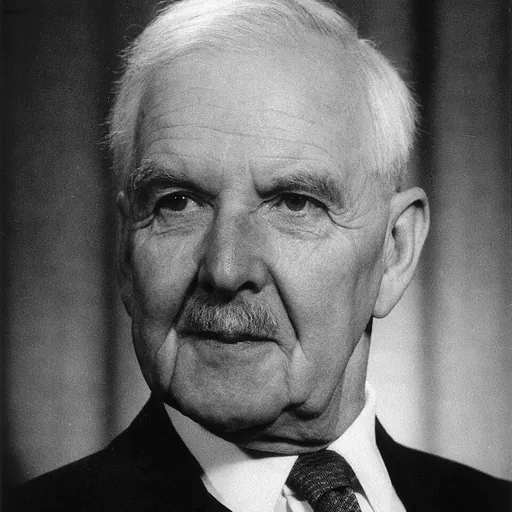
About Rudolph Peters
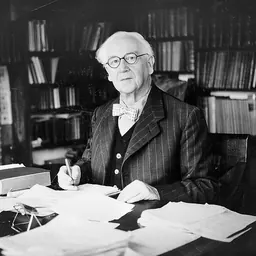
Lived 1889 – 1982 (aged 92). Rudolph Peters was a British military physician, biochemist and physician.
Sir Rudolph Albert Peters MC MID FRS
Life He was born in Kensington in London the son of Dr Albert E. D. R. Peters (1863–1945), a physician, and his wife, Agnes Malvina Watts (1867–1950).
He was educated at Wellington College, Berkshire, then studied medicine at King's College London and Gonville and Caius College, Cambridge.
In the First World War he served in the Royal Army Medical Corps as Medical Officer to the 60th Rifles. From 1917 he was attached to the chemical warfare section at Porton Down. After the war he returned to Cambridge University lecturing in biochemistry. In 1923 he was created professor of biochemistry at Oxford University.
After the Second World War, he researched pyruvate metabolism, focussing particularly on the toxicity of fluoroacetate. The fact that fluoroacetate in itself is far less toxic than its metabolite fluorocitrate led him to coin the term "lethal synthesis" which was the title of his Croonian Lecture of 1951.
Peters retired from academia in 1954 to establish, at age 65, a new department of biochemistry at the Agricultural Research Council Animal Physiology Unit at Babraham; he retired five years later.
He was elected FRS in 1935. In 1940, he received the Cameron Prize for Therapeutics of the University of Edinburgh. He was knighted by Queen Elizabeth II in 1952 and elected an Honorary Fellow of the Royal Society of Edinburgh in 1957.
He died in Cambridge on 29 January 1982, and was cremated there on 4 February.
Some of Sir Rudolph's papers are held at the Bodleian Library.
Family
Peters married Frances Williamina Vérel at the Queen's Park Free Church, Glasgow, on 7 November 1917. Frances was the daughter of Francis William Vérel, a photographic chemist, and had been at school in Westgate-on-Sea with Peters's sister, Gwendoline. They had two sons: Rudolph V (1918–2013), and Francis Raymond (1922–2023).
Don’t just read it —
keep it.
Full-length biographies made to live with: read them, listen on the way to work, watch them tonight.
- E-book
- Audio
- Video
Instant download · yours to keep · every purchase keeps this site free
Important facts
Related people
Same field, nearest in time


Contemporaries
People whose lives overlapped Rudolph Peters's




Frequently asked questions
Who was Rudolph Peters?
British biochemist
When was Rudolph Peters born?
Rudolph Peters was born on 13 April 1889 in Kensington.
When did Rudolph Peters die?
Rudolph Peters died on 29 January 1982 in Cambridge.
What was Rudolph Peters's occupation?
Rudolph Peters was a military physician, biochemist and physician.
What nationality was Rudolph Peters?
Rudolph Peters was British.
Sources & further reading
Cite this page
APA: Biography.guide. (2026). Rudolph Peters. https://biography.guide/rudolph-peters/
MLA: "Rudolph Peters." Biography.guide, https://biography.guide/rudolph-peters/.
Chicago: "Rudolph Peters." Biography.guide. https://biography.guide/rudolph-peters/.
Data last updated: 2026-09-24 · Spot an error? Report a correction.
Portrait: Wikimedia Commons · author & licence
Page generated 2026-09-27 05:08 UTC