
Rudolf Weigl
Polish biologist, physician, and inventor
About Rudolf Weigl
Lived 1883 – 1957 (aged 73). Rudolf Weigl was a Polish biologist, university teacher, physician and immunologist, known for Vaccine.
Rudolf Stefan Jan Weigl (2 September 1883 – 11 August 1957) was a Polish biologist, physician and inventor, known for creating the first effective vaccine against epidemic typhus. He was nominated for the Nobel Prize in Medicine each year between 1930 and 1934, and from 1936 to 1939.
Weigl worked during the Holocaust to save the lives of countless Jews by developing the vaccine for typhus and providing shelter to protect those suffering under the Nazi Germans in occupied Poland. For his contributions, he was named a Righteous Among the Nations in 2003.
Life
Weigl was born in Prerau, which at the time was part of the Austro-Hungarian Empire, to Austrian parents, of Austro-Moravian descent. When he was a child, his father died in a bicycle accident.
Later, the family moved to Lviv (Lwów in Polish, Lemberg in German and Yiddish), where in 1907 Weigl graduated from the biology department at the Lwów University, at which he had been a pupil of Professors Benedykt Dybowski (1833–1930) and J. Nusbaum–Hilarowicz (1859–1917). He then received his doctorate degrees in zoology, comparative anatomy, and histology. In 1919, he became a member of a military sanitary council in the Polish army.
During the Nazi German occupation of Poland in World War II, Weigl's research attracted the attention of the Nazis. Many of these people he hired assisted him in his typhus research and experiments with lice. Many of his Jewish associates primarily helped grow the lice and in return, they received food, protection, and doses of the vaccine when it was fully developed. His vaccines were smuggled into ghettos in Lwów and Warsaw, various concentration camps, and even certain Gestapo prisons. It was estimated that Weigl was able to save around 5,000 lives during the Nazis' reign by employing them in his Institute.
Vaccine development Prof. Rudolf Weigl's anti-typhus vaccine at POLIN Museum of the History of Polish Jews in Warsaw In 1930, following Charles Nicolle's 1909 discovery that lice were the vector of epidemic typhus, and following the work done on a vaccine for the closely related Rocky Mountain spotted fever, Weigl took the next step and developed a technique to produce a typhus vaccine by growing infected lice and crushing them into a vaccine paste. He discovered that a vaccine could be developed from lice stomachs infected with Rickettsia prowazeki, the causative agent of typhus in humans. He developed this first version of the vaccine in 1918 and began experimenting on guinea pigs and even human volunteers. He refined this technique over the years until 1933 when he performed large-scale testing to cultivate bacteria and experiment with the lice using a micro-infection strategy.
The method comprised four major steps: Growing healthy lice, for about 12 days; Injecting them with typhus; Growing them more, for 5 additional days; Extracting the lice's midguts and grinding them into a paste (which was the vaccine).
Growing lice meant feeding them blood, the more human the better. At first he tested his method on guinea pigs, but around 1933 he began large-scale testing on humans, feeding the lice human blood by letting them suck human legs through a screen. This could cause typhus during the latter phase, when the lice were infected. He alleviated this problem by vaccinating the human "injectees", which successfully protected them from death (though some did develop the disease). Weigl and his wife Zofia Weigl were some of the earliest lice feeders. He developed the disease, but recovered.
The first major application of his vaccine was conducted between 1936 and 1943 by Belgian missionaries in China. Soon, the vaccines were also administered in Africa. > The vaccine was dangerous to produce and hard to make on a large scale. Over time, other vaccines were developed that were less dangerous and more economical to produce, including the Cox vaccine developed on egg yolk.
Later years, death, and legacy Following the border changes in the aftermath of the war, Weigl moved to Kraków in southern Poland. He was appointed chair of the General Microbiology Institute at the Jagiellonian University, and later chair of biology in the medical faculty at the University of Poznań. He retired in 1951, but production of his vaccine continued for several years.
For Weigl's research and work with typhus at Lwów University, Weigl's Institute was created in the typhus research department. The institute features prominently in Andrzej Żuławski's 1971 film, The Third Part of the Night.
Awards and honors Weigl was continuously nominated for a Nobel Prize in the years 1930–1934 and 1936–1939.
On 2 September 2021, Google commemorated Weigl's 138th birthday with a Google Doodle.
Don’t just read it —
keep it.
Full-length biographies made to live with: read them, listen on the way to work, watch them tonight.
- E-book
- Audio
- Video
Instant download · yours to keep · every purchase keeps this site free
Important facts
Family & relationships
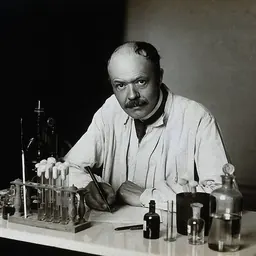
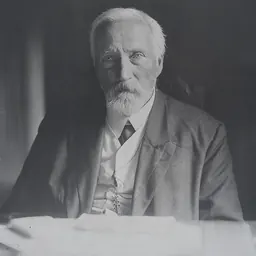
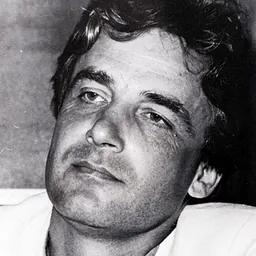
People in Rudolf Weigl's life
Named in this biography and alive at the same time
Related people
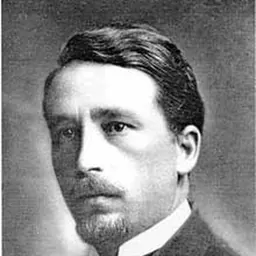
Same field, nearest in time




Contemporaries
People whose lives overlapped Rudolf Weigl's



Frequently asked questions
Who was Rudolf Weigl?
Polish biologist, physician, and inventor (1883-1957)
When was Rudolf Weigl born?
Rudolf Weigl was born on 2 September 1883 in Přerov.
When did Rudolf Weigl die?
Rudolf Weigl died on 11 August 1957 in Zakopane.
What was Rudolf Weigl's occupation?
Rudolf Weigl was a biologist, university teacher, physician and immunologist.
What was Rudolf Weigl known for?
Rudolf Weigl was known for Vaccine.
What nationality was Rudolf Weigl?
Rudolf Weigl was Polish.
Sources & further reading
Cite this page
APA: Biography.guide. (2026). Rudolf Weigl. https://biography.guide/rudolf-weigl/
MLA: "Rudolf Weigl." Biography.guide, https://biography.guide/rudolf-weigl/.
Chicago: "Rudolf Weigl." Biography.guide. https://biography.guide/rudolf-weigl/.
Data last updated: 2026-09-26 · Spot an error? Report a correction.
Page generated 2026-09-27 05:14 UTC