
About Rudolf Klug
Lived 1905 – 1944 (aged 38). Rudolf Klug was a pedagogue and resistance fighter.
Rudolf Klug (8 October 1905 – 28 March 1944) was a Hamburg school teacher. He became a member of the Communist Party in 1928 and suffered from growing levels of harassment at work. When the Nazi Party took power in Germany at the beginning of 1933 his problems greatly intensified: he had already been dismissed from one teaching post, and participated in (now illegal) resistance to the government.
During the war he was released from the concentration camp at Sachsenhausen and, in 1943, declared fit for military service and conscripted into the Army. A reluctant soldier, he was sent off to guard prisoners of war. After he helped a Soviet officer to escape by returning the man's gun he found himself before a military court which conferred a double death sentence on him. He was executed in northern Norway.
Life Klug was born into a Hamburg working-class family, the first of his parents' three recorded children. His father, Ernst Klug, had grown up far to the south in Vogtland where he had turned down the opportunity to train as a teacher, preferring an apprenticeship as a butcher because, as he put it, "a butcher can always get enough to eat". to "oppose the dismantling of social rights and achievements in education and the growing risk of fascism"|group="n" As a popular young teacher who was also a Communist Party activist Rudolf Klug generated mistrust at an increasingly jittery city hall, both among the Nazis and among the traditional conservatives. An investigation hearing was launched in May 1930 after he had been denounced for "creating squads of school children" to "fight against fascism in schools". The allegation concerned not the school where he worked but a nearby school in Rellinger Street (where he had never had any involvement). While the investigations triggered by the complaint were under way the party selected him as a candidate for the 1931 municipal elections and he was dismissed from the teaching service. Pupils and teachers at his own school in Telemann Street, supported by the governors, protested and the Social Democrat chairman of the governors Fritz Köhne succeeded in having him reinstated, but the supervisory school board nevertheless insisted that he be moved to another school, and asked the police to keep an eye on him. Klug's own work involved making deliveries by bicycle. In order to avoid drawing the interest of the authorities, the left-wing IOL, of which he had been a member earlier in the decade, had by now dissolved itself into a number of small and for most purposes isolated cells, but his delivery work nevertheless enabled Klug to keep in touch with political friends and teachers whom he had known in the IOL, as well as parents whom he had known when he was a teacher at the school in Telemann Street. And although his deliveries were officially only of coffee, he also took the opportunities presented to distribute illegal written materials.
Klug was probably subjected to a further arrest in 1935. In April 1937 he was one of around 100 political dissidents caught up in a Gestapo round-up. They were taken to the concentration camp at Sachsenhausen where Klug was held for three months. 1937 was also the year in which, after two years, his marriage to his wife Ilse broke up. On his release Klug returned to Hamburg, shortly afterwards resuming his illegal political activities and supporting himself with casual work. Later he found work as a credit control book keeper in Hamburg's Lurup quarter with an abrasives producer called Christiansen & Co. In 1938 he was interrogated at the city hall by the Gestapo who invited him to tell them about the illegal activities of teachers.
Participating in a political discussion group that masqueraded as an "emigrants' group", Rudolf Klug got to know the book seller Margaretha Kubicki. They married during 1940 and moved into an address at Barmbeker Street 93. Their daughter Anja was born on 18 April 1942.
In 1940 a communist resistance group coalesced in Hamburg around Bernhard Bästlein, Franz Jacob and Robert Abshagen. Rudolf Klug joined them. By the end of 1944 all four men would have been executed. In the world beyond Hamburg, the German invasion of Poland in September 1939 had triggered a wider war across Europe. Rudolf Klug's criminal record made him officially "unworthy for military service". According to his sister he was persuaded by comrades in the Bästlein-Jacob-Abshagen Group to apply to have his "fitness for military service" restored in order that he might join the army and create political opposition to the Nazis inside it. His wife always insisted that the application in question did not come from Klug at all. Either way, he was conscripted, not into the regular army but into a Landsturm'' (regional militia) . Here he was trusted to guard prisoners of war.
Still guarding prisoners of war, Klug's final posting was to Narvik in the north of occupied Norway. Here he made contact with prisoners and with a group of Norwegian resistance movement activists. In the context of preparations for the escape of a group of inmates from the prison camp, Klug returned a Soviet officer's pistol that had been confiscated and was being kept in the office. The absence of the pistol was spotted and on 26 February 1944 Rudolf Klug was detained. He managed to escape from his captors, but was betrayed by members of his unit and re-arrested. On 15 March a military court gave him a double death sentence, finding him guilty of both treason during war and of desertion. On 28 March 1944 the sentence was carried out when Rudolf Klug was shot dead just outside Narvik, at Beisfjord.
The military court notified the widow that Klug had been buried "on the spot." The court ordered Margarete not to publish any death notice or obituary about her husband.
Don’t just read it —
keep it.
Full-length biographies made to live with: read them, listen on the way to work, watch them tonight.
- E-book
- Audio
- Video
Instant download · yours to keep · every purchase keeps this site free
Important facts
People in Rudolf Klug's life
Named in this biography and alive at the same time
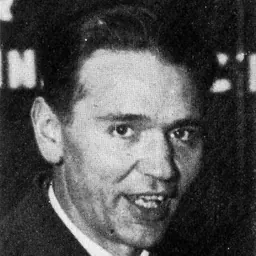
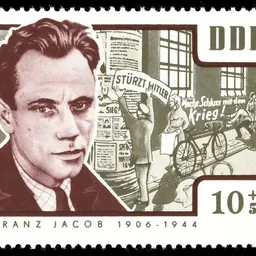

Related people
Same field, nearest in time


Contemporaries
People whose lives overlapped Rudolf Klug's





Frequently asked questions
Who was Rudolf Klug?
German educationist
When was Rudolf Klug born?
Rudolf Klug was born on 8 October 1905 in Hamburg.
When did Rudolf Klug die?
Rudolf Klug died on 28 March 1944 in Beisfjord.
What was Rudolf Klug's occupation?
Rudolf Klug was a pedagogue and resistance fighter.
What nationality was Rudolf Klug?
Rudolf Klug's recorded nationality: German Reich.
Sources & further reading
Cite this page
APA: Biography.guide. (2026). Rudolf Klug. https://biography.guide/rudolf-klug/
MLA: "Rudolf Klug." Biography.guide, https://biography.guide/rudolf-klug/.
Chicago: "Rudolf Klug." Biography.guide. https://biography.guide/rudolf-klug/.
Data last updated: 2026-09-22 · Spot an error? Report a correction.
Page generated 2026-09-27 04:59 UTC