
About Rubén Salazar
Lived 1928 – 1970 (aged 42). Rubén Salazar was a Mexican and American journalist.
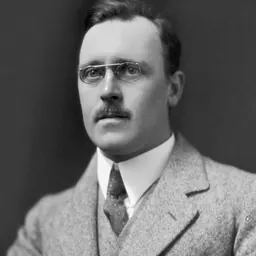
Ruben Salazar (March 3, 1928 – August 29, 1970) was a civil rights activist and a reporter for the Los Angeles Times. He was the first Mexican journalist from mainstream media to cover the Chicano community.
Salazar was killed during the National Chicano Moratorium March against the Vietnam War on August 29, 1970, in East Los Angeles, California. During the march, Los Angeles County Sheriff's deputy Thomas Wilson struck and immediately killed Salazar with a tear-gas projectile. No criminal charge was filed, but Salazar's family reached an out-of-court financial settlement with the county. Salazar began his U.S. naturalization process on October 15, 1947, when he submitted his application for a certificate of arrival and preliminary form for a declaration of intention of citizenship.
Career
After high school, he served in the U.S. Army for two years. Salazar attended Texas Western College, graduating in 1954 with a degree in journalism. He obtained a job as an investigative journalist at the now-defunct El Paso Herald-Post; at one point he posed as a vagrant to get arrested while he investigated the poor treatment of prisoners in the El Paso jail. After his tenure at the Herald-Post, Salazar worked at several California newspapers, including the Santa Rosa Press Democrat. Moving south from Santa Ana, California to be a part of the San Francisco News in 1956 to 1957 as a reporter.
Salazar was a news reporter and columnist for the Los Angeles Times from 1959 to 1970. During his career, Salazar became one of the most prominent figures within the Chicano movement. He was a foreign correspondent in his early years at the Times, covering the 1965 United States occupation of the Dominican Republic, the Vietnam War, and the Tlatelolco massacre (the latter while serving as the Times''' bureau chief in Mexico City).
When Salazar returned to the US in 1968, he focused on the Mexican-American community and the Chicano movement, writing about East Los Angeles, an area largely ignored by the media except for coverage of crimes. He became the first Chicano journalist to cover the ethnic group while working in a large general circulation publication. Many of his pieces were critical of the Los Angeles government's treatment of Chicanos, particularly after he came into conflict with police during the East L.A. walkouts.
In January 1970, Salazar left the Times to become news director for the Spanish language television station KMEX in Los Angeles. At KMEX, he investigated allegations of police officers' planting evidence to implicate Chicanos and the July 1970 police shooting of two unarmed Mexican nationals. According to Salazar, he was visited by undercover LAPD detectives who warned him that his investigations were "dangerous in the minds of barrio people."
Due to his support of the Chicano movement, Salazar became an FBI target and was the subject of an FBI internal file. He was noted as being cooperative during his interactions with the FBI during the investigation of Stokely Carmichael, but he had drawn the FBI's attention during the Korean War when he began corresponding with a white female pacifist regarding the loss of his application for US citizenship by the army. During his Carmichael interview, he is noted as saying that he could not be a witness to the speech that FBI was referencing as he was not present to which he was then asked to obtain a video of the speech to present to the FBI. While Salazar accepted, he did so under the notion that he would publicize the fact that the FBI was looking for the tape. As they feared the civil unrest this could cause if publicized, the FBI rescinded their request. Due to the fact that the FBI and the LAPD correlated civil unrest with communism, and Salazar reported at many events where civil unrest occurred, he was viewed in his files as a communist. LAPD also held files on Salazar specifically due to an article that Salazar wrote about the Chief of Police, Chief Davis, wherein he reported the fact that Davis referred to Mexican "tyranny and dictatorship". Salazar had taken a break from covering the march and was resting in a nearby bar when a tear gas round fired by police through a curtained doorway struck him in the head, killing him. On February 22, 2011, the Office of Independent Review released a report of its examination of the Los Angeles Sheriff's Department records on the death of Salazar. After reviewing thousands of documents, the civilian watchdog agency concluded there is no evidence that sheriff's deputies intentionally targeted Salazar or had him under surveillance.
Deputy Wilson, after being identified as responsible for Salazar's death, stated that "he did not know, and under the circumstances was not concerned about, what kind of tear gas projectile he fired". Salazar's death captured the attention of many activists within the Chicano movement as his death occurred at the hands of those whom the movement believed were responsible for the marginalization of Chicano communities. At meetings with the District Attorney about Salazar's death, many Chicanos complained about police brutality. At the time, this was the highest settlement recorded in Los Angeles county history.
He was survived by his wife, Sally (née Robare), and their daughters, Lisa Salazar Johnson and Stephanie Salazar Cook, and son, John Salazar.
Legacy and honors A plaque honoring Salazar was mounted in the Globe lobby of the former Los Angeles Times building in downtown Los Angeles. Salazar was a two-time winner of the Greater Los Angeles Press Club Award and in 1965 was presented with an award from the Equal Opportunity Foundation. In 1971, Salazar was posthumously awarded a special Robert F. Kennedy Journalism Award. After the controversy related to his death had subsided, Laguna Park, site of the 1970 rally and subsequent police action, was renamed Salazar Park in his honor. Salazar is depicted under the name "Roland Zanzibar" in Oscar Zeta Acosta's 1973 novel The Revolt of the Cockroach People. In 1979, Sonoma State University renamed its library in honor of Salazar. Subsequently, in 2002 the library moved into a new building, and the former library building was renamed Salazar Hall. In 1996, the Smithsonian American Art Museum in Washington, D.C., acquired the painting Death of Rubén Salazar, a 1986 oil on canvas by artist Frank Romero. His death was commemorated in a corrido by Lalo Guerrero titled "El 29 de Agosto". A classroom building at California State University, Los Angeles (Cal State LA) was named for him in 1976. On October 12, 2006, Salazar Hall was rededicated with the unveiling of his portrait by John Martin. On October 5, 2007, the United States Postal Service announced that it would honor five journalists of the 20th century with first-class rate postage stamps, to be issued on Tuesday, April 22, 2008: Martha Gellhorn, John Hersey, George Polk, Ruben Salazar, and Eric Sevareid. A documentary about Salazar by Phillip Rodriguez titled Ruben Salazar: Man in the Middle was broadcast on PBS television on April 29, 2014.
Don’t just read it —
keep it.
Full-length biographies made to live with: read them, listen on the way to work, watch them tonight.
- E-book
- Audio
- Video
Instant download · yours to keep · every purchase keeps this site free
Important facts
People in Rubén Salazar's life
Named in this biography and alive at the same time





Related people
Same field, nearest in time

Contemporaries
People whose lives overlapped Rubén Salazar's

Frequently asked questions
Who was Rubén Salazar?
American journalist (1928–1970)
When was Rubén Salazar born?
Rubén Salazar was born on 3 March 1928 in Ciudad Juárez.
When did Rubén Salazar die?
Rubén Salazar died on 29 August 1970 in Los Angeles.
What was Rubén Salazar's occupation?
Rubén Salazar was a journalist.
What nationality was Rubén Salazar?
Rubén Salazar was Mexican and American.
Sources & further reading
Cite this page
APA: Biography.guide. (2026). Rubén Salazar. https://biography.guide/ruben-salazar/
MLA: "Rubén Salazar." Biography.guide, https://biography.guide/ruben-salazar/.
Chicago: "Rubén Salazar." Biography.guide. https://biography.guide/ruben-salazar/.
Data last updated: 2026-09-22 · Spot an error? Report a correction.
Page generated 2026-09-27 05:31 UTC