
About Rubén González
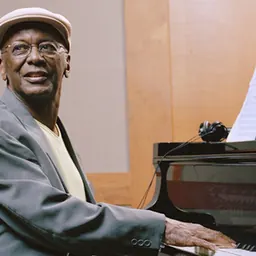
Lived 1919 – 2003 (aged 84). Rubén González was a Cuban pianist, composer and musician.
Rubén González Fontanills (26 May 1919 – 8 December 2003) was a Cuban pianist. Together with Lilí Martínez and Peruchín he is said to have "forged the style of modern Cuban piano playing in the 1940s".
Between the 1940s and his retirement in the 1980s, he played with Cuba's most successful acts, including Paulina Álvarez, Arsenio Rodríguez, Orquesta América del 55, Orquesta Riverside and Enrique Jorrín. In the 1990s, he came out of retirement to play in the revival ensembles Afro-Cuban All Stars and Buena Vista Social Club, also recording solo material and performing live until 2002.
Biography Early life and career González was born in Santa Clara, Cuba, on 26 May 1919. His family moved to the small village of Encrucijada when he was 6 years old. He took up the piano at age seven and graduated from the Cienfuegos Conservatory at age 15.
He grew up wanting to be a doctor and studied medicine, thinking music would remain a hobby he could pursue by night. However, he abandoned his studies after four years because music was "in his blood" and also because of all the encouragement he received from people around him. Thus, after graduating from high school, he began playing with groups in Cienfuegos and around the country. Rodríguez advised him to "just play your own style, whatever it is, but don't imitate anyone". Although González's first confirmed recordings with Arsenio's conjunto are dated to 5 July 1945, earlier recordings might feature him, since Panacea's last confirmed recording session took place on 16 November 1943; these recordings were all released by RCA Victor.
In 1945, he left the conjunto—and was replaced by Lilí Martínez—to go to Panama with the ensemble Estrellas Negras, comprising mostly ex-Rodríguez musicians. With the Estrellas Negras, González toured most of South America—from Mexico City to Buenos Aires—and, on his return to Cuba, he joined the Conjunto Kubavana directed by Alberto Ruiz.
Between 1948 and the mid-1950s, González played with Ernesto Grenet and Senén Suárez at the Cabaret Tropicana. In 1954, he backed Rolando Laserie at the Cabaret San Souci.
In 1975, he recorded his eponymous solo album backed by members of Jorrín's orchestra; the album was released by Areíto as LD-3582. In 1979, he recorded the album Los héroes as part of the Estrellas de Areito all-star ensemble. After Jorrín's death in 1987, González briefly took over the role of bandleader, but retired soon after. The resulting album, Son Inconcluso, featured a full band including bassist Orlando "Cachaíto" López and Arturo "Alambre dulce" Harvey (ex-tresero with Conjunto Chappottín), among others, and was released in 1999 by EGREM.
In 1995, Nick Gold (head of World Circuit Records) and Juan de Marcos González (director and tres player of Sierra Maestra) decided to record a series of descarga sessions featuring classic Cuban musicians, including Rubén González on piano, together with African virtuosos Toumani Diabate (kora player) and Djelimady Tounkara (guitarist). By early 1996, the Cuban musicians had already been selected and the African musicians were about to leave for Cuba, but could not travel because of difficulties in obtaining visas. Gold then invited Ry Cooder and his son Joachim to participate in the sessions; Ry would play guitar and Joachim African percussion.
The sessions, all of which featured Rubén González on piano, took place in March 1996 in Havana's EGREM studios. The first set of recordings was meant to revive the 1950s Cuban big band sound. Cooder also played slide guitar on Lilí Martínez's famous son "Alto Songo". Here Rubén González on piano and Cachaíto on bass accompanied singers Compay Segundo, Ibrahim Ferrer, Omara Portuondo and Eliades Ochoa. Cooder played guitar on all but one track. All three albums were released on Nick Gold's World Circuit Records in 1997. In early 1998, Wim Wenders filmed a documentary entitled Buena Vista Social Club, and González and his colleagues became famous worldwide.
Later years and death
Between 1997 and 2000, González recorded his next album, Chanchullo, at EGREM Studios in Havana and Angel Recording Studios in London. Some recordings he made in September 1999 at EGREM studios were released by EGREM as Rubén González and Friends in 2000. His last public appearances took place in Mexico and Cuba in 2002.
In the morning of 8 December 2003, Rubén González died at his home in Havana after a long illness which had prevented him from walking and eventually led to renal and respiratory problems. He was survived by his wife, Eneida Lima,
Style and legacy
Rubén González is considered an innovator of the son cubano piano style. Apart from the son, González had a profound knowledge of the danzón and his improvisations are characterized by harmonic subtleties.
Introducing...Rubén González (World Circuit, 1997) Chanchullo (World Circuit, 2000)
As sideman With Noneto Cubano de Jazz Jazz Cuba (Areito/Palma, 1964)
With Estrellas de Areito Los héroes (Areito, 1979)
With Afro-Cuban All Stars A Toda Cuba le Gusta (World Circuit, 1997)
With Buena Vista Social Club Buena Vista Social Club (World Circuit, 1997) Buena Vista Social Club at Carnegie Hall (World Circuit, 2008) Lost and Found (World Circuit, 2015)
With Raúl Planas Son Inconcluso (EGREM, 1999) – Recorded in 1994; Dos Grandes – Con la Orquesta Jorrín (EGREM, 2000) – Recorded in 1989
Compilations Rubén González and Friends (EGREM, 2000) Todo sentimiento (Yemayá, 2004) The Essential Rubén González (Manteca, 2006)
Filmography With Buena Vista Social Club Buena Vista Social Club DVD (Road Movies/Sony VCD0040, 1999) – Directed by Wim Wenders
With Afro-Cuban All Stars Afro-Cuban Legends DVD (Warner Music Vision 8573-88531-2, 2001) – Directed by Tony Knox
Don’t just read it —
keep it.
Full-length biographies made to live with: read them, listen on the way to work, watch them tonight.
- E-book
- Audio
- Video
Instant download · yours to keep · every purchase keeps this site free
Important facts
People in Rubén González's life
Named in this biography and alive at the same time


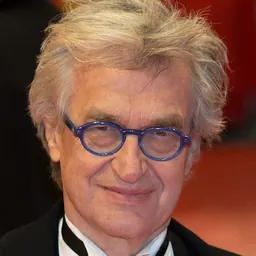


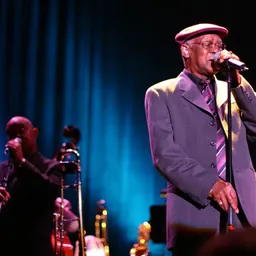
Related people
Same field, nearest in time

Contemporaries
People whose lives overlapped Rubén González's


Frequently asked questions
Who was Rubén González?
Cuban pianist (1919-2003)
When was Rubén González born?
Rubén González was born on 26 May 1919 in Santa Clara.
When did Rubén González die?
Rubén González died on 8 December 2003 in Havana.
What was Rubén González's occupation?
Rubén González was a pianist, composer and musician.
What nationality was Rubén González?
Rubén González was Cuban.
Sources & further reading
· DBpedia: Rubén González (pianist)
Cite this page
APA: Biography.guide. (2026). Rubén González. https://biography.guide/ruben-gonzalez-pianist/
MLA: "Rubén González." Biography.guide, https://biography.guide/ruben-gonzalez-pianist/.
Chicago: "Rubén González." Biography.guide. https://biography.guide/ruben-gonzalez-pianist/.
Data last updated: 2026-09-20 · Spot an error? Report a correction.
Page generated 2026-09-27 05:13 UTC