
About Roy Heath
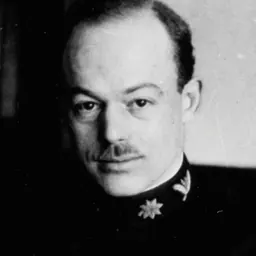
Lived 1926 – 2008 (aged 81). Roy Heath was a Guyanese novelist, lawyer and writer.
Writing
Although Heath left British Guiana in 1951, "it never left him. He only ever wrote about his mother's land, never his adopted home." However, "Although [Heath's] fiction has fed richly upon his obsessive and meticulous memories of Georgetown and the coastland, his novels cannot be called celebrations of the place and its people. They seem to reveal instead the failures and shameful inadequacies of individual and community."
His short story "Miss Mabel's Burial" was published in 1972 in the Guyanese journal Kaie; another story, "The Wind and the Sun", appeared in the Jamaican journal Savacou two years later.
Heath's first novel, A Man Come Home, was published in 1974 by Longman, where Anne Walmsley was Caribbean publisher, with a limited focus on the local educational market. When Heath completed his next book, Walmsley "urged him to look elsewhere for a firm that could bring his work the acclaim, the wide sales, that it deserved. Who better than the then fledgling Allison and Busby?" Taken on by A&B, with Margaret Busby as editor, Heath's next novel, published in 1978, was The Murderer, which that same year won the Guardian Fiction Prize and was described by The Observer as "mysteriously authentic, and unique as a work of art". The Murderer was also listed in 1999's The Modern Library: 200 Best Novels in English since 1950 by Carmen Callil and Colm Tóibín.
He also wrote non-fiction, including Shadows Round the Moon: Caribbean Memoirs (1990), and plays – his Inez Combray was produced in Georgetown, Guyana, in 1972, in which year he won the Guyana Theatre Guild Award. in Georgetown. In the lecture Heath stated: "The price the artist pays for his egotism is a high one. On one level egotism obliges him to create, while the same egotism threatens to destroy him. Success not only goes to his head, it remains there, creating demands he cannot hope to satisfy. I am acutely aware of all of this and therefore try to shun gratuitous publicity."
In 1989 he was awarded the Guyana Prize for Literature for his novel The Shadow Bride, and about which Publishers Weekly said: "Heath's modest, unpretentious style undergirds a powerful realism as his subtle analysis of family conflicts builds to a tragic and moving climax."
Reception Heath's writings have been widely acclaimed and he has been called "truly one of the most brilliant story tellers ever", with reviewers at different times comparing his work to that of such great writers as D. H. Lawrence, R. K. Narayan, Dostoevsky, Tolstoy, Graham Greene, Joseph Conrad, V. S. Naipaul and others. Described by Salman Rushdie as "a beautiful writer" and by Edward Blishen as "simply one of the most astonishingly good novelists of our time", Heath might have been better known outside literary circles had he not eschewed personal publicity, believing that his work should speak for itself.
The Murderer (1978)
Winner of the Guardian Fiction Prize in 1978, The Murderer was well reviewed on first publication and later reissues, being described by The Observer as "mysteriously authentic, and unique as a work of art" and by Publishers Weekly as "an impressive study of a man's descent into paranoia and madness." Wilson Harris in World Literature Written in English said: "What is impressive about The Murderer is the execution of a style that truncates emotion."
In May 2022, The Murderer was reissued in the UK as a Penguin Classic, and also was reprinted in the United States by McNally Editions. Other praise for the novel has been given by Lemn Sissay ("Guyanese authors are a radiant constellation, and Roy Heath stands rightfully among them. His unique style stands out from others of his time, and ours"), Salman Rushdie ("A beautiful writer and an unforgettable book"), and Colm Tóibín ("A masterpiece").
The Armstrong Trilogy – From the Heat of the Day (1979), One Generation (1980), Genetha (1981) "A spare, bleak saga of two generations in the life of a Guyanese family struggling for respectability but unable to snatch any but the most fleeting moments of happiness. ... Like the early D.H. Lawrence, Heath endows the familiar trials of this family with an elemental power, as if each were happening for the first time. The result is harrowing in its simplicity and cumulative force." (Kirkus Reviews)
"Mr. Heath is a gentle social satirist with a concise, probing style; his prose is filled with ironies, both overt and subtle.... Roy Heath's solid devotion to character, plot and emotion, to the minutiae of daily life and its buried tragedies, is not post-modern or even modernist. It is impossible, despite his work's affinities to Dostoyevsky and Hardy and the Joyce of 'Dubliners,' to put a date on it: the post-colonial world has its own unique time lines. To call this author old-fashioned, however, is nothing but praise." (The New York Times)
Kwaku; or, the Man Who Could Not Keep His Mouth Shut (1982) "Heath is a master of droll, understated comedy; his affectionate empathy with his characters is never for a moment compromised by condescension. He's a somewhat flintier R.K. Narayan, and there's more than whiff of Kipling in his avuncular fascination with scramblers and hustlers. A wonderful novel, which stands impressively both on its own and in tandem with its equally irresistible sequel. There's no longer any doubt that Heath is one of the world's best writers." (Kirkus Reviews)
"Kwaku comes from a long line of literary buffoons who manage to triumph over the intelligent people around them. The language Mr. Heath employs to describe this process is luxurious and densely baroque in places, sweetly comic in others. The hero's clowning conceals an essential wisdom and goodness. In the end, he is unable to become as hardened and corrupt as the people he tries so desperately to emulate, and in this lies his greatest success." (Mark Childress, The New York Times)
Orealla (1984) "...this novel perhaps owes as much to Wilson Harris as to Mittelholzer, contrasting as it does the communal, spiritual and moral values of traditional Amerindian life" (Stewart Brown, Kyk-over-Al)
"Heath's novels are so imbued with local sights, sounds, smells, speech and unique features of the landscape that they offer rare and penetrating insight into the history and culture of twentieth century Guyana." (Frank Birbalsingh, Indo-Caribbean World)
The Shadow Bride (1988) "The Guyanese-born Heath ... surpasses himself with this ambitious, vividly written, psychologically rich chronicle—set in his own colorfully multiracial native country—of compromised ambition and family conflict. ... Heath's brilliant novel—also distinguished for its flexible and lyrical prose, expert handling of its several native populations, varieties of pidgin English, and memorable use of figurative language—was shortlisted for the Booker Prize. It's hard to believe it didn't win." (Kirkus Reviews)
"Heath's modest, unpretentious style undergirds a powerful realism as his subtle analysis of family conflicts builds to a tragic and moving climax." (Publishers Weekly)
"With a fine ear for comic dialogue and an eye for the ironies of clashing personalities ... Heath ably steers his charming ship of fools and knaves through a sea of picaresque corruption to a generous-hearted conclusion." (Publishers Weekly)
Shadows Round the Moon (1990) "In his memoir-novel Shadows Round the Moon Heath offers reminiscences of colonial life and Caribbean culture. His reproductions of Guyanese dialect, as well as his descriptions of the Creole (black), Hindu, and Muslim communities are noteworthy." (Raymond Williams)
Don’t just read it —
keep it.
Full-length biographies made to live with: read them, listen on the way to work, watch them tonight.
- E-book
- Audio
- Video
Instant download · yours to keep · every purchase keeps this site free
Important facts
People in Roy Heath's life
Named in this biography and alive at the same time







Related people
Same field, nearest in time





Contemporaries
People whose lives overlapped Roy Heath's

Frequently asked questions
Who was Roy Heath?
Guyanese writer (1926-2008)
When was Roy Heath born?
Roy Heath was born on 13 August 1926 in Georgetown.
When did Roy Heath die?
Roy Heath died on 14 May 2008 in London.
What was Roy Heath's occupation?
Roy Heath was a novelist, lawyer and writer.
What nationality was Roy Heath?
Roy Heath was Guyanese.
Sources & further reading
Cite this page
APA: Biography.guide. (2026). Roy Heath. https://biography.guide/roy-heath/
MLA: "Roy Heath." Biography.guide, https://biography.guide/roy-heath/.
Chicago: "Roy Heath." Biography.guide. https://biography.guide/roy-heath/.
Data last updated: 2026-09-20 · Spot an error? Report a correction.
Page generated 2026-09-27 05:22 UTC