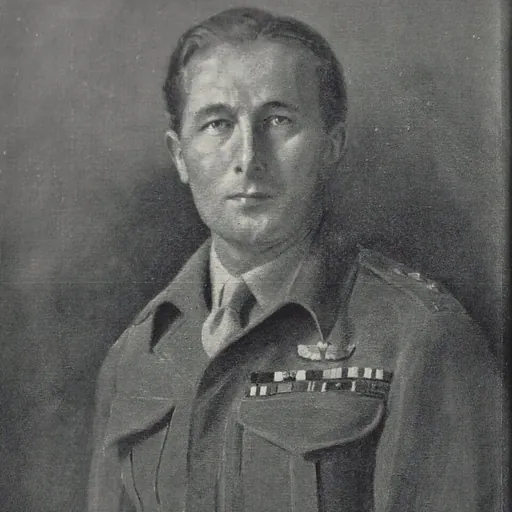
Roy Farran
British-Canadian politician and soldier
About Roy Farran
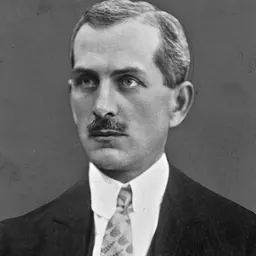
Lived 1921 – 2006 (aged 85). Roy Farran was a Canadian journalist, politician, university teacher, soldier and military officer.
Major Roy Alexander Farran (2 January 1921 – 2 June 2006), also known as Paddy McGinty, was a British-Canadian soldier, politician, farmer, author and journalist. He was highly decorated for his exploits with the Special Air Service (SAS) during the Second World War. Farran became widely known after his court-martial on a charge of beating an unarmed 17-year-old member of the Jewish underground militant group Lehi to death during his command of an undercover Palestine Police special squad. After his brother was killed in a revenge attack, Farran emigrated to Canada where he forged a successful business and political career, holding a seat in the Legislative Assembly of Alberta from 1971 to 1979 sitting with the Progressive Conservative caucus. He served as a cabinet minister in the government of Premier Peter Lougheed during that period.
Early life Farran was born on 2 January 1921, either in Purley, Surrey, or in Shimla, India, to a family of Irish Roman Catholics (the Ó Faracháin were from County Donegal). His father was a Warrant Officer in the Royal Air Force. He spent most of his early life in India and was educated at the Bishop Cotton School in Shimla before returning to Britain in the mid-1930s, where he enlisted in the Inns of Court Regiment and attended the Royal Military College, Sandhurst. After graduating from Sandhurst, Farran was commissioned as a second lieutenant into the 3rd Carabiniers (Prince of Wales's Dragoon Guards) and sent to the 51st Training Regiment.
Military career
Second World War
North Africa and Crete Farran was posted on attachment to the 3rd The King's Own Hussars, which was serving in the North African Campaign at the time, and joined the regiment just in time for the beginning of Operation Compass. This was a British offensive against Italian forces in North Africa, which began in December 1940, and participated in the Battle of Sidi Barrani. In the aftermath of one battle, he was detailed to supervise a burial party and came across a damaged Italian tank, its entire crew dead; unable to recover the bodies, Farran set the tank's petrol tank on fire. After Operation Compass came to an end, the Hussars were transferred to the island of Crete, to reinforce the British and Commonwealth forces that were stationed there after their retreat from Greece. On 21 May, the 10th Infantry Brigade launched a successful assault on Cemetery Hill, in which Farran participated. German forces were eventually able to break through the British and Commonwealth positions around Galatas, and Farran was part of a counter-attack in an attempt to retake the village. He protested about the unsuitability of his light tanks for the task but was told that no heavy tanks were left. Farran later wrote of his guilt at allowing the dangerous lead position to be taken by a subordinate -"I did not care for orders when it suited me, but this time I had chosen to obey them because I knew that I would be killed if I did not. I should have been in that leading tank. Instead, there was Skedgewell dead and his pretty young wife waiting at home. I felt as if I had murdered him."
On 3 October, the Allies made a seaborne landing at the town of Termoli, with the aim of outflanking the Axis positions in the area and thereby aid the northwards advance of the Eighth Army and the United States Fifth Army. The 1st Special Service Brigade formed part of the amphibious landings, and attached to the Brigade were several Special Air Service units, including 1st Special Air Service Regiment, recently renamed 1st Special Raiding Squadron. Farran, with a detachment of 20 men from 'D' Squadron of 2 SAS, came ashore with the rest of 1 SRS with orders to create a base for future raids behind enemy lines. The seaborne landings soon became stalemated against fierce Axis resistance, and Farran and his men joined the rest of 1 SRS in an attempt to repel a German counterattack supported by armour. Positioned on a ridge with a light mortar and six Bren light machine guns, and later several 6 pounder anti-tank guns, Farran and his men were able to help repel the attack. The Axis forces launched several more assaults on the Allied positions, which Farran and his men also helped to repulse, before finally retreating from the area. During the closing days of October, Farran commanded four parties of troops from 2 SAS who were landed by motor torpedo boat near the city of Ancona, and were able to destroy 17 sections of the railway that linked Ancona and Pescara, as well as laying mines on the main road between the two towns. After being successfully extracted Farran and the rest of 2 SAS spent another four months in Italy, before returning to Britain in early 1944; around this time Farran received another Bar to his Military Cross for his successful actions around Pescara and Ancona. Ultimately, Transfigure did not take place, as Allied ground forces advanced too quickly during the breakout for the airborne troops to be used effectively.
Operation Wallace
However, on 19 August, Farran landed with 60 men and 20 jeeps at Rennes airfield, which was now under Allied control, with orders to begin Operation Wallace. His jeeps were to advance some behind German lines and link up with 50 SAS troopers who had previously established a base camp near Châtillon, to the north of the city of Dijon. This was one of a number of bases set up by SAS patrols to attack retreating German troops and lines of communications. Under the command of Captain Grant-Hibbert, the troopers had spent the three weeks prior to Farran's arrival ambushing German convoys and blowing up a stretch of railway between Dijon and Langres.
The journey to Grant-Hibbert's position took Farran and his men four days; the first 50 miles were uneventful, as local French resistance fighters were able to help the SAS troopers avoid German positions. To increase the chances of not being discovered, Farran split the jeeps into three groups, and ordered them to maintain a distance of 30 minutes and avoid all German resistance; unfortunately the first group disobeyed the orders and drove through the village of Mailly-le-Chateau, occupied by a German garrison. Although the group made it through the village, losing a jeep in the process, Farran and the next group were ambushed and came under fire, forcing his group and the following one to divert south to the Foret de St Jean, rendezvousing with the first group. The same process took place on the following day, but once again the leading group encountered German troops and suffered heavy losses, only the commander surviving and escaping; they were unable to warn the other two groups, which were also attacked. Farran and his men were able to skirt the Germans, but the third group were all but destroyed, with only a few surviving. The survivors retreated back to Paris, and eventually joined Farran by parachute insertion at a later date.
Now left with only seven of his original jeeps, Farran pressed on, the remainder of the troopers strafing a passing goods train, puncturing the boiler on its engine and forcing it to come to a halt. Eventually they linked up with Grant-Hibbert's men after one final encounter during their journey, assaulting a German radar station and causing the German garrison to flee; prisoners informed the SAS troopers that they believed the jeeps to be the advance guard of General George S. Patton's United States Third Army. Farran took command of the combined group, which consisted of a composite squadron of 60 troopers, 10 jeeps and a civilian truck, and ordered it to move to another base to avoid further German scrutiny. The squadron roamed around until the end of August, assaulting German troop convoys and facilities, and then split into three groups to maximise the area they could cover and the damage that could be dealt to the German forces. Throughout their entire time behind German lines they were supplied by the Royal Air Force in 36 sorties, which supplied the SAS with 12 new jeeps and 36 supply panniers. Operation Wallace came to an end on 17 September, when the groups linked up with advance elements of the Seventh United States Army. During the month they had been active, Farran and his men had caused more than 500 German casualties, and destroyed some 95 enemy vehicles and more than 100,000 gallons of petrol. 17 SAS troopers had been lost, including one in a parachuting accident, as well as 16 jeeps. After linking up with the American forces, Farran sent the squadron back to Paris and granted it a week's leave in the capital, despite it officially being out of bounds to all British troops. As a result of these actions, Farran was awarded a Distinguished Service Order, which unusually was awarded under the pseudonym of 'Patrick McGinty'; Farran had used the name since his escape from German captivity in 1941, and claimed that the name was a reference to an Irish song. These operations were small in scale, however, and Farran began to devise a plan for deploying a larger formation; it would be deployed behind German lines, but still be close enough to 15th Army Group to aid Allied ground forces in their own operations. He focused his planning on the three departments of what is now Emilia Romagna: Parma, Reggio Emilia, and Modena. Italian partisan brigades operated in each department, controlled by a headquarters or Comando Unico, and supported by an Allied liaison officer who supervised supply drops and encouraged them to fight the German forces in their area. The only department with a liaison officer ready to accept the arrival of SAS forces was Reggio Emilia, which suited Farran's plan well as the forward-most point of 15th Army Group was only from the department.
Farran wanted to command the operation, known as Tombola, himself, but was forbidden by staff officers at 15th Army Group's headquarters. He did, however, get permission to accompany the transport aircraft the SAS troopers used to parachute into the area. When the operation began on 4 March, Farran "accidentally" fell out of the aircraft from which he was watching the parachute drop, although he was fortunate enough to have a parachute on at the time and his personal kit with him. Although this was agreed to, Farran was not enamoured with the state of the partisans when he first inspected them, stating that "nearly all of them had some physical defect." To improve their fitness and training, Farran arranged for several instructors and an Italian interpreter to be parachuted in, as well as a large quantity of supplies. Within a few days the SAS company, with a strength of 40 men, had arrived to form the core of the battalion, with one officer and four men attached to each of the other companies in a supervisory capacity.
Villa Rossi and Villa Calvi The battalion's first target, as proposed by both Farran and Lees, was the headquarters of the German 51 Mountain Corps (LI Gebirgs Korps) of General Valentin Feurstein and then led from General Friedrich-Wilhelm Hauck, stationed in the area of Albinea, 20 miles from where they landed. Army Group Headquarters initially agreed with the proposal and supplied aerial photography of the headquarters. At the same time, it was discovered that local German forces were beginning an anti-partisan drive into the mountains where the battalion was stationed. Despite this however, Farran decided to continue with the attack, and was en route to the headquarters with the battalion when he was contacted by Army Group Headquarters, who withdrew permission for the attack to take place. Farran ignored the injunction and continued towards the target, on the grounds that he might lose all credibility with the partisans if their first operation was cancelled. Farran had conducted a personal reconnaissance of the headquarters on 23 March, and the battalion arrived in three columns at a farm about from the target on 26 March. There they rested until nightfall. At 02:00 on 27 March the battalion began the attack on the headquarters.
The rest of the German garrison reacted swiftly to the attack, and soon brought the Russian screening force under machine-gun fire. On Farran's signal of a red Very light, the entire force retreated from the area, carrying those who had been wounded. After nearly a day marching through the mountains, obscured from German search parties by mist and rain, the battalion arrived in a partisan-controlled village. For their efforts, the battalion had three British soldiers killed, as well as eight British and Italians wounded; this included Lees, who suffered injuries that crippled him permanently – he was eventually taken by light aircraft to a hospital in Florence. Six Russians from the covering force were captured, and Thompson states that they were probably executed 'on the spot'. After heavy fighting and suffering several local reverses, the Russian company conducted a counter-attack that forced the Germans to retreat and end the drive.
Aftermath At the beginning of April, Farran was informed that the United States Fifth Army was planning to launch an offensive in the area in which he and the partisans were operating. As the army's axis of advance would lead through Modena, Farran decided, with the approval of Army Group Headquarters, to move the battalion into Modena and support the local partisans operating there. Equipped with jeeps, the battalion would launch attacks on Route 12, the primary Florence-Modena route, with the intention of harassing German troops using it. On 5 April Farran received word that the offensive was beginning, and led the battalion to its new area of operations. When it arrived, it was discovered that the terrain lacked any cover for the partisans; as the road ran along an open valley, this would force the jeeps to drive right up to the convoys before opening fire. Farran therefore decided to target German troops on and around the road with the 75-mm howitzer, and then send in the jeeps after they had been bombarded. An initial attack on the village of Sassuolo, near Modena, was extremely successful, and the partisans launched a number of similar raids against Route 12. During its time operating, the battalion had killed an estimated 300 German soldiers and destroyed twenty vehicles, as well as taking 158 prisoners of war, and had suffered 24 casualties in return. Although the Irgun and other Jewish paramilitary groups were outnumbered by a ratio of 20:1 by British security forces,
British attempts to end their activities were hampered by an inadequate intelligence organization which was understaffed and over-stretched, with many of its small number of personnel consisting of "enterprising amateurs" seconded from other units. Political violence by Jewish paramilitary groups began when the war came to an end, and by early 1947 Palestine had experienced a large number of attacks against British targets. Debates raged in London over what the best course of action was to combat the attacks. On 2 March 1947, martial law was declared throughout Tel Aviv and the Jewish sector of Jerusalem, with the intended aim of differentiating the paramilitary members from the civilian population and ending the attacks. However, this had the opposite effect, and the number of attacks actually doubled.
"A free hand for us against terror" After two high-profile kidnappings, the Cabinet acceded to Field Marshal Bernard Montgomery's request for the restrictions on force employed in security operations to be lifted, despite opposition from the Colonial Office and the fact that the Cabinet had signalled an intention to withdraw from Palestine. Former Royal Marine Nicol Gray, the Inspector General of the Palestine Police, impressed by the wartime exploits of special forces units behind the lines, authorized Brigadier Bernard Fergusson (who had served in the Chindits with Orde Wingate, the leader of the Special Night Squads) to create covert teams along similar lines.
Those in the police who heard of the new unit were aghast, and even Gray's tough-minded predecessor, Brigadier John Rymer-Jones, was moved to warn that the tactic would end in catastrophe. Fergusson ignored him and recruited two former 2nd SAS men as commanders: Alastair MacGregor (then with MI6) and Roy Farran. Some authors have seen Farran as an odd choice for the assignment given his propensity to contravene direct orders, lack of experience in security or police work, and (by his own later account) drinking problem.
MacGregor was to operate in north Palestine and Farran the south, while Fergusson took the Jerusalem squad pending the arrival of a third squad commander; these areas conformed to military zones, not the six Palestine Police districts. Subsequently, Fergusson said the concept was to provoke contact and give insurgents a "bloody nose", while Sir Henry Gurney insisted that the squads had never been authorized to use anything outside normal police methods. Farran, or so he later claimed, thought he had been given "carte blanche... a free hand". There was only a short period of training and it largely consisted of intensive pistol and close quarters battle practice. Utilizing jeeps, a citrus-fruit delivery truck and a dry-cleaner's lorry, Farran's team "moved among Jewish civilians in Jewish clothing" and made several arrests in the month they were active, although alert insurgents recognized them as British forces more than once. Farran did not have any fluent Hebrew speakers, but didn't liaise with the Criminal Investigation Department out of security concerns, and his unit (2001) lacked accurate intelligence on insurgents.
Alexander Rubowitz affair On 6 May 1947, 17-year-old Alexander Rubowitz disappeared while putting up posters for Jewish paramilitary group Lehi. Palestine police CID believed he had been caught and killed by Farran's squad; Gurney ordered them "to proceed with the case as an ordinary criminal offence with the object of bringing Farran and any other accused to trial."
According to an account ruled inadmissible at Farran's trial, Rubowitz was taken to a remote location where, after being tortured to extract information, he was beaten to death by Farran with a rock and the body given to an Arab for disposal. His body was never found. Suspicions of Farran's involvement were first raised after a grey trilby hat, bearing the name Farran or Farkan, was found near the street corner where a struggling Rubowitz was seen being pushed into a car. However, Colonel Bernard Fergusson persuaded Farran to return voluntarily.
Notes made by Farran while in custody and found after his escape reportedly contained a confession but were judged to be preparation for his defence and thus inadmissible under the rules of lawyer-client privilege. The prosecution failed to prove the hat was Farran's or even that Rubowitz was actually dead. The result was that the case collapsed for lack of evidence. The bomb was sent by a Lehi cell in Britain led by Yaakov Heruti, who had personally assembled it. In an episode of the BBC2 television documentary series Empire Warriors first broadcast on 19 November 2004, Knesset member and former Lehi operative Geulah Cohen claimed that the letter had been addressed to "R. Farran", without knowledge of the younger brother. The documentary was shortlisted for an international film award.
Two of those involved in the murder, Irgun members Monty Harris and Nathan Raymond Burns, were arrested in England in 1948. In October 1948, Harris was found guilty of illegally possessing explosives and sentenced to 7 years in prison, while Burns was acquitted. In August 1950, Harris was released from prison on condition of departing to Israel and renouncing his British citizenship.
Post army life
After being discharged from the army, Farran moved to Scotland and briefly worked as a quarryman. Bill Stirling, the former commander of 2SAS, had given him refuge on his estate in Scotland and arranged the job for his former comrade. He briefly went to Africa, initially to Kenya and then to Southern Rhodesia to manage a construction company. While there, he met his future wife, Ruth Ardern from Canada. Her family owned a ranch in Alberta. After returning to the United Kingdom he ran in the 1950 United Kingdom general election in the constituency of Dudley where he ran as the candidate for the Conservative Party. He lost to incumbent Labour Member of Parliament George Wigg, finishing second out of the three candidates. He began working for the Calgary Herald and later became owner and publisher of his own newspaper, the North Hill News.
Political career
Farran returned for his second stint on Calgary City Council in 1964 and served until 1971 when he was elected to provincial office. He held his civic seat at the same time he held his provincial seat until his term expired in October that year.
The Progressive Conservatives would form their first government in the province. Premier Peter Lougheed appointed Farran to the Executive Council of Alberta in 1973 after the death of Len Werry and served as Minister of Telephones and Utilities. He would run for re-election in the 1975 Alberta general election with ministerial advantage. Farran faced Simpson for the second time, and a further three candidates. He was returned to office with a landslide plurality, picking up just over 70% of the popular vote. Simpson would see his popular support collapse, while the other three candidates had no significant impact in the race.
Late life After leaving provincial politics, he was appointed by the province of Alberta to serve as head of the Racing Commission. He also became a visiting professor at the University of Alberta and later founded a non-profit organization called French Vosges, providing Franco-Canadian student exchanges. He was awarded the Légion d'honneur in 1994 for his work in founding the organization. Farran battled against a throat cancer which resulted in having his larynx surgically removed. Farran died in 2006.
Don’t just read it —
keep it.
Full-length biographies made to live with: read them, listen on the way to work, watch them tonight.
- E-book
- Audio
- Video
Instant download · yours to keep · every purchase keeps this site free
Important facts
People in Roy Farran's life
Named in this biography and alive at the same time







Related people
Same field, nearest in time



Contemporaries
People whose lives overlapped Roy Farran's



Frequently asked questions
Who was Roy Farran?
British-Canadian politician and soldier (1921-2006)
When was Roy Farran born?
Roy Farran was born on 2 January 1921 in England.
When did Roy Farran die?
Roy Farran died on 2 June 2006 in Calgary.
What was Roy Farran's occupation?
Roy Farran was a journalist, politician, university teacher, soldier and military officer.
What nationality was Roy Farran?
Roy Farran was Canadian.
Sources & further reading
Cite this page
APA: Biography.guide. (2026). Roy Farran. https://biography.guide/roy-farran/
MLA: "Roy Farran." Biography.guide, https://biography.guide/roy-farran/.
Chicago: "Roy Farran." Biography.guide. https://biography.guide/roy-farran/.
Data last updated: 2026-09-22 · Spot an error? Report a correction.
Portrait: Wikimedia Commons · author & licence
Page generated 2026-09-27 05:02 UTC