
Röstäm Kildebäkef
Soviet and Russian Tatar artist, painter, and monumentalist
About Röstäm Kildebäkef
Lived 1934 – 2023 (aged 89). Röstäm Kildebäkef was a Russian painter, muralist, stained-glass artist, mosaicist, carpets designer and poster artist.
Rustem Akhmedovich Kildibekov (Tatar: Рөстәм Әхмәт улы Килдебәков; 30 March 1934, Kazan, Tatar ASSR, RSFSR, Soviet Union – 9 November 2023, Kazan, Republic of Tatarstan, Russia) was a Soviet and Russian Tatar artist, painter, and monumentalist. He was an Honored Artist of the Russian Federation and People's Artist of the Republic of Tatarstan (2006), and had also been named an Honored Art Worker of the Tatar ASSR (1991). He was a laureate of the Gabdulla Tukay State Prize of the Republic of Tatarstan (2011).
He became interested in art as a child. In 1954, he graduated from the Kazan Art School, after which he moved to the Ukrainian Soviet Socialist Republic. He studied at the Lviv National Academy of Arts, graduating in 1960 with a diploma project consisting of interior murals for the Lviv Museum of Ethnography and Crafts. That same year he returned to Kazan with his wife, Maria, and their daughter, having started a family while still a student. He immediately began working actively as an artist, taught at an art studio attached to a palace of culture, and worked for the Tatar Art Fund. In 1987, he was accepted into the Artist's Union of the USSR, and for several years served on the board of the Union of Artists of Tatarstan. He is known as a versatile artist who achieved success in many forms and genres, including monumental art, easel painting, graphic art, poster art, sgraffito, mosaic, and tapestry. Alone and as part of author collectives, he decorated a number of public buildings in Kazan — the sgraffito on the façade of the Hotel Volga (1961–1963), a relief mosaic panel in the interior of the Kazan restaurant (1963), the sgraffito Chemistry on the façade of a building of the Kazan National Research Technological University (1966), the panel Kazan — Capital of Soviet Tataria on the wall of the Kazan suburban railway station (1967), leather panels in the banquet halls of the Hotel Tatarstan and the House of Tatar Cuisine (1967), murals in the interior of the Detsky Mir store (1970), and mosaics at the Builders' Palace of Culture (1972). He also worked in Naberezhnye Chelny, Zelenodolsk, and Menzelinsk.
The decorative tendencies of Kildibekov's monumental work found their expression in his paintings and thematic pictures, which are distinguished by their richness of color, deep symbolism, national imagery, and engagement with Tatar folk art. Representative works of this kind include the canvases Lacemakers (1962–1964), Conversation. Old Man with a Fish (1964), Arsk Still Life (1974), Arsk Craftswomen (1974), and Kukmor Felt Boots (1978). Kildibekov also distinguished himself in the genres of still life and landscape, as well as in graphic art — critics particularly single out his series on the themes of Tatar folk tales (1967). He was also active in poster art, with his works Let's Dress Kazan in Bright Green (1962) and How Well Your May Day Attire Suits You, Tataria! (1968) considered clear achievements of that period. In the late 1970s and early 1980s Kildibekov's art reached its highest flowering, marked by his turn to philosophy, spiritual tradition, difficult pages of Tatar history, and the image of Gabdulla Tukay. One of the artist's finest works is the painting Together (2013), in which Kildibekov portrayed himself with his wife, who for many years had been his co-author in creating tapestries that echo his paintings both thematically and stylistically.
He died in 2023 at the age of 89.
Biography Rustem Akhmedovich Kildibekov was born on 30 March 1934 in Kazan. Tatar by nationality, he came from the ancient Kildibekov family, which traced its lineage back to the era of the Golden Horde. His father, Akhmed (b. 1900), was the son of a mullah and worked as an engineer; his mother, Shamsinur (b. 1913, née Akhatova), was originally from Chita and worked as a librarian. He had two younger sisters, Nailya and Nuriya.
He began drawing as a child, after seeing a neighbor in his communal apartment use a stencil to paint cornflowers on a wall during renovations. From 1945 to 1947, he attended Children's Art School No. 1. After completing the seventh grade of secondary school, in 1949 he enrolled at the Kazan Art School, where he studied under Semyon Aronovich Rotnitsky. In 1987 he was admitted as a member of the Artist's Union of the USSR, after repeated attempts and resistance from ideological authorities. From 1988 to 1995, he served on the board of the Union of Artists of Tatarstan. In 1991, he became an Honored Art Worker of the Tatar SSR. In 2006, he was awarded the title of People's Artist of the Republic of Tatarstan, and in 2011, that of Honored Artist of the Russian Federation. He was nominated for the Gabdulla Tukay State Prize of the Republic of Tatarstan in 2009 and 2011, which he finally received on his second nomination, jointly with his wife, for a series of works of monumental and applied art. In 2015, he marked his 80th birthday. In 2017, he was widowed after more than 60 years of marriage.
Kildibekov was a versatile artist of considerable talent and originality, realizing his potential across many forms and genres. Critics and the public particularly recognized his work in monumental art — leather and smalt mosaics, murals, and sgraffito — which adorned public buildings in Kazan, Naberezhnye Chelny, Zelenodolsk, and Menzelinsk. He was also highly active in decorative and applied art, easel painting, graphic art, poster art, and tapestry. Working within a vein of nonconformism, deliberate primitivism, simplified forms, and flatness, Kildibekov nonetheless achieved considerable success. As art historian Svetlana Chervonnaya noted, the artist's varied body of work reflected numerous discoveries and achievements in painting, monumental art, and tapestry, and in its versatility places him alongside such a classic figure of Tatar art as Baki Urmanche.
Throughout his life in art, Kildibekov sought and followed his own path, demonstrating inner independence, his own sense of time and life, self-reliance of creative thought, and firmness in defending his own point of view. Since 1960, he participated in republic-level, zonal, and All-Russian exhibitions. Solo exhibitions were held in Kazan in 1994, 2014, 2019, and 2023. Kildibekov's works are held in the collections of the State Museum of Fine Arts of the Republic of Tatarstan and the National Museum of the Republic of Tatarstan, the Bolgar Historical and Architectural Museum-Reserve, the Zelenodolsk Museum of Historical and Cultural Heritage, the Radishchev Art Museum, the Savitsky Museum of Art in Nukus, and private collections in Russia and abroad.
Rustem Akhmedovich Kildibekov died on 9 November 2023 in Kazan at the age of 89. Tatarstan's leadership expressed condolences, including Rustam Minnikhanov and Mintimer Shaimiev. A farewell ceremony was held on 11 November at the Gallery of Contemporary Art, and Kildibekov was buried beside his wife at the cemetery of the village of Salmachi.
Artistic legacy
Monumental art, sgraffito, mosaics, and murals The intensive civic construction of the 1960s in Kazan and Tatarstan — the building of major public and residential structures, palaces of culture, factories, and schools — encouraged the broad involvement of artists in the improvement of the city, and Kildibekov was no exception. This period marked a revival of monumental painting in the republic, which had been essentially absent for the previous thirty years, and as a result most works were created under conditions of limited resources and means. The circle of monumentalist artists consisted of young masters, great enthusiasts of their craft — besides Kildibekov it included Sergei Mikhailovich Bubennov, Vasil Malikovich Malikov, and Viktor Kronidovich Fyodorov. Their works were the product of collective creativity from the sketch stage through to execution of the author's design, and the artists themselves often had to carry out their own ideas simply to earn a living. From his earliest works, Kildibekov proved himself a worthy co-author alongside his more senior colleagues; his works demonstrated an organic connection between composition and the character of the object, an understanding of the significance of the monumental in art, and command of various techniques. Far more than wall painting, it was the creation of mosaics for building decor — both in Kazan and in a number of cities of the republic — that attracted Kildibekov, along with other artists, from the early 1970s onward. Murals and mosaics of the period developed such themes as revolution and the struggle for peace, youth and sport, historical subjects, events from the life of the country, holidays and everyday life, motifs from folk tales, and themes of national imagery.
In 1961–1963, Kildibekov, together with Bubennov and Malikov, decorated the façade of the new Hotel Volga with a monumental-decorative sgraffito composition on the theme Kazan — Port of Five Seas and People of the Volga Region. Drawing on symbolic images of electric power, oil, water, and fish, the authors created a narrative about the life of the peoples of the Volga region and how the river united north and south, sharing its riches with them. The composition is executed in a muted three-color palette, with a dark background combined with reddish and gray tones for the depicted objects. According to critics, the solution was not without flaws — it was overloaded with schematic representations of certain concepts, and the character of the sgraffito came out somewhat crude — but a beginning had been made, and this work became the first evidence of a revival of this kind of art in Kazan. In 1963, Kildibekov, together with Bubennov and Malikov, created relief-mosaic panels titled Old Kazan and New Kazan in the interior of the Kazan restaurant at the hotel of the same name on Bauman Street, whose interiors had been reconstructed and decorated to a design by Alexei Andreevich Sporius and Nikolai Stepanovich Artamonov.
In 1965, Kildibekov and Malikov, working as a pair, created a memorial stele to Musa Cälil, erected on Vosstaniya Square in the Leninsky District of the city. The composition combines the technique of sgraffito with deep relief; color is almost absent, and there are no stock imagery elements, with the main emphasis placed on the portrait expressiveness of the poet's stern, clear, sorrowful face — an imagery solution that appropriately conveys the theme of Cälil's heroism and creative work. In 1966 the same artists created the sgraffito Chemistry on the façade of a newly built five-story building of the Kazan Chemical-Technological Institute. The panel covers the entire blank end wall of the assembly hall, creating a large-scale urban planning accent. The work consists of two compositional parts: on the right, figures of a teacher and two students; on the left, an image of petrochemical plant equipment with a storage tank and a freight train. The composition is crowned by an allegorical female figure representing Chemistry, holding a crystal object in her hands. Young Soviet scientists are shown fully devoted to their work, and the interconnection of education and knowledge-intensive production is also clearly expressed. Compositionally, the work is executed in only four colors, in keeping with the surrounding architecture, and the artists used sculptural modeling techniques to give the figures volume and enrich the color scheme.
An important project of that period was the composition by Kildibekov, Bubennov, and Fyodorov titled Kazan — Capital of Soviet Tataria on the end wall of the new Kazan suburban railway station (architect Munir Khasyanovich Agishev), created in 1967 for the 50th anniversary of the October Revolution. Full mutual understanding with the architect, great scope and scale, a synthesis of the arts, a combination of ceramics, concrete, pebbles, and glass, and the use of sgraffito and mosaic technique (by Bubennov and Fyodorov) together with stained glass, which was executed by Kildibekov, together produced a landmark work of monumental art for Tataria. A monumental image of a Tatar girl in a traditional headwear, with a slender, strict face and slightly slanted eyes framed by black braids, became a true personification of the republic. Her white headscarf, spread across the entire plane of the building's exterior wall as a schematic map of Tataria, is filled with images of oil derricks and folk embroidery patterns. Below is a mosaic silhouette of Kazan with figures of young men and women, the country's working generation. In several places the headscarf is cut by vertical strips of narrow stained-glass windows, which cleverly enhance the decorative richness and color scheme of the work. Kildibekov also created tempera murals in the station's interior on the theme The Development of Railway Transport in Our Country, which critics considered somewhat abstract and schematic, and thus less artistically successful. The mural was destroyed during the station's reconstruction in 2005, when only a single wall of the original building remained, with the sgraffito removed and then recreated as a copy of the original version.
The construction boom that swept a number of cities in Tataria in the 1970s also marked a further rise in monumental-decorative art. The most productive and interesting creative partnership in terms of output proved to be that of Kildibekov and artist Valentin Valeryevich Karamyshev, who together decorated the walls of several buildings in Kazan. Their first joint work, in 1970, was the interior decoration of the Detsky Mir store, whose old building had already undergone major reconstruction in 1966. There Kildibekov and Karamyshev painted murals in the sales hall on the theme of children's life in different seasons of the year. In the course of later reconstructions the building was completely rebuilt, losing its original appearance. Another joint work by Kildibekov and Karamyshev, in 1972, was a tempera mural on the theme Trade Relations of Tataria in the exhibition hall of a Kazan wholesale trading base. Narrow vertical panel-inset compositions told of trade relations with Egypt, India and Rus, depicting both early Russian merchants in Volga Bulgaria and Tatar merchants in Russia. Decorative originality, softness of color, and free imagination were combined here with historical accuracy in detail.
In 1969–1970 Kildibekov, together with Karamyshev and designer Alexander Alexandrovich Golubev, decorated the Gorky Palace of Culture in Zelenodolsk. In addition to a colored sgraffito, Round Dance of Friendship, on the exterior walls, they created a ceramic-tile mosaic, "Romantics," in the Pioneer room, depicting children around a Pioneer campfire alongside scenes reflecting their dreams — travel by hot-air balloon, spaceflight, and the discovery of uninhabited islands. A major work for Kildibekov and Karamyshev in 1973 was the enormous smalt-glass mosaic Energy on the façade of the Energetic Palace of Culture for hydraulic engineers in the city of Naberezhnye Chelny. The composition consists of two figures, a young woman and a young man, holding a blue ribbon symbolizing the life-giving power of water. This broad blue border, occupying the space between the figures, becomes a background for images telling of the taming of the water element and its submission to the builders of power stations. Everything that water gives to people is here — white foamy patterns of waves and steep river currents pass through the sluices of a dam, transforming into a bright red sun of electric energy with lightning-bolt rays, which then becomes a garden city, blossoming, with golden-capped trees, growing new houses at the builders' feet. The mosaic is notable for its dynamism and the freshness and vibrancy of its color scheme.
The most significant project of this period was the Builders' Palace of Culture (1972), whose decoration was carried out in 1971. Despite ambivalent reception of the stained-glass solution for the façade, the mosaics in the auditorium, created by Kildibekov and Karamyshev, proved a great success and became their most beautiful and graceful work. On either side of the stage were three-figure compositions of festively dressed groups of young women on the theme Festival of the Arts, connected to the purpose of the building. The announcement of the festival, its decoration, and participation in it were expressed through the young women's figures — one with a horn, another with a torch, a third with flowers in her hands — while the remaining three released birds into flight, symbolizing songs flying into the hall from the stage. This was the first use of gold smalt mosaic in Kazan altogether, notable for the elegance and lightness of its silhouette solutions and its subtle resonance with motifs of Tatar folk art. The smalt did not cover the images but merely traced them in a thin gold outline, akin to old Tatar embroidery in gold and beads on green velvet. Critics also noted the strong impression made by the noble shimmer of this gold against the green background of the wall. In the ground-floor lobby of the building Kildibekov also created the mosaic Birds of Paradise, notable for its contrasting combination of blue and yellow-orange tones and its rhythmic structure and ornamentality in the treatment of the birds themselves. The palace of culture was later reconstructed, and the auditorium mosaics were lost.
In 1971, Kildibekov, together with Andrei Lavrentyevich Prokopyev, created a monumental wall panel titled Musicians in the Kazan restaurant Vostok, to a design by Vladimir Alexandrovich Popov, alongside At the Spring by Abrek Amirovich Abzgildin and The Hunt by the same artist and Valery Ivanovich Okhotin. Following the manner of murals by Chingiz Akhmarov and executed in the technique of oil painting on wax emulsion, this interior decoration was distinguished by the softness of its color palette, the elegance of its drawing, and its aesthetic expressiveness, in addition to its subtle rendering of the world of Eastern poetic imagery. In 1975, Kildibekov created the colored smalt mosaic Land of Menzelinsk on the façade of the Palace of Culture in Menzelinsk, one of the first monumental works in that city. The theme is conveyed through an allegorical female figure and through heraldry symbolizing the labor of the people of Menzelinsk. The mosaic is organically tied to the façade, and through its free asymmetry seems to flow across its entire surface, which harmonizes well with the expressiveness of the shimmering, painterly material itself.
Kildibekov and Bubennov's sgraffito The Victory of Communism Is Inevitable in a small park on Gagarin Street (dated to the 1970s) and is dedicated to a theme topical at the time — the union of industry, labor, and education. The left part of the work is occupied by a portrait of Vladimir Lenin, the right by the slogan itself, with workers at a machine, builders, students, and young people with tools of production depicted alongside. The color scheme is executed in brick red, white, gray, dark gray, gray-green, and beige, with Lenin depicted in two colors as an unobtrusive ideological symbol, while the other figures are schematic and resemble the sgraffito on the Hotel Volga. The works of Tatar monumentalist artists, including Kildibekov, took their place in the history of the republic's art, becoming part of the historical face of its cities. Nevertheless, the buildings' owners take little care to preserve them, destroying them or covering them with new façades, and over the years of reconstruction of Kazan's historic center many unique works of monumental art have been destroyed, effectively bringing the development of this art form to a halt. Having mastered the specifics of decorative and applied art, painting, and graphic art already during his student years, aided by the very profile of the Lviv art institute, upon his return to Kazan Kildibekov confidently and boldly announced himself with a series of notable works, while shunning any kind of ideological commitment and avoiding both the rebelliousness of the Sixtiers generation and the stagnant, conservative strain of socialist realism. According to Dina Diasovna Khisamova, he became part of the circle of artists who made up the nonconformist wave in the republic's art of the 1960s. Abstraction and unconventionality could exist only privately, in a kind of informal community and at private apartment gatherings, in which Kildibekov took part, becoming friends with such figures from the art world as Alexei Avdeyevich Anikeyenok, Anatoly Ivanovich Novitsky, Rustem Adelshevich Kutuy, Vil Salakhovich Mustafin, and Dias Nazikhovich Valeev.
By the mid-1970s Kildibekov's art had reached artistic maturity and the highest degree of energetic intensity. His ability to penetrate deeply into life and the essence of things and events was accompanied by an organic reworking of the experience of medieval art, icon painting, and Persian miniature painting, which only strengthened the possibilities of his artistic style. The artist frequently employed reverse perspective and a flattening of space, heightening the impact through color and subtle tonal development, while avoiding narrative explicitness and leaving a degree of reticence that drew the viewer into their own reflective process. Kildibekov became increasingly drawn to antiquity and the distant past, and works featuring images of Muslim poets, philosophers, and Sufis, reflecting on the transience of life and the necessity of honest human existence on earth, came to occupy a prominent place in his art. In his historical compositions he brought distant and recent times together, imbuing them with the poignancy of a modern worldview while depicting the way of life and images of people in a traditional form, as if taken from the past. Themes of spiritual tradition, reflection on the history of the Tatar people, and tragic events and fates of the nation permeate such philosophical works by Kildibekov as Kul Gali (1985), Tatar Poetesses of the 19th Century (1984), Old Woman with Brushwood (1990), A Visit (1991), Pilgrims (1992), Return (1992), Nostalgia (1999), Dancing Sufi (2003), Falconry (2003), and Winter in Kasimov. Söyembikä with Her Son (2005).
The personality and poetry of Gabdulla Tukay are among the central themes in Kildibekov's art, and his works on this subject marked a new stage in the deep exploration of the poet's image in painting. A poetic and romantic attitude toward life finds its fullest expression in the painting From the Lyrics of G. Tukay (1986), which, in the words of Rozalina Gumerovna Shageyeva, is "one of the finest canvases in the art of Tatarstan." The composition is imbued with a range of emotion from rapture to sorrow, stylistically following the era of Art Nouveau. At the center of the work is a large mirror, on either side of which are depicted the poet and a young woman. The mirror plays a symbolic role as a sacred object that accompanies a person through life while also containing something unresolved, unknown, and inaccessible. Tukay and his unrequited love, Zaytuna, are separated by the world beyond the mirror, a realm beyond human control that may have stolen and consumed their happiness. Huddled against the cold in his coat, Tukay in his solitude has almost merged with the eternal nature surrounding him, becoming as much a constant as it is itself — and it is in this sorrow, according to critics, that the truest perception of the poet's fate lies.
Critics consider the painting Together (2013) a defining work of Kildibekov's mature period, and one of the finest achievements both in his own art and in the art of Tatarstan as a whole. The artist depicted himself alongside his wife — his love, his muse, his friend — together they created beauty and art, their thoughts and feelings intertwined. In her hands is a ball of woolen thread, its ends stretching toward his hands. The skein of yarn in the artist's palms steadily diminishes, as if the Kildibekov couple, who had lived together for decades, were unwinding the thread of life itself. Critics suggest that this canvas points to the idea that the foundation of Kildibekov's life and art was love — elevated, pure, and moving — which had guided him from his very first steps in art, along paths that were at times difficult and arduous. The composition of the painting is suffused with a deep inner bond between the artist and his wife, and, as a result, with a spiritual richness that seems to encompass all the joys and sufferings that fall to a person's lot in life. Compared to a similar painting by Geliy Korzhev, Lovers, which depicts an older couple, or The Two by Viktor Popkov, depicting two young people unaware of what lies ahead of them, Kildibekov's canvas is distinguished by a poignant understanding of life arrived at in old age, and a calm and dignified acceptance of one's fate, which can move the viewer deeply.
Through his intensive search for original imagery across different art forms, Kildibekov had a stimulating influence on the work of his wife, who created tapestries. This art form in fact occupies a special place in the artist's body of work, given that before the Kildibekov couple's arrival in Tatarstan, tapestry as such had not existed in the tradition of Tatar art. Because hand weaving is one of the most ancient Tatar crafts, one that had since disappeared without leaving surviving examples, the Kildibekov couple did a great deal of work to revive and develop this art form and to apply technical methods to the expression of artistic intent. The tapestries created by Kildibekov from his own designs, in collaboration with his wife, who executed the work, echo the artist's paintings both thematically and stylistically — they are devoted to subjects from the life, history, and folklore of the Tatar people, national holidays, folk tales, and rituals. The series Circus, a set of designs for tapestries for the Kazan circus building erected in 1967, stands out for its independent graphic significance. Among the Kildibekovs' works, critics have noted the monumental tapestry for the demonstration hall of the House of Everyday Services (Dom Byta) in Kazan; Roses and Flowers in the Interior for a Kazan restaurant and café on Tolstoy Street; "Decorative," for the wedding hall of the civil registry office (ZAGS) in Leninogorsk; as well as G. Tukay and The Beginning for the Kamal Theatre; The Sayar' Troupe, depicting the first Tatar theatrical troupe, Sayar; and the triptych Based on Folk Tales (Su Anasy, Sak-Sok, Shurale). As a gifted painter and colorist, Kildibekov, together with his wife, established his own line within Tatar tapestry art, and their works, according to critics, are always recognizable and unique for their deep connections to folk tradition.right
Awards Honorary title of "Honored Artist of the Russian Federation" (2011) — for services to the fine arts. Honorary title of "People's Artist of the Republic of Tatarstan" (2006). Honorary title of "Honored Art Worker of the Tatar SSR" (1991). Gabdulla Tukay State Prize of the Republic of Tatarstan (2011, jointly with his wife) — for joint works of monumental and applied decorative art created for the interiors and exteriors of public buildings in the Republic of Tatarstan, and for a series of paintings: monumental "mosaic" and "sgraffito" work at the Volga and Tatarstan hotel complexes, the Galiasgar Kamal Tatar State Academic Theatre, and elsewhere; the tapestries The Sayar Troupe and the triptych Based on Folk Tales (Su Anasy, Sak-Sok, Shurale); and a series of paintings devoted to the history and culture of the Tatar people, including Kukmor Felt Boots, Poetesses, Pilgrims, Return, Dancing Dervish, and others. The prize was presented by President of the Republic of Tatarstan Rustam Minnikhanov at a ceremony on the square in front of the Kamal Theatre. Medal "For Valorous Labor" (2015) — for a major contribution to the development of the fine arts and many years of creative work. Presented by the Chairman of the Cabinet of Ministers of the Republic of Tatarstan Ildar Shafkatovich Khalikov at a ceremony at the Kazan Kremlin. Letter of Gratitude from the President of the Republic of Tatarstan (2010). Gold Medal of the Union of Artists of Russia "Spirituality. Traditions. Mastery" (2012).
Don’t just read it —
keep it.
Full-length biographies made to live with: read them, listen on the way to work, watch them tonight.
- E-book
- Audio
- Video
Instant download · yours to keep · every purchase keeps this site free
Important facts
People in Röstäm Kildebäkef's life
Named in this biography and alive at the same time
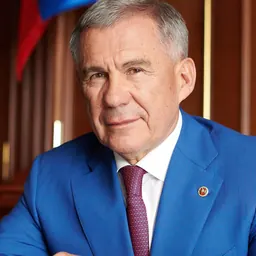

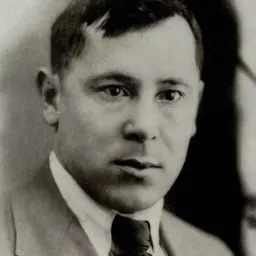




Related people
Same field, nearest in time



Contemporaries
People whose lives overlapped Röstäm Kildebäkef's


Frequently asked questions
Who was Röstäm Kildebäkef?
soviet and Russian Tatar artist, painter, and monumentalist
When was Röstäm Kildebäkef born?
Röstäm Kildebäkef was born on 30 March 1934 in Kazan.
When did Röstäm Kildebäkef die?
Röstäm Kildebäkef died on 9 November 2023 in Kazan.
What was Röstäm Kildebäkef's occupation?
Röstäm Kildebäkef was a painter, muralist, stained-glass artist, mosaicist, carpets designer and poster artist.
What nationality was Röstäm Kildebäkef?
Röstäm Kildebäkef was Russian.
Sources & further reading
· Wikipedia: Röstäm Kildebäkef
Cite this page
APA: Biography.guide. (2026). Röstäm Kildebäkef. https://biography.guide/rostam-kildebakef/
MLA: "Röstäm Kildebäkef." Biography.guide, https://biography.guide/rostam-kildebakef/.
Chicago: "Röstäm Kildebäkef." Biography.guide. https://biography.guide/rostam-kildebakef/.
Data last updated: 2026-09-20 · Spot an error? Report a correction.
Page generated 2026-09-27 05:24 UTC