
About Rosey E. Pool
Lived 1905 – 1971 (aged 66). Rosey E. Pool was a Dutch poet, translator, writer, scholar of English and english teacher.
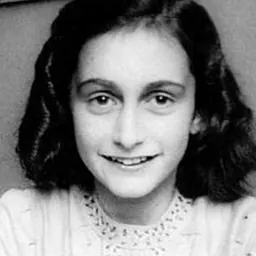
Rosey E. Pool (born Rosa Eva Pool; 7 May 1905 – 29 September 1971) was a Dutch poet, resistor of the Nazi regime, and anthologist of African-American poetry. Raised in Amsterdam, Pool studied in Berlin and helped German Jews to flee to the Netherlands during the Nazi regime. After returning to Amsterdam in 1939, she taught at a Jewish school (with the diarist Anne Frank and her sister Margot Frank amongst her pupils) and continued resistance to the Nazi regime. In May 1943 Pool was captured by the Nazis and sent to Westerbork camp; her fellow resistors helped her escape six months later. Pool was the first person to translate Anne Frank's diary into English at the request of Frank's father. Pool's time in Westerbork transformed her interest in African-American poetry into a political and personal passion.
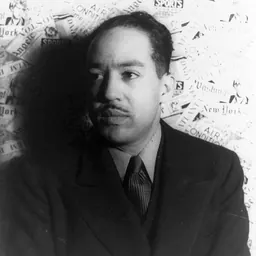
After moving to North London in 1948, Pool began to lecture, travel and write about Black American poets and her home became a regular meeting point for writers including Langston Hughes, W.E.B. DuBois, and Owen Dodson. In 1958 her work Black and Unknown Bards: A Collection of Negro Poetry, which was written in collaboration with Eric Walrond, became a breakthrough publication in Great Britain. Pool initially traveled to the United States for eight months in 1959, visiting many historically Black colleges and schools. She returned to America several times more and in 1967 was depicted on a mural of civil rights heroes at Alabama A&M University in Huntsville. She saw parallels between the African-American civil rights movement and the treatment of the Jewish people in Nazi Germany, and used her experience as a Holocaust survivor to lift voices fighting for justice in the United States.
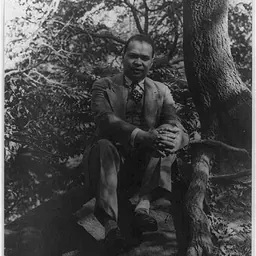
Biography Early years Pool was born and raised in a secular Jewish family in Amsterdam, Netherlands, to Louis Pool and Jacoba Jessurun. In the 1920s, she participated in Dutch Popular Front youth movements, such as the socialist Arbeiders Jeugd Centrale (AJC) and the Social Democratic Students Club (SDSC). In 1927, she was one of the founders of the Socialistische Kunstenaarskring (SKK, or Socialist Artists Circle). Pool's appreciation of African-American poetry began in 1925 during her studies at Amsterdam University when she discovered the works of Countee Cullen. She was collecting African-American poetry by this time and lecturing on the topic in left-wing circles. In September 1943, this resistance group helped her to escape from the Nazi transit camp Westerbork where she had been captured and taken to in May that year.
In 1948 Pool moved to London and lived with her partner Ursel "Isa" Isenberg, who worked as a radiologist. Together, Isenberg and Pool set up a travel agency and travelled all over the world. From her London home, she became involved in the Black Arts Movement, both in Britain and the United States. In 1958 she worked with Eric Walrond to publish Black and Unknown Bards: A Collection of Negro Poetry; it established her as a leading voice for African-American poetry in Great Britain.
Pool traveled to the United States as a Fulbright scholar and with UNCF funding (1959–1960), and was a guest lecturer at a number of colleges in the Deep South. The 1950s and 1960s saw Pool publish more titles with European publishers, partly because American publishing companies were not as interested: Beyond the Blues: New Poems by American Negroes (as editor, 1962) and Ik ben de nieuwe neger / I am the new Negro (as editor; dual translation in Dutch and English, 1965). Ed Simpkins explained: "it was Rosey Pool's [book] Beyond the Blues that first brought us together (...)." Beyond the Blues included a survey of African American poetry from the mid-eighteenth century onwards and focused on the work of contemporary young poets.
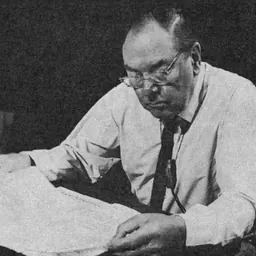
In 1965 Pool and her partner Ursel "Isa" Isenberg travelled across the Soviet Union; a trip which, for Pool, aligned with her sympathies towards communism and anti-fascist beliefs. Unlike her other international trips Pool documented little about her time in the USSR - in line with many left-leaning intellectuals of the time. The other judges for the contest were Langston Hughes, Katherine Dunham, Davidson Nicoll, Cyprian Ekwensi, Gerald Moore, Abe Wale, and Clifford Simmons. Hayden's work made it through to the competition through Pool's advocacy efforts. The last article she wrote, about Anne Frank, was published in a Baháʼí journal the following year.
Selected bibliography Translator Emily Dickinson, Ten poems (Amsterdam: Vijf Ponden Pers, 1944) William Shakespeare, Three sonnets (Utrecht: G.M. van Wees, 1944) Annie M. G. Schmidt, Love from Mick and Mandy (London: Odhams Press, 1961) Annie M. G. Schmidt, Good luck Mick and Mandy (London: Odhams Press, 1961) Annie M. G. Schmidt, Take care, Mick and Mandy (London: Odhams Press, 1961) Claude Brown, Mijn Harlem (Rotterdam: Lemniscaat, 1966)
Author "African Renaissance", in: Phylon [1940–1956], vol. 14, no. 1 (1st Qtr, 1953), pp. 5–8 "The Negro Actor in Europe", in: Phylon [1940–1956], vol. 14, no. 3 (3rd Qtr, 1953), pp. 258–267 n Engelse sleutel. Een ABC over het "Perfide Albion" (Amsterdam: De Boer, 1957) (Co-editor with Eric Walrond), Black and Unknown Bards: A Collection of Negro Poetry (Aldington, Kent: Hand & Flower Press, 1958) (Co-editor with Paul Breman), Ik zag hoe zwart ik was. Poëzie van Noordamerikaanse negers. Een tweetalige bloemlezing van Rosey E. Pool en Paul Breman (Den Haag: Bert Bakker / Daamen N.V., 1958) (Co-editor with Paul Breman), Black all day. American negro poetry (Amsterdam: Instituut voor Kunstnijverheidsonderwijs, 1960) (Editor) Beyond the Blues: New Poems by American Negroes (Lympne, Kent, England: Hand and Flower Press, 1962) "The Discovery of American Negro Poetry", in: Freedomways. A quarterly review of the Negro Freedom Movement, Fall 1963, vol. 3, no. 4. (Editor) Ik ben de nieuwe neger (Den Haag: Bert Bakker, 1965) "Fling me your challenge. Commentary On The Literary Scene", in: Negro Digest, December 1965, vol. XV, no. 2, pp. 54–60 "Robert Hayden: Poet Laureate", in: Negro Digest, June 1966, vol. XV, no. 8, pp. 39–75. Lachen om niet te huilen (Rotterdam: Lemniscaat, 1968) "Anne Frank: The Child and the Legend", in: World Order: Spring 1972, Vol. 6, No. 3 "'Grand Prix de la Poezie' for Robert Hayden", in: World Order: Summer 1983, Vol. 17, No. 4
Don’t just read it —
keep it.
Full-length biographies made to live with: read them, listen on the way to work, watch them tonight.
- E-book
- Audio
- Video
Instant download · yours to keep · every purchase keeps this site free
Important facts
People in Rosey E. Pool's life
Named in this biography and alive at the same time



Related people
Same field, nearest in time


Contemporaries
People whose lives overlapped Rosey E. Pool's




Frequently asked questions
Who was Rosey E. Pool?
Dutch writer and poet (1905–1971)
When was Rosey E. Pool born?
Rosey E. Pool was born on 7 May 1905 in Amsterdam.
When did Rosey E. Pool die?
Rosey E. Pool died on 29 September 1971 in London.
What was Rosey E. Pool's occupation?
Rosey E. Pool was a poet, translator, writer, scholar of English and english teacher.
What nationality was Rosey E. Pool?
Rosey E. Pool was Dutch.
Sources & further reading
Cite this page
APA: Biography.guide. (2026). Rosey E. Pool. https://biography.guide/rosey-e-pool/
MLA: "Rosey E. Pool." Biography.guide, https://biography.guide/rosey-e-pool/.
Chicago: "Rosey E. Pool." Biography.guide. https://biography.guide/rosey-e-pool/.
Data last updated: 2026-09-22 · Spot an error? Report a correction.
Page generated 2026-09-27 05:22 UTC