
About Rose Valland
Lived 1898 – 1980 (aged 81). Rose Valland was a French art historian, writer, curator, resistance fighter and scientist.
Rose Antonia Maria Valland (1 November 1898 – 18 September 1980) was a French art curator, member of the French Resistance, captain in the French military, and one of the most decorated women in French history. She secretly recorded details of the Nazi plundering of National French and private Jewish-owned art from France. Working with the French Resistance, she saved thousands of works of art.
Early life Valland was born in Saint-Étienne-de-Saint-Geoirs, Isère, the daughter of a blacksmith. Like many gifted pupils from humble backgrounds, she received a scholarship to an école normale, a teacher school. She graduated in 1918, with the plan of becoming an art teacher. She studied art at the École nationale des beaux-arts de Lyon, graduating in 1922. Valland then topped the competitive exam for art teacher training and underwent two years of training at the in Paris, graduating in 1925. She then began to study art history at the École du Louvre and the University of Paris. She also worked as a high school drawing teacher. She graduated in 1933 with a special diploma from the École du Louvre, and engaged in graduate studies at the Collège de France. In 1932, Valland became a volunteer assistant curator at the Jeu de Paume Museum.
World War II
In 1941, during World War II, Valland was put in paid service and became the overseer of the Jeu de Paume Museum at the time of the German occupation of France. In fact, she never formally studied the language, but her partner who knew and spoke the language, helped her understand German.
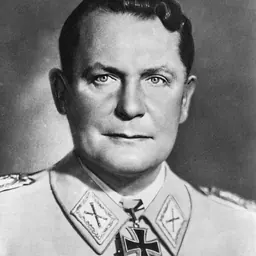
Valland would converse with truck drivers employed by the Germans, and she was thus able to learn about artwork being ransacked and taken directly to the railway stations. Valland regularly informed Jacques Jaujard, the Director of the Musėes Nationaux, about the status of Nazi art looting. about railroad shipments of art so that they would not mistakenly blow up the trains loaded with France's priceless treasures. The museum was visited by high-ranking Nazi officials, and Valland was there when Reichsmarschall Hermann Göring came on 3 May 1941 to personally select some of the stolen paintings for his own private collection. Fortunately, these other goods wagons had not yet been loaded which meant the train never left the station on schedule.
Valland was able to give Jaujard a copy of the Nazi shipment order, which listed the train and goods wagon numbers, the contents of each crate and the destination of each goods wagon (either to Kogl Castle at Sankt Georgen im Attergau in Austria or the Nikolsburg depository in Moravia.) This information Jaujard passed on to the Resistance. By 10 August, the train was ready to depart, but by then the French railway workers were on strike. However, two days later the tracks were cleared and being delayed by higher priority trains carrying fleeing Germans and their personal possessions. The train which had the designation 40044 departed, hauling a total of 53 wagons. The overloaded train reached Le Bourget before it suffered a mechanical breakdown. By the time the Germans had fixed the problem 48 hours later, the French Resistance had derailed two trains which blocked the tracks up ahead leaving the train stranded at Aulnay-sous-Bois.
Following the arrival of the Second Armored Division of the French Army in Paris, a small detachment under the command of lieutenant André Rosenberg (the son of exiled art dealer Paul Rosenberg) was sent on 27 August to check out and secure the train.
Post World War II
Following the liberation of Paris by the Allied Forces, Valland was initially arrested as a suspected Nazi collaborator, because she had been employed at Jeu de Paume.
Upon her return to France in 1953, Valland was appointed a conservator of the French Musées Nationaux and in 1954 was named Chair of the Service de protection des oeuvres d'art (Commission for the Protection of Works of Art). In 1961, she wrote about her wartime experiences in a book published under the title, Le front de l'art (republished in 1997). Valland retired in 1968 but continued to work on restitution matters for the French archives. Her valor and dedication resulted in numerous awards from her own and other countries. From the French government Valland received the Legion of Honour, was made a Commandeur of the Order of Arts and Letters and was awarded the Médaille de la Résistance. The United States awarded Valland the Medal of Freedom in 1948.
Legacy Plaque in front of the Musée du Jeu de PaumeIn Paris, France, in her memory, two commemorative plaques were inaugurated: one in front of the Musée du Jeu de Paume, in the Jardin des Tuileries, and the second on the building where she lived with Joyce Heer, in the 5th arrondissement. A Parisian street is also named after her in the 17th arrondissement. Other streets are named after her in several French cities, as in Grenoble.
In 2018, the French postal service issued a stamp commemoring Valland in her memory. A rose was also named after her.
The Rose Valland Institute, an organization founded by Maria Eichhorn that specializes in tracing Nazi plunder, is named after her.
In 2003, the central square in Saint-Étienne-de-Saint-Geoirs, was renamed Place Rose Valland. The Collège Rose Valland, located at 1 rue Pierre de Coubertin in her home town, is also named in her honor. The Association de la Mémoire de Rose Valland, which was established to honor her memory, is based on Place Rose Valland in her hometown.
In popular culture The 1964 John Frankenheimer film The Train was loosely based on her book, and includes a character named "Mlle Villard". Valland's role in preserving the stolen art was discussed as part of the 1994 book and 2006 documentary, The Rape of Europa.
In 2006, Valland was the subject of Corinne Bouchoux's biography Rose Valland: Resistance at the Museum.
In Sara Houghteling's 2009 novel, Pictures at an Exhibition, the character of Rose Clément is based on Rose Valland. In 2009 Valland was also one of the main subjects of Robert M. Edsel's book The Monuments Men. This would later serve as the basis of the 2014 George Clooney-directed film of the same name, in which Valland was the inspiration for the character of Claire Simone, portrayed by Cate Blanchett .
Michelle Young’s 2025 book The Art Spy recounts Valland’s involvement with the French Resistance and her documenting of the Nazis’ wholesale looting of French art.
Don’t just read it —
keep it.
Full-length biographies made to live with: read them, listen on the way to work, watch them tonight.
- E-book
- Audio
- Video
Instant download · yours to keep · every purchase keeps this site free
Important facts
People in Rose Valland's life
Named in this biography and alive at the same time





Related people
Same field, nearest in time


Contemporaries
People whose lives overlapped Rose Valland's


Frequently asked questions
Who was Rose Valland?
French resistance member, art historian (1898-1980)
When was Rose Valland born?
Rose Valland was born on 1 November 1898 in Saint-Étienne-de-Saint-Geoirs.
When did Rose Valland die?
Rose Valland died on 18 September 1980 in Ris-Orangis.
What was Rose Valland's occupation?
Rose Valland was an art historian, writer, curator, resistance fighter and scientist.
What nationality was Rose Valland?
Rose Valland was French.
Sources & further reading
Cite this page
APA: Biography.guide. (2026). Rose Valland. https://biography.guide/rose-valland/
MLA: "Rose Valland." Biography.guide, https://biography.guide/rose-valland/.
Chicago: "Rose Valland." Biography.guide. https://biography.guide/rose-valland/.
Data last updated: 2026-09-22 · Spot an error? Report a correction.
Page generated 2026-09-27 05:21 UTC