
About Rose O'Neal Greenhow
Lived 1814 – 1864 (aged 49–50). Rose O'Neal Greenhow was an American spy.
Early life
She was born in 1813 as Maria Rosetta O'Neale on a small plantation in Montgomery County, Maryland, northwest of Washington, D.C. (Note: The biographical note on Greenhow at the National Archives and Records Administration, which holds a collection of her papers, says that O'Neal was born in 1817 in Port Tobacco, Maryland, but it is unclear what the documentation is for this.) Their father died in 1817,
In the 1830s, she met Robert Greenhow Jr., a prominent doctor, lawyer, and linguist
Marriage and family In 1835, Rose married Dr. Robert Greenhow Jr. with Dolley's blessing, and by the 1850s had long been an established socialite in the capital.
The Greenhows had four daughters: Florence, Gertrude, Leila, and Rose. They were the parents of two children, son William (died 1874) and daughter Lee, who later took the name Mary and was the wife of Louis Eugene Marié. The Duvalls divorced in 1899.
Robert's work with the State Department prompted the family to move with him to Mexico City in 1850 and then to San Francisco, California. In 1852, Greenhow returned East with her children, a journey of months, giving birth to her last daughter in 1853. Her husband died in an accident in San Francisco in 1854. Being a widow did not disrupt Greenhow's popularity in the capital.
Confederate spy
After losing her husband, Greenhow became more sympathetic to the Confederate cause. Greenhow was an advocate for secession and "preserving the Southern way of life," including slavery.
After passing control of the espionage network to Greenhow, Jordan left the US Army, went South, and was commissioned as a captain in the Confederate Army.
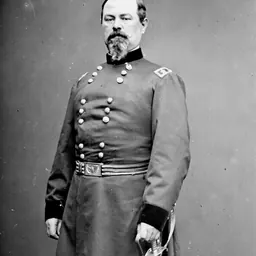
On July 9 and July 16 of 1861, Greenhow passed secret messages to Confederate General P. G. T. Beauregard containing critical information regarding Union military movements for what would be the First Battle of Bull Run, including the plans of General Irvin McDowell. Assisting in her conspiracy were pro-Confederate members of Congress, Union officers, courier Betty Duvall, and her dentist, Aaron Van Camp, as well as his son who was also a Confederate soldier, Eugene B. Van Camp. She became known as "Rebel Rose" for her work for the South.
Capture and prison
Knowing she was suspected of spying for the Confederacy, Greenhow feared for her remaining daughters' safety. Leila was sent to Ohio to join her older sister Florence Greenhow Moore, whose husband Seymour Treadwell Moore had become a captain in the Union Army. (He was breveted a brigadier general in May 1865 for his services and achieved a rank of lieutenant colonel after the war in his army career.) Only Little Rose stayed with Greenhow in Washington.
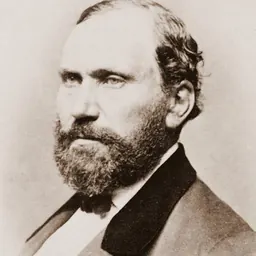
Allan Pinkerton was made head of the recently formed Secret Service and one of his first orders was to watch Greenhow, because of her wide circle of contacts on both sides of the sectional split. Due to the activities of visitors, he arrested Greenhow and placed her under house arrest at her 16th Street residence on August 23, 1861, along with one of her couriers, Lily Mackall.
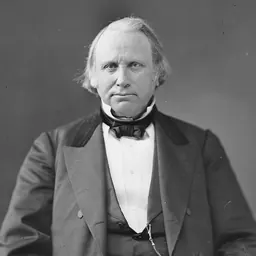
The materials included numerous love letters supposedly from the abolitionist Republican U.S. Senator Henry Wilson from Massachusetts. She considered him her prize source, and claimed he gave her data on the "number of heavy guns and other artillery in the Washington defenses," but he likely knew far more from his work on the Military Affairs Committee. The seized Greenhow papers are now held by the National Archives and Records Administration, with some available online. Contemporary biographers of Wilson have regarded the letters as likely not sent by Wilson as his handwriting and signature do not match those in the letters.
Pinkerton supervised visitors to Greenhow's house and moved other suspected Southern sympathizers into it, giving rise to the nickname Fort Greenhow. He was pleased to oversee the visitors and messages, as it gave him more control of the Southern flow of information. While messages continued to be sent to Jordan, he discounted them after Pinkerton mounted his control. When a letter from Greenhow to Seward complained of her treatment was publicized, there was Northern criticism for what was perceived as too lenient treatment of a spy. Pinkerton transferred Greenhow on January 18, 1862, to Old Capitol Prison, shutting down Fort Greenhow. So many political prisoners were detained that a two-man commission was set up to review their cases at what were called espionage hearings. Greenhow was never subjected to trial. Greenhow also on one occasion flew the Confederate Flag from her prison window.
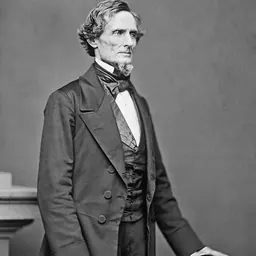
International acclaim On May 31, 1862, Greenhow was released without trial (with her daughter), on condition she stay within Confederate boundaries. After they were escorted to Fortress Monroe at Hampton Roads, she and her daughter went on to Richmond, Virginia, where Greenhow was hailed by Southerners as a heroine. President Jefferson Davis welcomed her return and enlisted her as a courier to Europe. Greenhow ran the blockade and, from 1863 to 1864, traveled through France and Britain on a diplomatic mission building support for the Confederacy with the aristocrats.
Death On August 19, 1864, Greenhow left Europe to return to the Confederacy, carrying dispatches. She traveled on the Condor, a British blockade runner. On October 1, 1864, the Condor ran aground at the mouth of the Cape Fear River near Wilmington, North Carolina, while being pursued by the Union gunboat USS Niphon. Fearing capture and reimprisonment, Greenhow fled the grounded ship by rowboat. A wave capsized the rowboat, and Greenhow drowned. She was weighed down by $2,000 worth of gold sewn into her underclothes and hung around her neck, returns from her memoir royalties.
When Greenhow's body was recovered from the water near Wilmington, searchers found a small notebook and a copy of her book Imprisonment hidden on her. Inside the book was a note meant for her daughter, Little Rose. She was honored with a military funeral at St. Thomas the Apostle Catholic Church in Wilmington, North Carolina, Greenhow was a featured character played by Nina Foch in an episode of the 1961 NBC TV series The Americans, The Rebellious Rose. Greenhow's exploits were dramatized in the 1990 television film The Rose and the Jackal, in which she was played by Madolyn Smith. Greenhow was a featured character played by Sue-Ann Leeds in the 1993 television drama Class of '61. In 1993, the women's auxiliary of the Sons of Confederate Veterans changed its name to the Order of the Confederate Rose in her honor. In The Pinkertons episode "The Better Angels of Our Nature", Greenhow's daughter (named Leila in the episode) is about to publish a scandalous biography of her late mother. The book's publisher is murdered in an attempt to steal the manuscript.
Don’t just read it —
keep it.
Full-length biographies made to live with: read them, listen on the way to work, watch them tonight.
- E-book
- Audio
- Video
Instant download · yours to keep · every purchase keeps this site free
Important facts
People in Rose O'Neal Greenhow's life
Named in this biography and alive at the same time



Related people
Same field, nearest in time

Contemporaries
People whose lives overlapped Rose O'Neal Greenhow's





Frequently asked questions
Who was Rose O'Neal Greenhow?
American spy (1814–1864)
When was Rose O'Neal Greenhow born?
Rose O'Neal Greenhow was born in 1814 in Montgomery County.
When did Rose O'Neal Greenhow die?
Rose O'Neal Greenhow died on 1 October 1864 in Cape Fear River.
What was Rose O'Neal Greenhow's occupation?
Rose O'Neal Greenhow was a spy.
What nationality was Rose O'Neal Greenhow?
Rose O'Neal Greenhow was American.
Sources & further reading
· Wikipedia: Rose O'Neal Greenhow
· DBpedia: Rose O'Neal Greenhow
Cite this page
APA: Biography.guide. (2026). Rose O'Neal Greenhow. https://biography.guide/rose-o-neal-greenhow/
MLA: "Rose O'Neal Greenhow." Biography.guide, https://biography.guide/rose-o-neal-greenhow/.
Chicago: "Rose O'Neal Greenhow." Biography.guide. https://biography.guide/rose-o-neal-greenhow/.
Data last updated: 2026-09-20 · Spot an error? Report a correction.
Page generated 2026-09-27 05:32 UTC