
About Rose Cohen
Lived 1894 – 1937 (aged 43). Rose Cohen was a British women's rights activist, newspaper editor, suffragist, suffragette and politician.
Rose Cohen (; 20 May 1894 – 28 November 1937) was an English feminist, suffragist, and founding member of the Communist Party of Great Britain in 1920. She worked for Communist International (Comintern) from 1920 to 1929. Between 1931 and 1937, Cohen served as a foreign editor of The Moscow News. She was executed during the Great Purge in the Soviet Union and posthumously rehabilitated in the Soviet Union in 1956.
Biography
Early life
Rose Cohen was born in 1894 in London's East End to a family of Jewish immigrants from Łódź, Poland. Her father, Maurice Cohen, was a tailor who later opened his own business and prospered. She was the first cousin of Abraham Cohen and the first cousin once removed of Morris Wartski, both through her father's side. Through the Workers' Educational Association Cohen became well-versed in economics and politics, and fluent in three languages.
After leaving the family home, Rose lived with her sister Nellie, Daisy Lansbury and May O’Callaghan in a shared flat on Grays Inn Road, London. In the 1910s, Rose and Nellie became active members of the East London Federation of Suffragettes led by Sylvia Pankhurst. (Nellie worked as Sylvia Pankhurst's personal secretary). She left the Labour Research Department in 1920. Towards the end of the First World War, the department became the centre of the young leftist intellectuals. In 1920 she became a founding member of the Communist Party of Great Britain (CPGB).
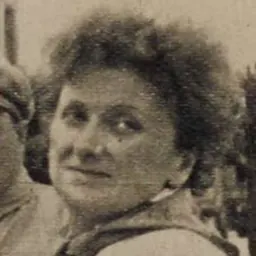
Contemporaries described Cohen as lively, intelligent, educated, and beautiful. Among Cohen's admirers, Harry Pollitt was the most persistent. A photograph of Cohen at the People's History Museum in the United Kingdom was inscribed by Pollitt: "Rose Cohen – who I am in love with, and who has rejected me 14 times."
Work in the Comintern In the early 1920s, Cohen travelled the world as a Comintern agent. She was assigned secret missions, which included delivering messages and transferring money to Communist parties. In 1922–23 she spent long periods in the Soviet Union, and also travelled to Finland, Germany, Lithuania, Estonia, Latvia, Turkey, France, Norway, Sweden and Denmark. As a Comintern courier, Cohen transferred large sums of money to the Communist parties of these countries.
In 1925, Cohen worked in the Soviet embassy in London and also spent several months in Paris on a secret mission for the Comintern, and handled large sums of money for the Communist Party of France. That year, she met David Petrovsky, whom she later married. and their apartment became a salon for the foreign community.
The victim of Stalin's terror Petrovsky was aware of the danger emerging in the Soviet Union following the murder of Sergei Kirov in 1934, the assassination that functioned as the catalyst for the Great Purge.
In the summer of 1936, Cohen went to London but was not permitted to make the trip with her son, Alyosha, so he stayed behind. Her sister Nellie thought that Rose was "unhappy, and had it not been for Alyosha might not have returned".
At that time Petrovsky was planning a business trip to America and got permission to travel abroad from his supervisor Sergo Ordzhonikidze – the head of the Supreme Soviet of the National Economy and the head of the People's Commissariat of Heavy Industry of the Soviet Union. Sergo Ordzhonikidze, who knew Stalin closely, more than anyone else, saw what was happening in the country. Anticipating his fate, he wanted to save Petrovsky from Stalin's terror and understood that he most likely would not return from a business trip. It seems that Rosa and David hoped to use their travels as an opportunity to leave Russia almost simultaneously and be saved. However, they had failed to acquire an exit visa for their son, and unwilling to leave without him, they remained in the Soviet Union. In her final statement she again pleaded not guilty.
British reaction Having learned of Cohen's arrest, British communist leaders Harry Pollitt and Willie Gallacher appealed to the Secretary General of the Executive Committee of the Communist International, Georgi Dimitrov, and his deputy Dmitry Manuilsky, and were advised "do not interfere". As a result, the Communist Party of Great Britain did not file a protest, and was not supportive of the protest launched in the pages of the New Statesman, via a letter written by Maurice Reckitt. Soviet records show that Cohen did not naturalise as a Soviet citizen.
The CPGB opposed efforts by the British government to get Cohen released, describing her arrest as an internal affair of the Soviet Union. Pollitt privately tried to intervene on her behalf, but by the time he did so she had already been shot. Twenty years after Cohen's death, Pollitt requested information from Moscow about whether she was still alive.
Political rehabilitation and family After the 20th Congress of the Communist Party of the Soviet Union (February 1956), Cohen's son filed an appeal to review her case. On 18 July 1956 the General Secretary of the Communist Party of Great Britain, Harry Pollitt, sent a letter to the First Secretary of the Communist Party of the Soviet Union, Nikita Khrushchev, with a request to clarify the situation regarding the arrest of Rose Cohen in 1937 and asking what had happened to her after the arrest.
Cohen and David Petrovsky's son, Alyosha, spent three years living in the orphanage after his parents' execution in 1937. In 1940 he was adopted from the orphanage by David Petrovsky's cousin Rebecca Belkina, a doctor, and a major of the armed forces' medical service during the Second World War. She succeeded in getting permission for Alyosha's adoption when she lived with her family in political exile in Tobolsk, Siberia under Article 58 of the Soviet Penal Code. Alyosha spent the rest of his childhood living in Siberia with her and her family. Afterward, many years later, he earned a PhD in Engineering, PhD in Geological and Mineralogical Sciences, and became an Academician of the Russian Academy of Sciences. Their grandson, Michael A. Petrovsky, holds a PhD in Physics and Mathematics.
Don’t just read it —
keep it.
Full-length biographies made to live with: read them, listen on the way to work, watch them tonight.
- E-book
- Audio
- Video
Instant download · yours to keep · every purchase keeps this site free
Important facts
Family & relationships
People in Rose Cohen's life
Named in this biography and alive at the same time

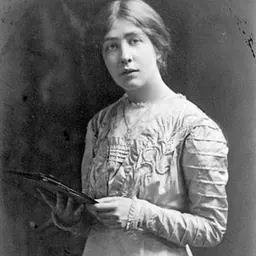
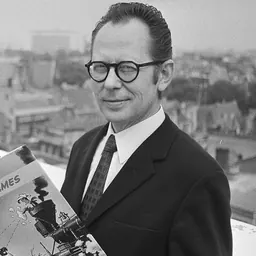

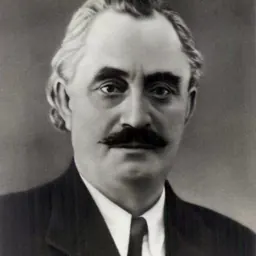
Related people
Same field, nearest in time



Contemporaries
People whose lives overlapped Rose Cohen's


Frequently asked questions
Who was Rose Cohen?
Stalin’s British victim
When was Rose Cohen born?
Rose Cohen was born on 30 June 1894 in London.
When did Rose Cohen die?
Rose Cohen died on 28 November 1937 in Butovo firing range.
What was Rose Cohen's occupation?
Rose Cohen was a women's rights activist, newspaper editor, suffragist, suffragette and politician.
What nationality was Rose Cohen?
Rose Cohen was British.
Sources & further reading
Cite this page
APA: Biography.guide. (2026). Rose Cohen. https://biography.guide/rose-cohen/
MLA: "Rose Cohen." Biography.guide, https://biography.guide/rose-cohen/.
Chicago: "Rose Cohen." Biography.guide. https://biography.guide/rose-cohen/.
Data last updated: 2026-09-22 · Spot an error? Report a correction.
Page generated 2026-09-27 05:21 UTC