
About Roscoe Dunjee
Lived 1883 – 1965 (aged 81). Roscoe Dunjee was an American journalist.
Roscoe Dunjee (June 21, 1883 – March 1, 1965) was an American civil rights activist, journalist, and editor in Oklahoma City, Oklahoma. He founded The Black Dispatch in 1915, the first black newspaper in Oklahoma City, and used it as a platform to support civil rights and reveal injustices. Long active in the local chapter of the NAACP, in 1932 he brought together several chapters to found the state chapter or branch of the NAACP. He served as its president for 16 years, and was also on the national board of the NAACP. his father died.
He enrolled as a member of the first class at Langston College, a historically black college in Langston, Oklahoma, that then emphasized technical and industrial trades. While there, Roscoe learned to set type by working after hours in the print shop of The Langston Herald, a small community paper. he had a chance to purchase a job printing plant from Oliva J. Abby, an instructor in the Oklahoma City public schools, whose printer husband had become ill. He founded his own newspaper, the Black Dispatch, the first black newspaper in Oklahoma City. He used this as a platform to publish editorials against segregation and report unfair treatment of blacks. The newspaper grew from a local publication to a national one, at one point boasting nearly 20,000 subscribers. Dunjee would regularly report on lynchings of blacks in both Oklahoma and Texas.
He worked to change voter laws that prohibited or constrained black voters from the polls. Oklahoma's new 1908 constitution, passed after statehood, had raised barriers to voter registration, effectively disenfranchising blacks and other minority voters. It joined former states of the Confederacy across the South in taking such action. In 1916 the state passed a grandfather clause that enabled white voters to escape certain restrictions related to literacy. Dunjee's efforts contributed to court challenges; ultimately lawyers of the NAACP (National Association for the Advancement of Colored People) overturned the grandfather clause in the US Supreme Court case Guinn v. United States.
Dunjee publicized the murder trial of Jess Hollins. He was a black man arrested for the rape of a white woman, to which he confessed without having seen counsel. He was rapidly sentenced to death four days after the alleged attack in December 1931. Dunjee reported on the case, supporting an appeal. The judge said he moved fast because he feared another Tulsa Race Massacre, as had taken place in 1921. The state court ruled that Hollins deserved a jury trial. He was convicted by an all-white jury in 1934 and again sentenced to death. The case was appealed to the US Supreme Court, which ruled in Hollins v. State of Oklahoma (1935), that the systematic exclusion of blacks from the jury had been grounds for reversing Hollins' conviction.
In the early part of 1921, the Ku Klux Klan sent salesmen into Oklahoma to sell memberships for $10 each. The Klan spread like wild fire, eventually selling 100,000 memberships. On May 31, 1921, after the Klan had been agitating in Oklahoma for only a few months, a group of Caucasian men set fire to the Greenwood District of Tulsa which was Black owned, burning 3,500 people out of their homes and destroying many lucrative businesses. Greenwood District had been one of the most successful Black enclaves in the United States and had often been called Black Wall Street. It is unclear how many Black people died in that 48-hour period, and how many ran away and never came back. The Greenwood District burned for two days. It was decimated. When the newspaper accounts began to come out, the white-owned newspapers blamed Black people and called what was really a massacre, a race riot. Of course, the Black Dispatch told the truth, but few Caucasians read it. Approximately 40 years later, the Oklahoma Legislature authorized an investigation of what really happened to Greenwood District. After a careful study, the committee found that the Black Dispatch and other Black-owned newspapers had told the truth. It was indeed a massacre.
Dunjee was a leader in the Oklahoma Youth Legislature, the National Negro Democratic Association, and the Negro Business League.
Don’t just read it —
keep it.
Full-length biographies made to live with: read them, listen on the way to work, watch them tonight.
- E-book
- Audio
- Video
Instant download · yours to keep · every purchase keeps this site free
Important facts
People in Roscoe Dunjee's life
Named in this biography and alive at the same time

Related people
Same field, nearest in time


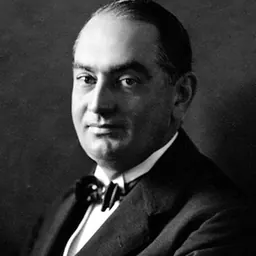
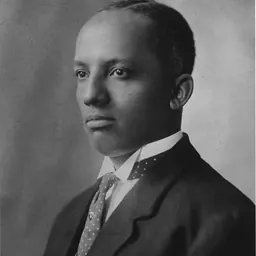
Contemporaries
People whose lives overlapped Roscoe Dunjee's

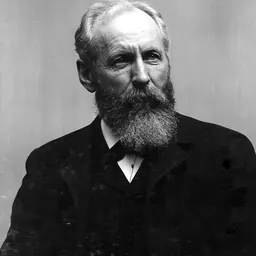

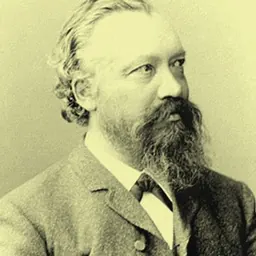
Frequently asked questions
Who was Roscoe Dunjee?
American civil rights activist, journalist, and editor
When was Roscoe Dunjee born?
Roscoe Dunjee was born on 21 June 1883 in Harpers Ferry.
When did Roscoe Dunjee die?
Roscoe Dunjee died on 1 March 1965 in Oklahoma City.
What was Roscoe Dunjee's occupation?
Roscoe Dunjee was a journalist.
What nationality was Roscoe Dunjee?
Roscoe Dunjee was American.
Sources & further reading
Cite this page
APA: Biography.guide. (2026). Roscoe Dunjee. https://biography.guide/roscoe-dunjee/
MLA: "Roscoe Dunjee." Biography.guide, https://biography.guide/roscoe-dunjee/.
Chicago: "Roscoe Dunjee." Biography.guide. https://biography.guide/roscoe-dunjee/.
Data last updated: 2026-09-20 · Spot an error? Report a correction.
Page generated 2026-09-27 05:03 UTC