
Rosario Pi
Spanish film director, screenwriter and writer
About Rosario Pi
Lived 1899 – 1967 (aged 67–68). Rosario Pi was a Spanish film director, screenwriter, writer, actor and businessperson.
Rosario Pi was a Catalan film director, producer, and screenwriter. With the release of her 1936 film El Gato montés (The Wildcat) she became one of Spain's women film pioneers, along with Elena Jordi and Helena Cortesina. She also directed Molinos de viento. Her Star Films Movie Company produced the first talkies in Spain.
Biography Rosario was born in Barcelona in 1899 into a family that owned a textile factory in Sabadell. She walked with a limp from a young age (likely due to polio, according to historians).
As a young woman, she forged a path for herself as an entrepreneur, starting her own lingerie business in Barcelona. When her business failed in 1929, she moved to Madrid and entered the fledgling film industry, forming a production company called Star Films. Star Films produced the first Spanish talkies. In 1935 she made her debut as director with El Gato Montés (The Wildcat), released in 1936, an adaptation of the Manuel Penella Moreno's operetta of the same name. In Rome, she worked as Maria Mercader's agent, who soon became one of Cinecittà film studios stars. Some critics believe that Pi Brujas continued working in the film industry in Rome, and was the uncredited director of the film Forza bruta (1940). For Magí Crusells and Jordi Sebastian, back in Madrid, she run a restaurant and worked as a journalist under the pseudonym of Rizpay. For Martin-Márquez she instead got a job at the Casa Mabel, a fashion designer that produced costumes for the film industry and made Ana Mariscal's dresses. Ironically, Mariscal was the actress who, just a few years later, would take Rosario Pi's place as the sole woman filmmaker in Spain.
Selected filmography
As producer ¡Yo quiero que me lleven a Hollywood! (medium length film, directed by Edgard Neville, 1932). El hombre que se reía del amor (feature film, directed by Benito Perojo, 1932) Odio (feature film, directed by Richard Harlan, 1933) Doce hombres y una mujer (feature film, directed by Fernando Delgado, 1934)
As director El Gato montés (The Wildcat) (1936) Molinos de viento (The Windmills) (1937) - lost Forza bruta (Brute Force) (1940) - uncredited
As screenwriter
Doce hombres y una mujer (feature film, directed by Fernando Delgado, 1934)
Don’t just read it —
keep it.
Full-length biographies made to live with: read them, listen on the way to work, watch them tonight.
- E-book
- Audio
- Video
Instant download · yours to keep · every purchase keeps this site free
Important facts
People in Rosario Pi's life
Named in this biography and alive at the same time




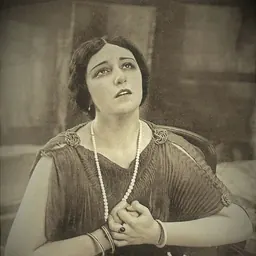
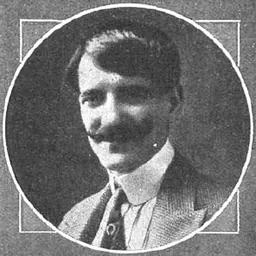

Related people
Same field, nearest in time
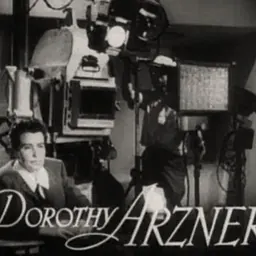
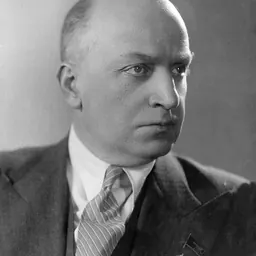

Contemporaries
People whose lives overlapped Rosario Pi's

Frequently asked questions
Who was Rosario Pi?
Spanish film director, screenwriter and writer (1899-1967)
When was Rosario Pi born?
Rosario Pi was born in 1899 in Barcelona.
When did Rosario Pi die?
Rosario Pi died on 22 March 1967 in Madrid.
What was Rosario Pi's occupation?
Rosario Pi was a film director, screenwriter, writer, actor and businessperson.
What nationality was Rosario Pi?
Rosario Pi was Spanish.
Sources & further reading
Cite this page
APA: Biography.guide. (2026). Rosario Pi. https://biography.guide/rosario-pi/
MLA: "Rosario Pi." Biography.guide, https://biography.guide/rosario-pi/.
Chicago: "Rosario Pi." Biography.guide. https://biography.guide/rosario-pi/.
Data last updated: 2026-09-22 · Spot an error? Report a correction.
Page generated 2026-09-27 05:13 UTC