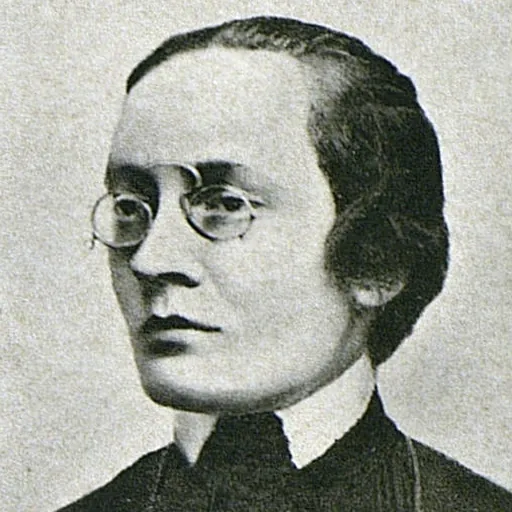
About Rosalia Zemlyachka
Lived 1876 – 1947 (aged 70). Rosalia Zemlyachka was a Russian politician and revolutionary.
Rosalia Samoilovna Zemlyachka (; ; 21 January 1947) was a Russian revolutionary and Soviet politician. As a revolutionary, she was best known by the alias Zemlyachka, though she also used the party pseudonyms 'Demon' and 'Osipov'. Her married name was Samoilova.
Biography Rosalia Zalkind was born in Kiev , in Kiev Governorate of the Russian Empire, the daughter of a wealthy Jewish family. She was educated in a girls' gymnasium in Kiev, and later at the Faculty of Medicine of the University of Lyon. From age of 17, she was involved in revolutionary activities. A member of the Russian Social Democratic Labour Party since 1898, Zemlyachka worked in Odessa and Yekaterinoslav as an agent for the Iskra newspaper, founded by Vladimir Lenin and Julius Martov.
Zemlyachka was a delegate to the Second Congress of the RSDLP, which convened in Brussels in July 1903, but she was arrested by the Belgian police and deported. When the RSDLP split into factions, she joined the Bolsheviks. She continued to support Lenin when he appeared to be losing control of the Bolsheviks, who wanted to bring about a reconciliation of the factions of the RSDLP. In July 1904, she travelled to Geneva for the conference of hard line Bolsheviks who formed the 'Bureau of Majority Committees', the forerunner of the Central Committee of the Communist Party of the Soviet Union, to which she was elected, under the name 'Demon', on Lenin's recommendation. Afterwards she returned to Russia to build the Bolshevik organisation, visiting St Petersburg, Georgia, and Baku.
In December 1905, she was in Moscow at the time of the Moscow uprising. After its failure, she insisted on a purge of the Moscow Bolshevik organisation. She was arrested in 1906, but escaped from a police station. She was arrested several times, and in October 1907 was imprisoned in the Lithuania Castle in St Petersburg.
Before Brusilov set out, a local decision was made to massacre those who had surrendered. The order to carry out this massacre was signed by the Chairman of the Crimean revolutionary committee, Béla Kun, Zemlyachka, and the head of the Crimean Cheka, Semyon Dukelsky. According to English writer Donald Rayfield, Kun and Zemlyachka were lovers, and she was "a Cheka sadist who tied the officers in pairs to planks and burned them alive in furnaces or drowned them in barges that she sank offshore. Estimates vary of the number killed, which may have been 70,000. Social scientist, Nikolay Zayats, from the National Academy of Sciences of Belarus has disputed the large, "fantastic" estimates and attributed this to eyewitness accounts and émigré press of the White Army. A Crimean Cheka report in 1921 showed that 441 people were shot, with a modern estimate that 5,000–12,000 people in total were executed in Crimea.
Later career
Between 1921 and 1924, Zemlyachka was the secretary of the Zamoskvoretsky district committee, Moscow. In 1924, she was sent to South East Russia. In 1925–26, she was the secretary of the Motovilikhsky district party committee, in Perm. Between 1924 and 1934, she was a member of the Central Control Commission. In 1926, she became a member of the collegium of Rabkrin and the head of its complaints bureau.
According to a tribute written to mark the 110th anniversary of her birth, she involved hundreds of workers and party members in her campaigns against bureaucracy. She became so well known as "the scourge of bureaucrats and red-tape mongers" that a letter reached her from the provinces with the address 'Moscow, Comrade Zemlyachka'. In February 1934, she was appointed the head of the Transport Commission of the Soviet Control Commission, the successor organisation to Rabkrin. She is the only woman to have served at this level in the Stalinist period, and the first woman to be decorated with the Order of the Red Banner.
During World War II, Zemlyachka was in charge of the relocation of Moscow University from Ashgabat to Sverdlovsk (1942) and the re-evacuation from Sverdlovsk back to Moscow (1943).
Zemlyachka died on 21 January 1947 in Moscow. Her ashes were buried at the Kremlin Wall Necropolis.
Don’t just read it —
keep it.
Full-length biographies made to live with: read them, listen on the way to work, watch them tonight.
- E-book
- Audio
- Video
Instant download · yours to keep · every purchase keeps this site free
Important facts
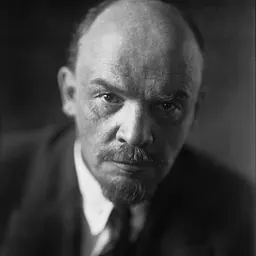
People in Rosalia Zemlyachka's life
Named in this biography and alive at the same time


Related people
Same field, nearest in time





Contemporaries
People whose lives overlapped Rosalia Zemlyachka's

Frequently asked questions
Who was Rosalia Zemlyachka?
Russian revolutionary (1876-1947)
When was Rosalia Zemlyachka born?
Rosalia Zemlyachka was born on 20 March 1876 in Mahilyow.
When did Rosalia Zemlyachka die?
Rosalia Zemlyachka died on 21 January 1947 in Moscow.
What was Rosalia Zemlyachka's occupation?
Rosalia Zemlyachka was a politician and revolutionary.
What nationality was Rosalia Zemlyachka?
Rosalia Zemlyachka was Russian.
Sources & further reading
· Wikipedia: Rosalia Zemlyachka
Cite this page
APA: Biography.guide. (2026). Rosalia Zemlyachka. https://biography.guide/rosalia-zemlyachka/
MLA: "Rosalia Zemlyachka." Biography.guide, https://biography.guide/rosalia-zemlyachka/.
Chicago: "Rosalia Zemlyachka." Biography.guide. https://biography.guide/rosalia-zemlyachka/.
Data last updated: 2026-09-22 · Spot an error? Report a correction.
Portrait: Wikimedia Commons · author & licence
Page generated 2026-09-27 05:02 UTC