
About Ronnie Lester
Born 1959. Ronnie Lester is an American basketball player.
Ronnie Lester (born January 1, 1959) is an American former professional basketball player and basketball executive. Lester was an NCAA All-American at the University of Iowa, leading Iowa to the 1980 NCAA Final Four. Lester was a member of the 1979 USA Basketball team that won the gold medal in the 1979 Pan-American Games. Lester was the No. 10 overall selection in the first round of the 1980 NBA draft. After an injury-filled career, which included winning an NBA title with the 1985 Los Angeles Lakers, Lester worked as a scout for the Lakers, and eventually became the team's assistant general manager. After 24 years in the Lakers organization, with seven NBA titles, Lester served as a scout for the Phoenix Suns from 2011 to 2015.
Early life Born in Canton, Mississippi, Lester grew up in a public housing project in Chicago, Illinois. Growing up in the Stateway Gardens housing project near Comiskey Park in Chicago, Lester was raised by his single mother Nadine, along with his with three sisters. Lester attended Dunbar Vocational High School, graduating in 1976.
High school career Lester started on the varsity team at Dunbar High School of the Chicago Public League as a 5'6" sophomore. In between his sophomore and junior year, Lester grew to 6'2". He averaged ten points and ten assists per game in his junior campaign.
As a senior, Lester averaged 27.0 points per game, playing alongside teammate Ken Dancy, who was a future 1980 NBA draft pick.
At the beginning of his senior in high school, colleges had shown little interest, until University of Iowa coach Lute Olson and others began seeing his talents during his senior season. Olson was the first to recognize Lester's abilities and began recruiting him.
Every Friday after practice in Iowa City, Olson, accompanied sometimes by his wife Bobbi, would drive to Chicago to visit Lester. "He lived in an area that probably not a lot of people wanted to go into and visit with him and his mom," Olson said in 2015, recalling his recruiting of Lester.
Starting for Iowa as a freshman, Lester made an immediate impact, averaging 13.4 points, 3.6 assists and 2.4 rebounds in 1976–1977. Iowa finished 18–9, as Lester was second on the team in scoring, behind Bruce "Sky" King's 21.0 points, and he led the Hawkeyes in assists.
In 1978–1979, Lester averaged 18.7 points, 5.3 assists and 2.3 rebounds as a junior, as Iowa finished 20–8. Iowa captured the Big 10 Championship and advanced to the 40–team 1979 NCAA Division I Basketball Tournament, eventually won by Big Ten rival Michigan State with Magic Johnson over Indiana State with Larry Bird.
Lester was named First Team All–Big 10 for the second consecutive year, along with Joe Barry Carroll, Purdue; Magic Johnson, Michigan State; Greg Kelser, Michigan State; Kelvin Ransey, Ohio State and Mike Woodson, Indiana. Lester was named All–American Second Team (AP) and All-American Third Team (NABC, UPI).
1980 Final Four team In 1979–1980, the Iowa team made the 48–team NCAA tournament with an 18–8 record (10–8, 4th in the Big 10), despite playing a good portion of the season without Lester, who suffered a knee injury in the seventh game of the season. Lester averaged 14.8 points and 4.2 assists on the season, in which his talents and subsequent injuries were on display.
Iowa was playing the University of Dayton in the championship game of the Dayton Classic on Dec. 22 with a 7–0 record and won the game, 61–54, but lost Lester for much of the rest of the regular season on a play with 7 minutes remaining in the game.
"It was a play in the open court," Lester recalled of his first knee injury. "There was one guy back on defense, and I was trying to beat him to the basket. I got past him, or even with him, when I pushed off with my leg to put the ball up. I got a little push to my back, and my knee buckled. I was examined on the floor by a physician and he thought I should have surgery. But, when I got back to Iowa City, it was decided otherwise. I came back later, but hurt the knee again in practice, and wound up playing just a few Big Ten games. It was the first time I'd been hurt to the extent that I couldn't play up to my capabilities." Aside from players, Iowa lost assistant coach Tony McAndrews who had been severely injured in a plane crash during the season and did not return that season.
Lester's knee improved and he returned for the end of the regular season, with Iowa having lost three of its previous four games. Iowa had been so decimated by injures, the team, which relied mostly on six players in Lester's absence, was labeled the "Fabulous Few." Steve Waite (8.0 points, 5.9 rebounds, 1.0 assists), North Carolina transfer Steve Krafcisin (12.3 points, 6.4 rebounds, 1.6 assists), Vince Brookins (13.5 points, 3.5 rebounds, 4.3 assists) and Kevin Boyle (11.8 points, 6.2 rebounds, 3.1 assists) provided key play, along with Arnold (13.5 points, 3.5 rebounds, 4.3 assists) and Hanson (5.6 points, 2.0 rebounds). Lester led Iowa to victories over Michigan, at Michigan and at the Iowa Fieldhouse over Illinois in the season finale, to leave Iowa with an 18–8 record. Lester's #12 jersey was retired by Iowa in a ceremony at the finale against Illinois. Lester then had 17 points and four assists in just 28 minutes, as Iowa defeated North Carolina State and coach Norm Sloan 77–64 in the sweet sixteen.
In the elite eight, Iowa faced #1 seed Syracuse under coach Jim Boeheim, with Louis Orr and Danny Schayes. With Lester having seven assists and nine points on only 10 shots, Iowa had five other players in double digits as they defeated Syracuse 88–77.
In the East Regional Final against the Georgetown Hoyas, Iowa trailed by as many in 14 points in the second half. However, they came back to defeat Coach John Thompson's squad, led by Sleepy Floyd, 81–80. Lester had eight points and nine assists, taking just seven shots, with his playmaking and distribution helping Iowa to shoot 31 of 51 (60.8%) for the game, along with making 19 of 20 free throws. Iowa won on a dramatic last second basket and free–throw by Steve Waite (15 points) to advance to the Final Four.
In the NCAA National Semi–Final, Lester injured his knee 12 minutes into the game, after scoring 10 of Iowa's first 12 points on 4 for 4 shooting and 2 for 2 from the line. It was his final collegiate play. Lester did not return as Iowa fell to eventual NCAA champion Louisville 80–72. When Olson was asked about Iowa's chances to win the NCAA Tournament had Lester not been injured, "My feeling was yes, I feel we could have won," Olson said. "That was a fun team to coach." Overall, Iowa was 15–1 with Lester fully in the lineup and 8–9 in his absence.
“It was frustrating getting hurt from the beginning and missing half my senior year,” Lester said of the Final Four season. “It’s a team game. Our guys rallied to win some big games that year to stay in contention. For me personally, it was frustrating. But we had great team success and that’s what it’s about, winning and losing as a team.”
College summary Even after the continued success Lute Olson enjoyed at the University of Arizona (including four Final Four appearances, a National Championship, with players such as Mike Bibby, Gilbert Arenas, and Jason Terry), Olson regards Lester as the best player he ever coached. Hall of Famer Earvin "Magic" Johnson, who played at Michigan State University, once called Lester the toughest opponent he ever faced in the Big Ten.
Lester later said that his primary goal during his time at Iowa was to become the best player he could be while contributing to the team’s success. He cited the strength of the Big Ten Conference during that era and emphasized the importance of teamwork in the program’s achievements, including winning a Big Ten championship, qualifying for the NCAA Tournament, and reaching the Final Four.
Overall, Lester finished his 99–game Iowa career with 1675 total points and 480 total assists and averages of 16.9 points, 4.8 assists and 2.3 rebounds, while shooting 47% from the field and 77% from the line.
As a rookie in 1980–1981, still recovering from his knee injury suffered in the 1980 NCAA Final Four, Lester underwent knee surgery on November 3, 1980, and the Bulls re–signed veteran Ricky Sobers to replace him in the lineup. Lester returned at the end of the regular season, and played in eight games overall. Lester averaged 3.8 points in 10.4 minutes per game under coach Jerry Sloan, as the Bulls finished 45–37. In the Eastern Conference playoffs, the Bulls defeated the New York Knicks, 2–0, before losing to the eventual 1981 NBA Champion Boston Celtics, 4–0. Against the Knicks, Lester played 8 minutes total in the two games. Lester averaged 4.3 points, 1.5 rebounds and 1.0 assists in the Celtics series.
In 1981–1982, Sloan (19–32) was replaced by general manager Rod Thorn (15–15) as Bulls coach during the season, as Chicago finished 34–48 and Lester had his best professional season. Playing alongside Artis Gilmore, David Greenwood, Reggie Theus, Larry Kenon, Orlando Woolridge and Ricky Sobers, Lester played in 75 games, averaging 11.6 points, 4.8 assists and 2.8 rebounds in 30.0 minutes.
Paul Westhead became coach in 1982–1983 and the Bulls finished 24–58. Lester played in 65 games, averaging 8.1 points, 5.1 assists and 2.6 rebounds in 22.1 minutes.
Under Coach Kevin Loughery, the Bulls finished 27–55 in 1983–1984. Playing in 43 games, with Quintin Dailey, Sidney Green and Ennis Whatley joining the Bulls, Lester averaged 5.4 points, 3.9 assists and 1.1 rebounds in 16.0 minutes per game.
Los Angeles Lakers (1984–1986) On November 16, 1984, Lester was waived by the Chicago Bulls. On November 28, 1984, Lester signed as a free agent with the Los Angeles Lakers. Lester would spend the next 24 seasons with the Lakers organization in various capacities, being a part of seven NBA Championships: one as a player, three as a scout, and three as assistant general manager.
In 1984–1985, serving as the backup to Magic Johnson, whom he had played against at Michigan State, Lester averaged 2.8 points and 2.5 assists in 32 games as the Lakers won the NBA Championship. In the 1985 NBA Finals, which the Lakers won 4–2 over the Boston Celtics, Lester played six minutes in two games.
The 1985–1986 season was Lester's last as a player. Lester played in 27 games, averaging 2.5 points, 2.0 assists in 8.2 minutes. The Lakers were defeated by the Houston Rockets in the Western Conference Finals.
On October 2, 1986, the Lakers traded Lester to the Seattle SuperSonics for cash considerations. Lester was waived by the Super Sonics on October 25, 1986.
Overall, in 250 NBA games over five seasons, Lester averaged 7.3 points, 4.0 assists and 1.9 rebounds in 19 minutes per game.
NBA executive career In the 1987-88 NBA season, Lester began working for the Lakers organization as a scout and later served as the team's assistant general manager through the 2010–2011 season. In 2011, The Lakers gave him the option of signing a one–year contract for the same pay, or a three–year deal at a 30 percent pay cut. Lester did neither.
"I guess I'm just a little disappointed how it all has come to an end," he explained. "I'm not angry at anyone. Probably disappointed more than anything."
As a member of the Los Angeles Lakers' front office, he won six NBA championships and 10 Western Conference championships. Lester was the Lakers’ assistant general manager from 2001 to 2011 under general manager Mitch Kupchak, a span in which they won four NBA championships. He previously served as a scout for the Lakers from 1987 to 2001.
Said John Streif of Lester: ""He was certainly very well blessed with the physical basketball tools the Lord gave him," Streif said. "He was probably one of the greatest basketball players ever at Iowa, if not the greatest. He was always there, always dependable. He never wanted any recognition. He just operated in a quiet, behind-the-scenes manner. He was friendly not only with me, the trainer, but with the student managers. He still keeps in touch with us."
In 2015 and 2016, Lester and Lute Olson returned to the University of Iowa together. In 2016 they watched an Iowa victory over Iowa State and met with the Iowa team, former teammates, fans and media.
In 2017, Lester was named one of the "100 Best Illinois High School Basketball Players Ever" by the Chicago Tribune.
Lester is divorced and has a daughter. In 2017, Lester hosted two separate events for the Kenny Arnold Foundation. Arnold died in April 2019 at the age of 59.
Career statistics
NBA Source Lester was inducted into the Des Moines Sunday Register's Iowa Sports Hall of Fame.
Don’t just read it —
keep it.
Full-length biographies made to live with: read them, listen on the way to work, watch them tonight.
- E-book
- Audio
- Video
Instant download · yours to keep · every purchase keeps this site free
Important facts
People in Ronnie Lester's life
Named in this biography and alive at the same time




Related people
Same field, nearest in time

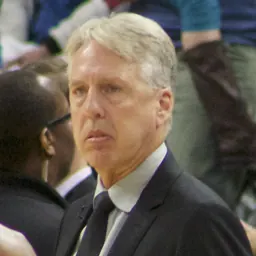


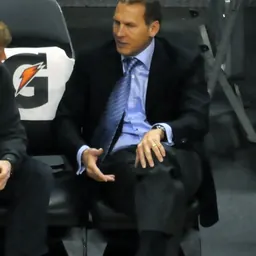
Contemporaries
People whose lives overlapped Ronnie Lester's
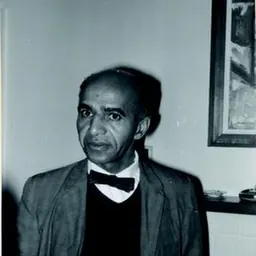



Frequently asked questions
Who is Ronnie Lester?
American basketball player (born 1959)
When was Ronnie Lester born?
Ronnie Lester was born on 1 January 1959 in Canton.
What is Ronnie Lester's occupation?
Ronnie Lester is a basketball player.
What nationality is Ronnie Lester?
Ronnie Lester is American.
Sources & further reading
Cite this page
APA: Biography.guide. (2026). Ronnie Lester. https://biography.guide/ronnie-lester/
MLA: "Ronnie Lester." Biography.guide, https://biography.guide/ronnie-lester/.
Chicago: "Ronnie Lester." Biography.guide. https://biography.guide/ronnie-lester/.
Data last updated: 2026-09-20 · Spot an error? Report a correction.
Page generated 2026-09-27 05:12 UTC