
About Ronald Suresh Roberts
Born 1968. Ronald Suresh Roberts is a South African biographer.
Ronald Suresh Roberts (born 17 February 1968) is a British West Indian writer and lawyer. He is best known for his biographies of two leading figures in the "New South Africa", author Nadine Gordimer and former South African President Thabo Mbeki.
Early life and education Roberts was born on 17 February 1968 in London, England. Born in Hammersmith to an Afro-Caribbean father and an Indo-Malaysian mother, he grew up in his father's homeland of Trinidad and Tobago. He attended Fatima College in Port of Spain and went to Balliol College, Oxford in 1986 to read law on a Trinidadian national scholarship. After his graduation from Harvard, Roberts worked on Wall Street at Winthrop, Stimson, Putnam & Roberts. Thereafter he took up policy and political work full-time, beginning in 1995 with research with Tiego Moseneke about privatisation and public–private partnerships.
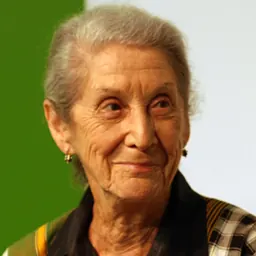
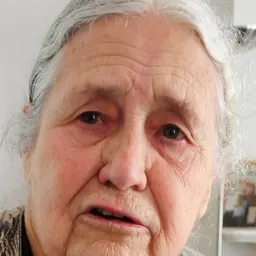
No Cold Kitchen (2006) Roberts's first biography was No Cold Kitchen: A Biography of Nadine Gordimer, about the Nobel Laureate and author Nadine Gordimer. He wrote the first draft of the biography between 1997 and 2002 with Gordimer's full cooperation, several interviews, and access to her personal archives. However, Gordimer withdrew her endorsement upon reading the draft in December 2002. According to Roberts, she objected to his account of her romantic relationships, to his inclusion of disparaging remarks she had made about Doris Lessing and Ruth First, and to critical passages about her contemporary political views on the Israel–Palestine conflict and the South African AIDS crisis. The project was subsequently dropped by Bloomsbury Publishing in London and Farrar, Straus and Giroux in New York, who were also publishers of Gordimer's fiction. The book was ultimately published in South Africa in 2006 by STE Publishers, and it was a finalist for the that year's Alan Paton Award. In later years, the relationship between Roberts and Gordimer became the subject of Craig Higginson's play The Imagined Land, the inspiration for Patrick Flanery's novel Absolution, and a case study in Hermione Lee's Biography: A Very Short Introduction; these and various other sources treated the dispute as emblematic both of ethical quandaries in biographical writing and of broader cultural tensions in post-apartheid South Africa.
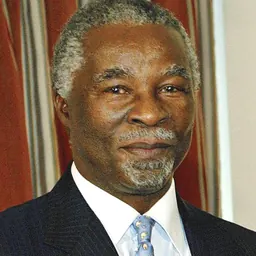
Fit to Govern (2007) Shortly after publishing No Cold Kitchen, Roberts was approached by South African President Thabo Mbeki to write the first authorized account of his intellectual and policy agendas. Called Fit to Govern: The Native Intelligence of Thabo Mbeki, the book was controversial for its insistent post-colonialism and focus on Mbeki as an African leader as opposed to a Western one. In the book Roberts argued that Mbeki's view on the link between HIV and AIDS, was not one of ignorance or denial but scientific curiosity—and that many of the points raised by Mbeki and initially controversial have since entered the orthodoxy.
In 2007 the controversial author and AIDS denialist Anthony Brink accused Roberts of using elements of his own unfinished work in Roberts' biography of Mbeki. Roberts countered that Brink had no relevant research given that as late as 2005 Brink remained a "complete stranger to the president at a personal level".
Disputes with the Sunday Times In 2006 Leslie Weinkove, Acting Judge of the Western Cape High Court judgement, found against Roberts in a defamation case Roberts instituted against the South African newspaper The Sunday Times. The judgment gives detailed descriptions of his behaviour in dealing with a complaint against the South African Broadcasting Corporation. Roberts' response to the judgment was published in an extensive interview in the South African Mail & Guardian, which cites a suppressed letter from Ken Owen, a previous editor of The Sunday Times, which recognised The Times′ "eagerness to smear Ronald Roberts" and repudiated the words the newspaper had attributed to him, adding: "I must say that on matters within my knowledge [its] reporting is false."
In 2007 the same newspaper incorrectly placed Roberts, Christine Qunta and others in a group of 12 signatories to an article supposedly supporting AIDS denialism. Roberts complained and the Times issued a retraction and apology to the group. Roberts accepted the apology but maintained that the newspaper's conduct was "shameful but not surprising."
Later career As of 2021, Roberts was a student at the University of Liverpool School of Law and Social Justice and a visiting senior fellow in the Department of Sociology at the London School of Economics.
Don’t just read it —
keep it.
Full-length biographies made to live with: read them, listen on the way to work, watch them tonight.
- E-book
- Audio
- Video
Instant download · yours to keep · every purchase keeps this site free
Important facts
People in Ronald Suresh Roberts's life
Named in this biography and alive at the same time

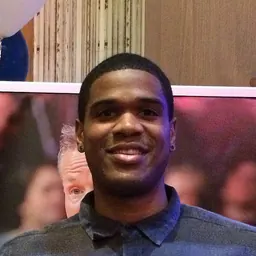

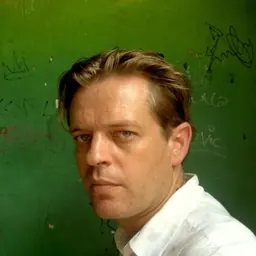
Related people
Same field, nearest in time





Contemporaries
People whose lives overlapped Ronald Suresh Roberts's
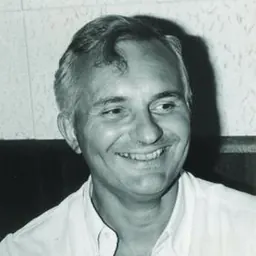
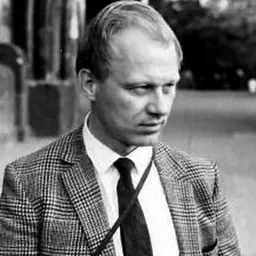

Frequently asked questions
Who is Ronald Suresh Roberts?
South AFrican writer
When was Ronald Suresh Roberts born?
Ronald Suresh Roberts was born on 17 February 1968 in London.
What is Ronald Suresh Roberts's occupation?
Ronald Suresh Roberts is a biographer.
What nationality is Ronald Suresh Roberts?
Ronald Suresh Roberts is South African.
Sources & further reading
· Wikipedia: Ronald Suresh Roberts
· DBpedia: Ronald Suresh Roberts
Cite this page
APA: Biography.guide. (2026). Ronald Suresh Roberts. https://biography.guide/ronald-suresh-roberts/
MLA: "Ronald Suresh Roberts." Biography.guide, https://biography.guide/ronald-suresh-roberts/.
Chicago: "Ronald Suresh Roberts." Biography.guide. https://biography.guide/ronald-suresh-roberts/.
Data last updated: 2026-09-22 · Spot an error? Report a correction.
Page generated 2026-09-27 05:32 UTC