
About Ronald Poulton-Palmer
Lived 1889 – 1915 (aged 25). Ronald Poulton-Palmer was a British rugby union player.
Ronald 'Ronnie' William Poulton (later sometimes Poulton-Palmer) (12 September 1889 – 5 May 1915) was an English rugby union footballer, who captained . He was killed in the First World War during the Second Battle of Ypres.
Born in north Oxford, he was the son of Emily Palmer and her husband, the zoologist Sir Edward Bagnall Poulton. He was educated at the Dragon School, Rugby School, and Balliol College, Oxford.
Poulton played for Balliol College, Oxford University RFC, Harlequins and Liverpool F.C. Poulton is one of three men to score a hat-trick of tries in The Varsity Match – he scored five, still the individual record for the fixture, in 1909. He captained England during the 1913–14 unbeaten season (now what would be called a 'Grand Slam'), scoring four tries against France in 1914, in the last test match prior to the outbreak of World War I. Poulton was renowned for his elusiveness and glamorous style of play – "the very mention of swerving sends one's thoughts to the late Ronald Poulton, the swerver par excellence ... swerving and Poulton are almost synonymous terms".
Personal life Poulton was born on 12 September 1889 at Wykeham House, Oxford to Edward Bagnall Poulton and his wife Emily Palmer Poulton. His father Edward was Hope Professor of Zoology at Oxford University, and a Fellow of Jesus College. He was born into a wealthy family, and brought up at Wykeham House, an impressive residence on Oxford's Banbury Road, with six servants. His siblings were Edward, Hilda, Margaret, all older, and his younger sister, Janet.
He was educated at Oxford Preparatory School ("OPS", now the Dragon School) from 1897 to 1903. The headmaster of OPS described Poulton as "the best all-round athlete who had ever been at the school". School records reveal that he scored 15 tries in one match against St Edward's Juniors. In earlier matches, Poulton had played at centre with Gilray on the wing, but for the Varsity Match of 1909, they reversed places. The match came to be known as "Poulton's Match": within a brilliant performance by the Oxford backline, his contribution was notable, and his tally of five tries in the Varsity Match remains unrivalled.
Following this performance, Geen and Poulton, who together were considered the scoring force of the Oxford team, were both selected to play for England in the second trial match against The North in Leeds. Although Geen scored a try in the game, he was outshone by Poulton, "the only man who was adding to his reputation, and [played] a really brilliant game." For the third and final trial, England versus The Rest on 7 January 1911, Geen was dropped, while Poulton was kept on. Poulton, for his part, was only picked to play for England in one test match in 1911, against Scotland on 18 March.
Poulton captained Oxford in his last term, in the autumn of 1911. In the run up to the 1911 Varsity Match, the Poulton–Geen partnership was a constant threat to opposition teams. Ten days before the game, Oxford beat London Scottish 39–3, Poulton twice putting Geen in the clear, with the latter ending the day with four tries in total. Cambridge, nevertheless, were favourites to win on 12 December, but Poulton led Oxford to victory, in front of a crowd of 10,000. Poulton, however, after scoring the first try of the match in the opening moments, suffered a hamstring injury approaching half time, and his replacement Eric Thomas, a forward, lacked the speed and skills to combine effectively with Geen. Nevertheless, Geen came close to scoring, but, as he had done in the previous year's match, he dropped the ball over the tryline. He was to repeat the error the following year.
1912 to 1914 Moving to Liverpool, Poulton played for Liverpool Football Club (which later merged with St Helen's RUFC to form Liverpool St Helens FC) under the captaincy of Freddie Turner, a former Oxford teammate, and captain of Scotland. The team also included Dickie Lloyd, Ireland's flyhalf and captain, so that the club had in the 1913–14 season three international rugby captains of the same era. The club lost 57 members in the First World War, including both Turner and Poulton.
Poulton played three games for England in 1912, against Wales on 20 January, Ireland on 10 February, and Scotland on 16 March. The first match was against Wales, and England only just managed to win. For the next game, against Ireland, a large police contingent was posted outside the ground in anticipation of violent protests relating to the Home rule debate, but the 40,000 crowd were peaceable and kept entertained. The Irish flyhalf and captain that day was Poulton's Liverpool teammate Dickie Lloyd, who praised Poulton as 'the greatest player I ever came in contact with ... It was as much a pleasure to play against him as with him for he was always the same fascinating figure ...'
International appearances
Military service and death
After leaving Oxford and stepping down from the Officers' Training Corps, Poulton moved to Reading in January 1912, where he was commissioned into 1st/4th Battalion Princess Charlotte of Wales's (Royal Berkshire Regiment) (Territorial Force) in June of the same year, and promoted to the rank of lieutenant in July 1913. At the outbreak of the First World War in August 1914, Poulton volunteered for overseas service. He wrote to his parents saying: "Darling parents, nothing counts till this war is settled and Germany beaten. You can't realise in Australia what is happening here. Germany has to be smashed, i.e. I mean the military party and everybody realises and everybody is volunteering. Those who are best trained are most wanted so I would be a skunk to hold back."
Three weeks earlier, on 14 April he had captained a South Midlands Division team to a 17–0 victory in a game of rugby against the 4th Division, with Basil Maclear, the former Irish international, as referee. It was Poulton's last. His team included two other internationals, Sid Smart of England, and William Middleton Wallace of Scotland, while the opposition fielded Billy Hinton and Tyrell, both of Ireland, Rowland Fraser of Scotland, and Morton of England.
Ronald Poulton Palmer's grave is in Hyde Park Corner (Royal Berks) Cemetery, near Ploegsteert, Belgium. The cross marking Poulton's grave in Flanders was taken back to Oxford, and is mounted in a wall in Holywell Cemetery The Reverend Albert David, Head Master of Rugby School, delivered these words in his sermon: "... we have indeed given of our best. If we were asked to describe what highest kind of manhood rugby helps to make, I think we should have Ronnie in mind as we spoke of it. God had endowed him with a rare combination of graces ... what we hoped would come of it ... strong and tender and true, he lived for others and died for others."
On 30 May 1915, a memorial service was held at St Giles' Church in Oxford. Reverend William Temple addressed the congregation, saying: "Many of us believed that with his ready sympathy, his utter freedom from selfishness, and his courage to follow what he saw to be right, he would grasp the causes of our labour unrest and class friction, and by removing them from the great industry in whose control a large part was to be his, set an example which would prove a great force in our social regeneration ... What he hated most in our usual manner of life was the artificial barriers that hold people apart, and the suspiciousness of one class towards another ..."
Twenty seven England international rugby players were killed in World War I of a total international toll of one hundred and thirty. One of the most notable was Poulton-Palmer, who was considered by many contemporary observers as perhaps the greatest-ever attacking rugby union threequarter.
Awards Poulton was inducted into the World Rugby Hall of Fame on 20 September 2015.
Don’t just read it —
keep it.
Full-length biographies made to live with: read them, listen on the way to work, watch them tonight.
- E-book
- Audio
- Video
Instant download · yours to keep · every purchase keeps this site free
Important facts
People in Ronald Poulton-Palmer's life
Named in this biography and alive at the same time





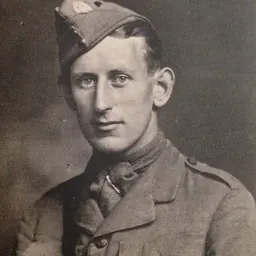

Related people
Same field, nearest in time
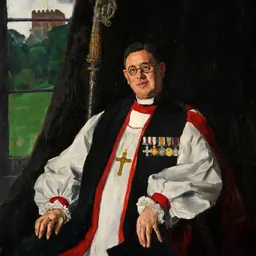

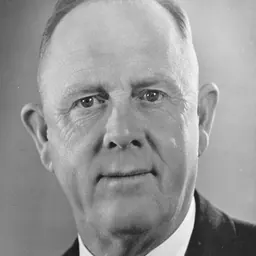
Contemporaries
People whose lives overlapped Ronald Poulton-Palmer's


Frequently asked questions
Who was Ronald Poulton-Palmer?
English rugby union footballer (1889–1915)
When was Ronald Poulton-Palmer born?
Ronald Poulton-Palmer was born on 12 September 1889 in Headington.
When did Ronald Poulton-Palmer die?
Ronald Poulton-Palmer died on 5 May 1915 in Ploegsteert.
What was Ronald Poulton-Palmer's occupation?
Ronald Poulton-Palmer was a rugby union player.
What nationality was Ronald Poulton-Palmer?
Ronald Poulton-Palmer was British.
Sources & further reading
· Wikipedia: Ronald Poulton-Palmer
Cite this page
APA: Biography.guide. (2026). Ronald Poulton-Palmer. https://biography.guide/ronald-poulton-palmer/
MLA: "Ronald Poulton-Palmer." Biography.guide, https://biography.guide/ronald-poulton-palmer/.
Chicago: "Ronald Poulton-Palmer." Biography.guide. https://biography.guide/ronald-poulton-palmer/.
Data last updated: 2026-09-25 · Spot an error? Report a correction.
Page generated 2026-09-27 05:11 UTC