
About Ron Halcombe
Lived 1906 – 1993 (aged 87). Ron Halcombe was an Australian cricketer.
Ronald Andrewes Halcombe (19 March 1906 – 1 August 1993) was a first-class cricketer who represented South Australia and Western Australia in a career spanning from 1926/27 to 1939/40.
A right-arm fast bowler, Halcombe moved from South Australia to Western Australia after two seasons due to a lack of opportunity. With more regular selection on the field, Halcombe was considered a leading contender to become his state's first ever representative for Australia in Test cricket due to his express pace, but his career was derailed after he was no-balled for throwing in two consecutive matches in early 1930.
Some solid performances in the early 1930s led to rumours that he would be brought into the Australian team in order to retaliate against England's Bodyline tactics during the 1932–33 Ashes series. However, this never eventuated and thereafter Halcombe increasingly found state selection hard to come by. In retirement he became a well known sports commentator for the Australian Broadcasting Commission, providing description of cricket and Australian rules football matches until his retirement from the media in 1968.
Early years
Halcombe grew up in South Australia, and studied at St Peter's College, Adelaide in his youth. There he earned the attention of cricket watchers for his fast-bowling skill and his suspect action. Halcombe was suspected of throwing, meaning an illegal bowling action in which a player straightens his arm in the process of delivering the ball, thereby throwing it, whereas the laws of cricket require that a bowler does not change the angle of his elbow in delivering the ball. In 1923, while still a schoolboy, he was observed by former England captain Archie MacLaren (who was then visiting Australia as part of the Marylebone Cricket Club team) and former Australia captain and all-rounder George Giffen. To test the legitimacy of Halcombe's action, his wrist, forearm and elbow were encased in splints, so that he could not move his elbow position. He delivered balls at varying speeds, and the experts failed to detect an illegal action.
Halcombe made his first-class debut during the 1926–27 season, playing four matches for South Australia. He made his debut against Queensland. He was unbeaten without scoring in his first innings as South Australia made 579. Halcombe then took 2/37 as Queensland made 251 and were forced to follow on. He conceded 58 runs without taking a wicket in the second innings, but his team nevertheless won by ten wickets.
Halcombe's first match for his new state in 1928–29 was against the touring England cricket team. He took 3/114 as the tourists compiled 406 in a drawn match. During the second innings of the match against England, Halcombe struck George Geary in the head with a bouncer, forcing him to be carried from the field. This drew further attention to Halcombe's bowling action. Halcombe was dropped to the colts (youth) team, and he promptly bowled them to victory against South Australia with 6/31 and 6/32. After taking match figures of 3/77 against Victoria Colts, Halcombe played his second first-class fixture of the season when Australian selectors selected him for an Australian XI against England at the end of the season. He took 2/50 in a drawn match, his wickets being Maurice Tate and Maurice Leyland.
However, his career turned sour in a match against Victoria in January 1930. After contributing three not out in Western Australia's first innings of 187,
The second day started dramatically when Halcombe bowled from the opposite end and bowled the second over of the day, with Lonergan standing at square leg. His first ball was deemed to be legitimate but from then on there was a continuous call of no-ball, for ten consecutive deliveries. Halcombe then substantially reduced his pace and completed the over after 18 balls. Although Bryant did not switch Halcombe to the other end in the first match, he did so on this occasion. Halcombe continued bowling and there were no further no-ball calls. During the ten consecutive no-balls, Lonergan had remained firm despite continuous heckling from a section of the crowd who showed their support of the bowler.
Tasmania took a 42-run lead and Western Australia made 7/303 before declaring, with Halcombe not being required to bat. To make things worse, Halcombe made a pair as his team crashed to defeat by an innings and 234 runs.
In the final match of the season, Halcombe represented Western Australia against the 1930 Australian team, who were warming up for the 1930 tour of England. Halcombe bowled nine wicketless overs for 47 runs, as the national team won by an innings with 25 runs. He was unbeaten in both innings, not scoring in the first innings and making his highest first-class score of 14 in the second. He ended the season with nine wickets at 31.33 and 34 runs at 8.50.
Media career
After his cricket career ended, Halcombe had a successful career as a sports broadcaster. In 1947 he was appointed as the sports supervisor for the Australian Broadcasting Commission in Perth. He was Western Australia's first full-time sports broadcaster, a position that he filled until his retirement in 1968. Halcombe won a strong personal following for his flamboyant description of cricket and Australian rules football matches. He also conducted regular segments on his Saturday sports programs such as "Strange but True" and "People I Met This Week". He developed a reputation as a raconteur and had a habit of rummaging through old newspapers in search of sporting items. Halcombe travelled widely throughout the state to interview notable sports personalities and presented his broadcasts in a distinctive humorous style. He was particularly remembered for his commentary partnerships with Johnnie Moyes and Englishman Arthur Gilligan during English tours to Australia.
Don’t just read it —
keep it.
Full-length biographies made to live with: read them, listen on the way to work, watch them tonight.
- E-book
- Audio
- Video
Instant download · yours to keep · every purchase keeps this site free
Important facts
People in Ron Halcombe's life
Named in this biography and alive at the same time

Related people
Same field, nearest in time
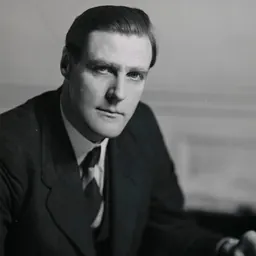
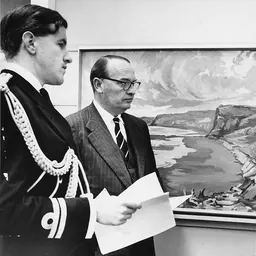


Contemporaries
People whose lives overlapped Ron Halcombe's

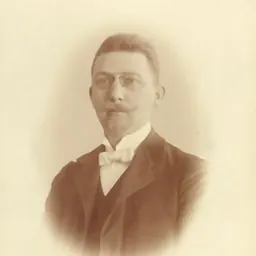

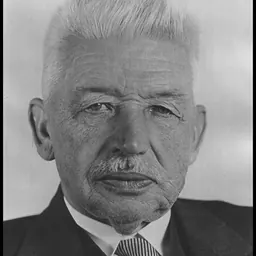

Frequently asked questions
Who was Ron Halcombe?
Australian cricketer (1906-1993)
When was Ron Halcombe born?
Ron Halcombe was born on 19 March 1906 in Peterborough.
When did Ron Halcombe die?
Ron Halcombe died on 1 August 1993 in Geelong.
What was Ron Halcombe's occupation?
Ron Halcombe was a cricketer.
What nationality was Ron Halcombe?
Ron Halcombe was Australian.
Sources & further reading
Cite this page
APA: Biography.guide. (2026). Ron Halcombe. https://biography.guide/ron-halcombe/
MLA: "Ron Halcombe." Biography.guide, https://biography.guide/ron-halcombe/.
Chicago: "Ron Halcombe." Biography.guide. https://biography.guide/ron-halcombe/.
Data last updated: 2026-09-20 · Spot an error? Report a correction.
Page generated 2026-09-27 05:25 UTC