
About Roman Rosen
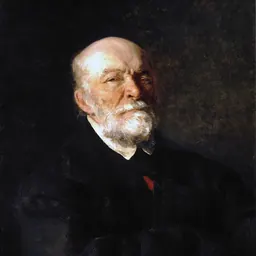
Lived 1847 – 1921 (aged 74). Roman Rosen was a Russian diplomat and politician.
Baron Roman Romanovich Rosen (; February 24, 1847 – December 31, 1921) was a diplomat in the service of the Russian Empire.
Biography Rosen was from a Baltic German nobility (with a Swedish title, obtained when Livonia and Pomerania were Swedish territories) that included musicians and military leaders. One of his ancestors, another Baron Rosen, won distinction in command of the Astrakhanskii Cuirassier Regiment at the Battle of Borodino on September 7, 1812, for which he was noted in the official battlefield report to General Barclay de Tolly. A Washington Post article dated July 5, 1905 claimed that "Baron Rosen is of Swedish ancestry, his forebears having followed Swedish King Gustavus Adolphus in his invasion of Russia and settled there. He was chargé d'affaires at Tokyo and later at Washington, and was acting in a judicial capacity as the mouthpiece of an international tribunal that was regarded as discourteous to Japan. ... As judicial minister, he reformed the judicial system of Siberia." Actually, the family was originally from Bohemia (Habsburg territory) and included one Marshal of France and one Austrian Field-Marshal. Rosen’s mother was a Georgian, Elizabeth Sulkhanishvili.
Early career Rosen graduated from the Imperial University of Dorpat and the Imperial School of Jurisprudence, and joined the Russian Foreign Ministry’s Asiatic Department, rising to head the Japan Bureau in 1875. He helped draft the Treaty of Saint Petersburg (1875), in which Japan exchanged its claims over Sakhalin for undisputed sovereignty over the entire Kurile islands chain. Negotiating the Treaty of Portsmouth (1905) – from left to right: the Russians at far side of table are Korostovetz, Nabokov, Witte, Rosen, Plancon; and the Japanese at near side of table are Adachi, Ochiai, Komura, Takahira, Satō. The large conference table is today preserved at the Museum Meiji Mura in Inuyama, Aichi Prefecture, Japan.
Later career Rosen stayed in the United States until autumn 1911, when he was recalled to St. Petersburg to retire from the diplomatic service. He was subsequently appointed by Tsar Nicholas II to the State Council of Imperial Russia. He held this membership in the Russian parliamentary Upper House under the Constitution of 1905 until the overthrow of the monarchy by the February Revolution in 1917. During this time, in 1913, he spoke against the alienation of Congress Poland, arguing that if a "racial conflict" were to break out in Europe, "Russia's frontiers should be in unity with herself." After the Bolshevik takeover in November 1917 October Revolution and the subsequent persecution of the old political and social elites, Rosen and his family managed to escape from Russia with the help of Western diplomatic friends in the end of the year 1918. He spent his last years in poverty, working as a translator and business consultant. This crash resulted in the fracture of his shin bone, and despite the fact that he was initially "cheerful[ly] unconcern[ed]" about this crash, Baron Rosen died due to lobar pneumonia resulting from this crash on December 31, 1921, a little more than two weeks after this crash occurred.
Legacy Rosen wrote a series of articles about European diplomacy and politics for The Saturday Evening Post covering the period from his first exile in Sweden to his life in the United States. The series was published in 41 parts from 1919–1921 and was posthumously issued as a 2-volume-book "Forty Years of a Diplomat's Life" in 1922.
Awards link=Order of St. Stanislav Order of St. Stanislaus, 1st degree, (1894)
link=Order of St. Vladimir Order of St Vladimir, 2nd degree (1900)
link= Order of St. Alexander Nevsky, Order of St. Alexander Nevsky, (1911)
Don’t just read it —
keep it.
Full-length biographies made to live with: read them, listen on the way to work, watch them tonight.
- E-book
- Audio
- Video
Instant download · yours to keep · every purchase keeps this site free
Important facts
Related people
Same field, nearest in time

Contemporaries
People whose lives overlapped Roman Rosen's




Frequently asked questions
Who was Roman Rosen?
Baltic German diplomat (1847-1921)
When was Roman Rosen born?
Roman Rosen was born on 12 February 1847 in Tallinn.
When did Roman Rosen die?
Roman Rosen died on 31 December 1921 in New York City.
What was Roman Rosen's occupation?
Roman Rosen was a diplomat and politician.
What nationality was Roman Rosen?
Roman Rosen was Russian.
Sources & further reading
Cite this page
APA: Biography.guide. (2026). Roman Rosen. https://biography.guide/roman-rosen/
MLA: "Roman Rosen." Biography.guide, https://biography.guide/roman-rosen/.
Chicago: "Roman Rosen." Biography.guide. https://biography.guide/roman-rosen/.
Data last updated: 2026-09-22 · Spot an error? Report a correction.
Page generated 2026-09-27 05:33 UTC