
About Roland Paoletti
Lived 1931 – 2013 (aged 82). Roland Paoletti was a British architect.
Romano Roland Paoletti (23 April 1931 – 13 November 2013) was a British-Italian architect. He was best known for his work on the early stations for Hong Kong's Mass Transit Railway, and for commissioning the award-winning designs of the stations of London Underground's Jubilee Line Extension. He was described by the Architectural Review as "the Medici of London Transport".
Early life and career Paoletti was born in London in 1931, at the City of London Hospital. His father was Italian and his mother French. The name Romano came from a church local to Lucca, Italy, where his father's family are thought to have lived for at least 700 years.
His father was treated as an enemy alien in the Second World War and the family had to move to Scotland. In 1942, Paoletti was sent to Clongowes Wood College, a Jesuit boarding school in County Kildare, Ireland. From 1948 he studied architecture at the University of Manchester, then moved to London to work with Basil Spence. After this he undertook postgraduate studies at the Istituto Universitario di Architettura in Venice under Carlo Scarpa and Giancarlo De Carlo. He became an assistant to Pier Luigi Nervi on the building of a new British Embassy in Rome to a design by Spence.
The use of individual colours for each station was thought to give each station a unique identity, as well as assisting illiterate passengers. In 1990, Sir Wilfrid Newton, chairman of the MTR, left Hong Kong to become chairman of London Regional Transport, which Paoletti joined him in London as commissioning architect for the new stations as part of the Jubilee Line Extension.
There had been plans to extend the London Underground's Jubilee line for many years. The final route for the extension involved eleven stations: Westminster, Waterloo, Southwark, London Bridge, Bermondsey, Canada Water, Canary Wharf, North Greenwich, Canning Town, West Ham and Stratford, plus a new depot at Stratford.
Since the 1930s, London Underground's architects had designed the surface buildings, but the sub-surface spaces were designed by civil engineers and only fitted out by the architects. Paoletti hired different architects to design each station, while maintaining that all should share an "underlying philosophy and essential elements." His own in-house architect team coordinated the work of the various architect teams, as well working on Waterloo and Canada Water stations. Westminster new ticket hall and two additional deep-level platforms Hopkins Architects Lambeth new ticket hall and two additional deep-level platforms JLE Project Architects
new station with two deep-level platforms MacCormac, Jamieson, Prichard new ticket hall and two additional deep-level platforms Weston Williamson and JLE Project Architects new station with two deep-level platforms Ian Ritchie
new station with two deep-level platforms and two new sub-surface platforms on East London Line JLE Project Architects and Heron Associates new bus station Eva Jiřičná Tower Hamlets new station with two deep-level platforms Foster + Partners
new station with three deep-level platforms Alsop, Lyall and Störmer new bus station Foster + Partners
new station with two surface platforms, two new elevated platforms for the DLR and two surface platforms for the North London line, new bus station Troughton McAslan new station building with two additional surface platforms Van Heyningen and Haward Architects
New station building and plaza WilkinsonEyre Three additional surface platforms and train crew building Troughton McAslan
Recognition Many of the Jubilee line stations received individual awards and commendations for their architecture, including Westminster and Canary Wharf being jointly awarded the 2000 Civic Trust Building of the Year. The Royal Fine Art Commission named the extension as a whole their Millennium Building of the Year, with the chair of the judging panel calling it "comparable to the achievement of Haussmann when he constructed the great boulevards of Paris". Paoletti himself received the RIBA/Arts Council Award for "Client of the Year" 1999.
Paoletti won first RIBA Client of the Year award in 1998, and was appointed a Commander of the Order of the British Empire (CBE) in the 2000 New Year Honours for "services to Architecture". The Architectural Review called him "the Medici of London Transport".
He died in London. He was survived by his wife, Nora. They had no children.
Don’t just read it —
keep it.
Full-length biographies made to live with: read them, listen on the way to work, watch them tonight.
- E-book
- Audio
- Video
Instant download · yours to keep · every purchase keeps this site free
Important facts
People in Roland Paoletti's life
Named in this biography and alive at the same time
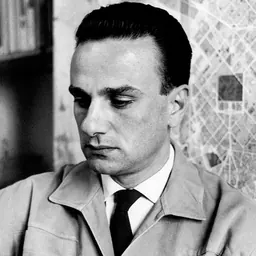
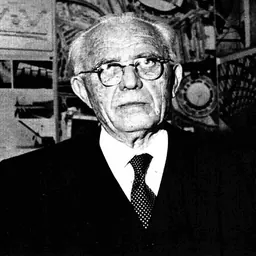

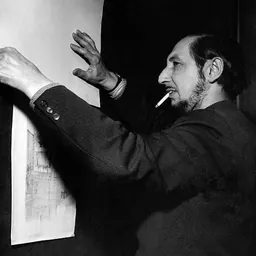



Related people
Same field, nearest in time

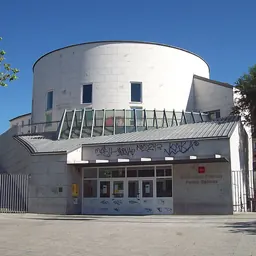
Contemporaries
People whose lives overlapped Roland Paoletti's

Frequently asked questions
Who was Roland Paoletti?
British-Italian architect (1931-2013)
When was Roland Paoletti born?
Roland Paoletti was born on 23 April 1931 in London.
When did Roland Paoletti die?
Roland Paoletti died on 13 November 2013 in London.
What was Roland Paoletti's occupation?
Roland Paoletti was an architect.
What nationality was Roland Paoletti?
Roland Paoletti was British.
Sources & further reading
Cite this page
APA: Biography.guide. (2026). Roland Paoletti. https://biography.guide/roland-paoletti/
MLA: "Roland Paoletti." Biography.guide, https://biography.guide/roland-paoletti/.
Chicago: "Roland Paoletti." Biography.guide. https://biography.guide/roland-paoletti/.
Data last updated: 2026-09-20 · Spot an error? Report a correction.
Page generated 2026-09-27 05:14 UTC