
About Roger Vailland
Lived 1907 – 1965 (aged 57). Roger Vailland was a French writer, journalist, screenwriter, novelist, essayist and playwright.
Roger François Vailland (; 16 October 1907 – 12 May 1965) was a French novelist, journalist, essayist, playwright and screenwriter. His published work includes nine novels, three plays, political and literary essays, travel books, film scripts, war reporting, an extensive body of journalism, correspondence and a posthumously published private journal.
As a schoolboy in Reims, Vailland helped form the Phrères Simplistes, the group from which the avant-garde magazine and collective Le Grand Jeu developed. He proposed the magazine's title and played a substantial part in devising its editorial programme. Although the Grand Jeu belonged to the wider surrealist milieu, it remained independent of the organisation directed by André Breton.
Vailland began working for the Paris press in 1928 and became a senior reporter for Paris-Soir. During the 1930s he travelled widely, wrote serial fiction and film criticism, cultivated the public manner of a dandy and used opium regularly. During the Second World War he underwent treatment for addiction, joined the French Resistance and began writing fiction in earnest. His first novel, Drôle de jeu (1945), drew on his experience of underground resistance and won the Prix Interallié.
Vailland formally joined the French Communist Party in 1952, after several years as a fellow traveller, but became disillusioned following Nikita Khrushchev's denunciation of Stalin and the Soviet suppression of the Hungarian Revolution of 1956. He gradually withdrew from the party and ceased renewing his membership in 1959. His novel La Loi won the Prix Goncourt in 1957. His later work continued to explore political power, social class, libertinage, rules and games, and the pursuit of what he called individual "sovereignty".
Early life and education
Vailland was born in Acy-en-Multien, where his father owned a surveying practice. The family moved to Paris in 1910, and Vailland entered the Lycée Henri-IV in 1918. In 1919 they settled in Reims, then undergoing reconstruction after the First World War.
In 1925 Vailland received his baccalaureate in philosophy and entered the hypokhâgne at the Lycée Louis-le-Grand in Paris, intending to prepare for the entrance examination to the École normale supérieure. He later studied at the University of Paris and completed a philosophy degree in 1928.
He used the bylines Robert François, Georges Omer and Étienne Merpin in his journalistic work. The Maitron also records his use of the pseudonym Frédéric Roche for a series published in Le Droit de vivre in 1936.
During the 1930s Vailland cultivated the appearance of a dandy while using opium regularly. His secure journalistic income allowed him to sustain the habit without the immediate destitution experienced by Gilbert-Lecomte. He met the cabaret singer Andrée Blavette in 1935 and married her the following year.
After being cut off from his network in 1944, Vailland began writing Drôle de jeu at Chavannes. Published in 1945, the novel used the daily routine of an underground intelligence group to explore courage, secrecy, political commitment, pleasure and betrayal. Its central figure, Marat, drew upon Vailland's own position as a journalist turned information agent, while Caracalla was based partly on Cordier. The novel received the Prix Interallié.
Post-war literary and political career
The success of Drôle de jeu began the most sustained period of Vailland's literary career. It was followed by Les Mauvais Coups (1948), a study of a destructive relationship; Bon pied, bon œil (1950); Un jeune homme seul (1951); Beau Masque (1954), which concerns factory life, union organisation and class conflict; and 325 000 francs (1955), centred on a worker's attempt to escape his condition by submitting himself to an extreme regime of industrial labour.
Vailland continued writing for progressive newspapers and periodicals, including Action, Libération, La Tribune des nations, Les Lettres françaises and Réalités. René Ballet, who edited two large posthumous collections of this journalism, argued that newspaper work taught Vailland to seize upon the gesture, expression or observed detail capable of summarising an entire situation.
Vailland married Élisabeth Naldi in 1954, after his divorce from Andrée Blavette, and the couple settled at Meillonnas. His political commitment informed several novels of the period. Beau Masque depicts a strike and the relation between personal love and collective solidarity; 325 000 francs examines piecework, bodily exhaustion and the failure of individual economic advancement. Vailland did not hold office within the Communist Party, and his relation to party doctrine remained mediated by his own ideas of discipline, freedom and sovereignty.
The revelations about Stalin made at the 20th Congress of the Communist Party of the Soviet Union in 1956, followed by the Soviet intervention in Hungary, caused a profound political crisis for Vailland. He signed a protest against the intervention and gradually withdrew from organised party activity. He remained a member through 1958 but declined to renew his card in 1959. His departure did not amount to an abandonment of the political left; class, labour, capitalism and collective action remained important in his later writing.
Pierrette Amable in Beau Masque subordinates her private life to trade-union action and survives the conflict in which her lover dies. Frédérique in La Truite refuses the forms of sexual and financial possession proposed by the men around her. Vailland often gave such characters an androgynous or physically forceful appearance, although their autonomy remains entangled with the male narrator's fascination and systems of social power. Bel-Ami (1955), directed by Daquin Les Liaisons dangereuses (1959), directed by Roger Vadim Et mourir de plaisir (1960), directed by Vadim and adapted from Sheridan Le Fanu La Novice (1961), directed by Alberto Lattuada Les Mauvais Coups (1961), directed by François Leterrier Le Jour et l'Heure (1962), directed by René Clément Le Vice et la Vertu (1963), directed by Vadim 325 000 francs (1964), a television adaptation directed by Jean Prat
Several of Vailland's novels were adapted without his participation, including La Loi by Jules Dassin in 1958, Drôle de jeu by Pierre Kast and Jean-Daniel Pollet in 1968, Beau Masque by Bernard Paul in 1972, and La Truite by Joseph Losey in 1982.
Selected works
Novels
Drôle de jeu (1945), Prix Interallié Les Mauvais Coups (1948) Bon pied, bon œil (1950) Un jeune homme seul (1951) Beau Masque (1954) 325 000 francs (1955) La Loi (1957), Prix Goncourt La Fête (1960) La Truite (1964)
Early fiction and historical narratives
Fulgur, collective serial novel (1927; book edition 1992) Leïla ou les ingénues voraces (serial, 1932) Ulysse dans la cité, after Ilarie Voronca (1933) La Visirova (serial, 1933; book edition 1986) Un homme du peuple sous la Révolution, with Raymond Manevy (serial, 1937; book edition 1947) Cortès, le conquérant de l'Eldorado (serial, 1941; book edition 1992)
Travel and reportage
Suède 40 (1940) La Bataille d'Alsace (1945) La Dernière Bataille de l'armée De Lattre (1945) Léopold III devant la conscience belge (1945) Boroboudour (1951) Choses vues en Égypte (1952) La Réunion (1964) Les Ruines de Berchtesgaden, edited by Marie-Noël Rio (2026)
Essays
Quelques réflexions sur la singularité d'être français (1946) Esquisse pour un portrait du vrai libertin (1946) Le Surréalisme contre la révolution (1948) Expérience du drame (1953) Laclos par lui-même (1953) Éloge du cardinal de Bernis (1956) Les Pages immortelles de Suétone (1962) Le Regard froid: réflexions, esquisses, libelles, 1945–1962 (1963)
Theatre
Héloïse et Abélard (1947) Appel à Jenny Merveille (radio play, 1948) Le Colonel Foster plaidera coupable (1952) Batailles pour l'humanité (1954) Monsieur Jean (1959)
Posthumous publications and collections
Écrits intimes (1968; expanded edition 1982) Lettres à sa famille (1972) Le Saint-Empire (1978) Chronique des années folles à la Libération, 1928–1945 (1984) Chronique d'Hiroshima à Goldfinger, 1945–1965 (1984) L'Épopée du Martin-Siemens (1991) N'aimer que ce qui n'a pas de prix (1995) Les Hommes nus (1996)
Don’t just read it —
keep it.
Full-length biographies made to live with: read them, listen on the way to work, watch them tonight.
- E-book
- Audio
- Video
Instant download · yours to keep · every purchase keeps this site free
Important facts
People in Roger Vailland's life
Named in this biography and alive at the same time
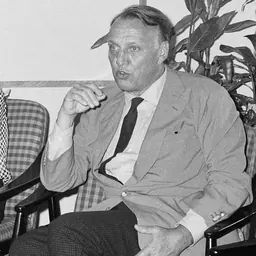

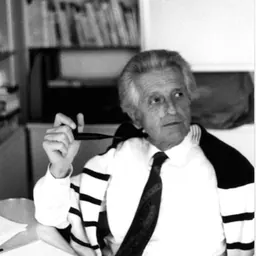

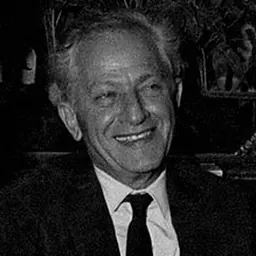
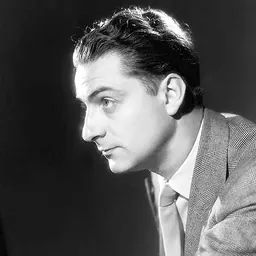

Related people
Same field, nearest in time

Contemporaries
People whose lives overlapped Roger Vailland's



Frequently asked questions
Who was Roger Vailland?
French writer (1907–1965)
When was Roger Vailland born?
Roger Vailland was born on 16 October 1907 in Acy-en-Multien.
When did Roger Vailland die?
Roger Vailland died on 12 May 1965 in Meillonnas.
What was Roger Vailland's occupation?
Roger Vailland was a writer, journalist, screenwriter, novelist, essayist and playwright.
What nationality was Roger Vailland?
Roger Vailland was French.
Sources & further reading
Cite this page
APA: Biography.guide. (2026). Roger Vailland. https://biography.guide/roger-vailland/
MLA: "Roger Vailland." Biography.guide, https://biography.guide/roger-vailland/.
Chicago: "Roger Vailland." Biography.guide. https://biography.guide/roger-vailland/.
Data last updated: 2026-09-20 · Spot an error? Report a correction.
Page generated 2026-09-27 05:19 UTC