
About Roger Mynors
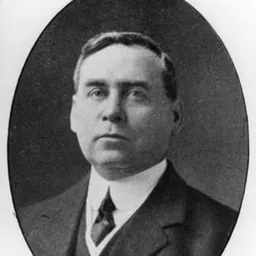
Lived 1903 – 1989 (aged 86). Roger Mynors was a British classical philologist, university teacher, latinist, palaeographer, philologist and librarian.
Sir Roger Aubrey Baskerville Mynors (28 July 190317 October 1989) was an English classicist and medievalist who held the senior chairs of Latin at the universities of Oxford and Cambridge. A textual critic, he was an expert in the study of manuscripts and their role in the reconstruction of classical texts.
Mynors's career spanned most of the 20th century and straddled two of England's leading universities, Oxford and Cambridge. Educated at Eton College, he read Literae Humaniores at Balliol College, Oxford, and spent the early years of his career as a Fellow of that college. He was Kennedy Professor of Latin at Cambridge from 1944 to 1953 and Corpus Christi Professor of Latin at Oxford from 1953 until his retirement in 1970. He died in a car accident in 1989, aged 86, while travelling to his country residence, Treago Castle in Herefordshire.
Mynors held a reputation as one of Britain's foremost classicists. He was an expert on palaeography, and has been credited with unravelling a number of highly complex manuscript relationships in his catalogues of the Balliol and Durham Cathedral libraries. His publications on classical subjects include critical editions of Virgil, Catullus, Pliny the Younger, Bede and Cassiodorus. He also served on the editorial board of the comprehensive edition of the works of Erasmus. The final achievement of his scholarly career, a comprehensive commentary on Virgil's Georgics, was published posthumously. Mynors was created Knight Bachelor in 1963.
Early life and secondary education Roger Aubrey Baskerville Mynors was born in Langley Burrell, Wiltshire, on 28 July 1903 into a family of Herefordshire gentry. The Mynors family had owned the estate of Treago Castle since the 15th century, and he resided there in later life. His mother was Margery Musgrave, and his father, Aubrey Baskerville Mynors, was an Anglican clergyman and rector of Langley Burrell, who had been secretary to the Pan-Anglican Congress, held in London in 1908. Among his four siblings was his identical twin brother Humphrey Mynors, who went on to become Deputy Governor of the Bank of England. The brothers shared a close friendship and lived together in their ancestral home after Roger's retirement.
Mynors attended Summer Fields School in Oxford, and in 1916 entered Eton College as a King's Scholar. At Eton, he was part of a generation of pupils that included the historian Steven Runciman and the author George Orwell. His precocious interest in Latin literature and its transmission was fostered by the encouragement of two of his teachers, Cyril Alington and M. R. James. Alington became an influential mentor and friend since he, like Mynors, was fascinated with the manuscript traditions of medieval Europe.
Academic career Balliol College, Oxford
In 1922, Mynors won the Domus exhibition, a scholarship to study Classics at Balliol College, Oxford. Attending the college at the same time as the literary critic Cyril Connolly, the musicologist Jack Westrup, the future Vice-Chancellor of the University of Oxford, Walter Fraser Oakeshott, and the historian Richard Pares, he was highly successful in his academic studies. Graduating with a Bachelor of Arts in 1926, he won the Hertford (1924), Craven (1924), and Derby (1926) scholarships. He was elected to a fellowship at Balliol and became a tutor in Classics. In 1935 he was elevated to a University Lecturership. At the time of his appointment, much of Mynors's teaching focused on the poet Virgil, whose complete works he edited in the following decades.
His tenure at Oxford University saw the beginning of his comprehensive work on medieval manuscripts. From the late 1920s onwards, Mynors was drawn more to matters of codicology than to purely classical questions. He prepared an edition of the 6th-century scholar Cassiodorus, The move to Cambridge meant an advancement of his academic career, but he soon came to contemplate a return to Oxford. He applied unsuccessfully to become master of Balliol College after the position had been vacated by Sandie Lindsay in 1949. The historian David Keir was elected in his stead.
His post at Cambridge caused changes to Mynors's profile as an academic. His duties at Balliol had centred on the supervision of undergraduates, while he was free to focus on palaeographical topics in his research. At Cambridge, Mynors was required to lecture extensively on Latin literature and to supervise research students, a task of which he had little experience. The duties of his university post left little time to get involved in the activities of the college, which led Mynors to regret his departure from Oxford, going so far as to describe the decision as a "fundamental error" in a personal letter.
Although his post was chiefly that of a Latinist, his involvement in the publication of medieval texts intensified during the 1940s. After he was approached by V. H. Galbraith, a historian of the Middle Ages, Mynors became an editor on Nelson's Medieval Texts series in 1946. Working on the series first as a joint editor, and from 1962 as an advisory editor, he edited the Latin text for a number of volumes. He was the principal author of editions of Walter Map's De nugis curialium and of Bede's Ecclesiastical History. In 1947, he collaborated with the Oxford historian Alfred Brotherston Emden, who consulted Mynors for his own work on the history of the University of Oxford while assisting, in turn, with the Balliol catalogue.
Corpus Christi College, Oxford In 1953, Mynors was appointed Corpus Christi Professor of Latin and could thus return to Oxford to succeed Eduard Fraenkel. At the time, there was no precedent for such a move between senior chairs at Oxford and Cambridge. In 1983, on his 80th birthday, Mynors's service to the study of Latin texts was honoured by the publication of Texts and Transmission: A Survey of the Latin Classics, edited by the Oxford Latinist L. D. Reynolds. In 2020, an exhibition was held at Balliol to commemorate his scholarship on the college library.
Publications The following books were authored by Mynors:
Don’t just read it —
keep it.
Full-length biographies made to live with: read them, listen on the way to work, watch them tonight.
- E-book
- Audio
- Video
Instant download · yours to keep · every purchase keeps this site free
Important facts
People in Roger Mynors's life
Named in this biography and alive at the same time






Related people
Same field, nearest in time

Contemporaries
People whose lives overlapped Roger Mynors's

Frequently asked questions
Who was Roger Mynors?
British classical scholar (1903–1989)
When was Roger Mynors born?
Roger Mynors was born on 28 July 1903 in Wiltshire.
When did Roger Mynors die?
Roger Mynors died on 17 October 1989 in Herefordshire.
What was Roger Mynors's occupation?
Roger Mynors was a classical philologist, university teacher, latinist, palaeographer, philologist and librarian.
What nationality was Roger Mynors?
Roger Mynors was British.
Sources & further reading
Cite this page
APA: Biography.guide. (2026). Roger Mynors. https://biography.guide/roger-mynors/
MLA: "Roger Mynors." Biography.guide, https://biography.guide/roger-mynors/.
Chicago: "Roger Mynors." Biography.guide. https://biography.guide/roger-mynors/.
Data last updated: 2026-09-20 · Spot an error? Report a correction.
Page generated 2026-09-27 05:27 UTC