
About Roger Millward
Lived 1947 – 2016 (aged 68). Roger Millward was an Australian rugby league player.
Roger Millward (16 September 1947 – 2 May 2016) was an English rugby league footballer who played in the 1960s and 1970s, and coached in the 1980s and 1990s. A goal-kicking , he gained a high level of prominence in the sport in England by playing for Hull Kingston Rovers (captain) and Castleford, as well as representing Great Britain. he was inducted into the Rugby League Hall of Fame in 2000. Millward's ability placed him in the top bracket of rugby league halves to have ever played the game.
Early life Millward was born in Castleford, West Riding of Yorkshire, England.
Domestic career Castleford Millward began his professional career in September 1964, signing for his home town club Castleford. He made his début on 3 October 1964 against Dewsbury Celtic, and won his first domestic honours in 1965 with Castleford picking up the Floodlit Trophy, playing in a 4–0 victory over St. Helens. Millward played in the position of and, due to the importance of such a position in rugby league, and due to the fact there were many more experienced players in the Castleford side at that time (such as Alan Hardisty and Keith Hepworth) Millward found it hard to break into the first team for any length of time. Millward played in Castleford's victory in the Yorkshire League during the 1964–65 season. Despite his lack of game experience, the international selectors were interested in Millward and picked him to play for the Great Britain team in March 1966 against France at the age of 18 and one of Great Britain's youngest players.
Hull Kingston Rovers On 8 August 1966, Millward transferred from Castleford to Hull Kingston Rovers for a fee of £6,000 , making his début for Hull Kingston Rovers at Hunslet on 15 August 1966; Millward was substituted at half time due to sustaining a leg injury. He helped the club win the 1966–67 Yorkshire Cup, playing as in a 25–12 victory over Featherstone Rovers at Headingley, Leeds on 15 October 1966, and helped to retain it in the following season, playing as in a 8–7 victory over cross-city rivals Hull F.C. at Headingley on 14 October 1967.
In the 1968 season, Millward finished as the top try scorer for Hull Kingston Rovers with a total of 38 tries in that season, picking up the supporters' player of the year award. Due to his good form, he was awarded a call up to the Great Britain squad for the 1968 World Cup which Britain lost to Australia.
In 1969, at the age of 21, Millward was given the captaincy of Hull Kingston Rovers and was also voted the supporters' player of the year for a second time. He was also honoured with the title of Rugby League Players No.6 "Player of the Year".
In the mid-1970s, Hull Kingston Rovers had become a dominant force in the world of rugby league thanks in part to Millward's playmaking abilities. Although Hull Kingston Rovers were now one of the top clubs in British rugby league, the major awards eluded Millward during his career at Hull Kingston Rovers, with just two more Yorkshire Cup winner's medals (1971–72, scoring four conversions in a 11–7 final victory against Castleford, and 1974–75, named man of the match and winning the White Rose Trophy) and a runner's up medal (1975–76, scoring a drop goal in a 11–15 final defeat by Leeds) along with two consecutive supporters' player of the year awards (1974–75, 1975–76).
In the 1976 close season, Millward decided to play for an Australian club, Cronulla-Sutherland. Millward made 14 appearances during his time in Sydney, and scored one try as well as kicking 17 points for the then struggling club before returning to Hull.
Millward's testimonial season took place during the 1976–77 season. During the season, Millward set a new record for Hull Kingston Rovers with the most tries scored in a season, scoring 160 tries in total, and was again voted the supporters' player of the season. Millward's testimonial season concluded with a testimonial match between Hull Kingston Rovers and the Great Britain national rugby league team at Craven Park on 31 July 1977, in which Hull Kingston Rovers were defeated heavily.
Player-coach In March 1977, Millward was appointed as player-coach of Hull Kingston Rovers following the sudden death of incumbent manager Harry Poole. Millward played as and coach in Hull Kingston Rovers' 26–11 victory over St. Helens in the 1977 BBC2 Floodlit Trophy Final during the 1977–78 season on 13 December 1977.
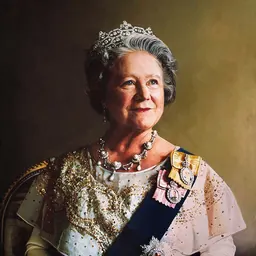
In the 1978–79 season, Hull Kingston Rovers were crowned Division One Champions for the first time since 1925. Millward and his Hull Kingston Rovers side qualified to play cross-city rivals Hull F.C., who had previously beaten Hull Kingston Rovers in a 3–13 defeat in the 1979 BBC2 Floodlit Trophy Final, in the 1980 Challenge Cup final at Wembley Stadium on 30 May 1980, playing as in front of a crowd of 95,000. Despite having his jaw broken midway through the first half from a high tackle by F.C. Ron Wileman, Millward continued playing, inadvertently having his jaw set back into place by a tackle from rival captain and Steve Norton, and received the cup from Queen Elizabeth the Queen Mother at the end of the game.
After undergoing surgery to remove three wisdom teeth, Millward returned to Hull Kingston Rovers' 'A' team the following October in a match against Batley's 'A' team. However, he was forced to retire prematurely from rugby league after sustaining another broken jaw in a late tackle during the match, his fourth such injury in ten months.
International career By 1969, Millward had established himself as a full Great Britain international after his début at 18 years of age playing , in the 4–8 defeat by France at Central Park, Wigan on 5 March 1966, He was named in the Great Britain squad for the 1972 Rugby League World Cup, but later withdrew.
During the 1978 Kangaroo tour Millward captained Great Britain from in all three Test matches of the Ashes series which Australia won 2–1.
Coaching Hull Kingston Rovers After retiring, Millward stayed on the coaching staff at Hull Kingston Rovers throughout the 1980s and early 1990s, guiding his team to another Challenge Cup Final and the Yorkshire Cup Final in the 1980–81 season. Hull Kingston Rovers lost 9–18 to Widnes in the Challenge Cup Final and lost 7–8 to Leeds in the Yorkshire Cup Final, however they did manage a Premiership trophy. Millward coached Hull Kingston Rovers to the 1981–82 John Player Trophy Final, which they lost to Hull F.C., and second in the Division One Championship.
During the 1983–84 season Hull Kingston Rovers dominated the scene with Millward's leadership, winning the League Championship as well as the Premiership to be the first team to complete the double and were rightfully crowned the 'Rugby League Team of the Year'. The 1984–85 season was almost as historic with victories in the John Player Trophy Final and being crowned Division One Champions for the fifth time, but lost out on the Premiership Final.
In 1984–85 Millward coached his side to the last major final of his tenure. The club were victorious in the 1984–85 John Player Special Trophy but were defeated 12–29 by Hull F.C. in the Yorkshire Cup Final, as well as being defeated 14–15 by Castleford in the Challenge Cup Final, consequently seeing the end of Hull Kingston Rovers' domination of English rugby league. Millward retired from the club at the end of the 1990–91 season, coinciding with its relegation to Division Two.
Halifax R.L.F.C. In May 1991, Millward was appointed as coach of Halifax R.L.F.C., replacing incumbent coach Peter Roe in a two-year contract following the club's promotion to the First Division. Millward resigned from the club by mutual consent in December 1992 following a string of defeats, being replaced by Mal Reilly.
Personal life Roger Millward lived in Kippax, near Leeds. He was employed as a Premises Manager by Royds Specialist Language College, near Rothwell Sports Centre. He attended rugby league matches, mainly those involving his home town club Castleford. Roger Millward was the cousin of the rugby league footballer and coach Brian Lockwood.
In 2007 Millward had an operation to remove a cancerous growth in his jaw.
Legacy
Millward made 406 appearances for Hull Kingston Rovers in total, with 207 tries, over 600 goals and a grand total of 1,825 points making him the third highest points scorer in Hull Kingston Rovers' history. Millward holds the club's record of 207 tries (which beat the previous record set in the 1920s by Gilbert Austin by nearly 50 tries) and has also scored a total of eleven hat tricks for Hull Kingston Rovers, with one for Castleford and two for Great Britain as well as kicking more than ten goals per match.
Following his retirement from playing, Millward was appointed Member of the Order of the British Empire (MBE) in the 1983 New Year Honours by Queen Elizabeth II for services to rugby league and sport in Great Britain. The West Stand of the club's 'new' Craven Park stadium was officially renamed the 'Roger Millward Stand' on 23 February 2003, the day of a National League Cup fixture against Sheffield Eagles, with Millward and his family attending the renaming ceremony as guests of honour.
Bus operator Arriva Yorkshire honoured Roger Millward in an August 2009 ceremony at Castleford's Wheldon Road stadium, including his name among 13 West Yorkshire rugby league players voted by the public to be included in the 'Arriva Yorkshire Rugby League Dream Team'. Millward and the twelve other nominated players had their names printed on the side of 13 new single-deck buses purchased by the operator.
Following Roger Millward's death on 2 May 2016, Hull Kingston Rovers retired the number 6 jersey. A jersey bearing the number was presented to his family at a memorial held prior to a Super League match against Widnes Vikings on 15 May 2016. The number 6 jersey was unretired in December 2024 for use by Mikey Lewis ahead of the Hull Kingston Rovers' treble-winning 2025 season.
In August 2016, it was announced that Hull's Garrison Road, the eastern edge of the A63 road bridging the River Hull and connecting east Hull's docks, would be renamed Roger Millward Way. A renaming ceremony was held in January 2018, with special red and white street signs installed by Hull City Council.
Honours As a player Challenge Cup: 1980 Rugby League Championship: 1978–79 BBC2 Floodlit Trophy: 1965–66, 1977–78 Yorkshire Cup: 1966–67, 1967–68, 1971–72, 1974–75 Rugby League Ashes: 1970
As a coach Rugby League Championship: 1983–84, 1984–85 John Player Trophy: 1984–85 Rugby League Premiership: 1980–81 Yorkshire Cup: 1985–86 Second Division Championship: 1989–90
Individual Open Rugby World XIII: 1978 White Rose Trophy: 1975 Rugby League Coach of The Year: 1985 Players No.6 RL Player of The Year: 1969 Hull KR Player of The Year: 1968, 1969, 1975, 1976, 1978 Hull KR Record Try Scorer (1966–1980): 207 tries Rugby League Hall of Fame: 2000 MBE: 1983
Don’t just read it —
keep it.
Full-length biographies made to live with: read them, listen on the way to work, watch them tonight.
- E-book
- Audio
- Video
Instant download · yours to keep · every purchase keeps this site free
Important facts
People in Roger Millward's life
Named in this biography and alive at the same time






Related people
Same field, nearest in time

Contemporaries
People whose lives overlapped Roger Millward's




Frequently asked questions
Who was Roger Millward?
English rugby league footballer and coach (1947–2016)
When was Roger Millward born?
Roger Millward was born on 16 September 1947 in Castleford.
When did Roger Millward die?
Roger Millward died on 3 May 2016.
What was Roger Millward's occupation?
Roger Millward was a rugby league player.
What nationality was Roger Millward?
Roger Millward was Australian.
Sources & further reading
Cite this page
APA: Biography.guide. (2026). Roger Millward. https://biography.guide/roger-millward/
MLA: "Roger Millward." Biography.guide, https://biography.guide/roger-millward/.
Chicago: "Roger Millward." Biography.guide. https://biography.guide/roger-millward/.
Data last updated: 2026-09-20 · Spot an error? Report a correction.
Page generated 2026-09-27 05:09 UTC