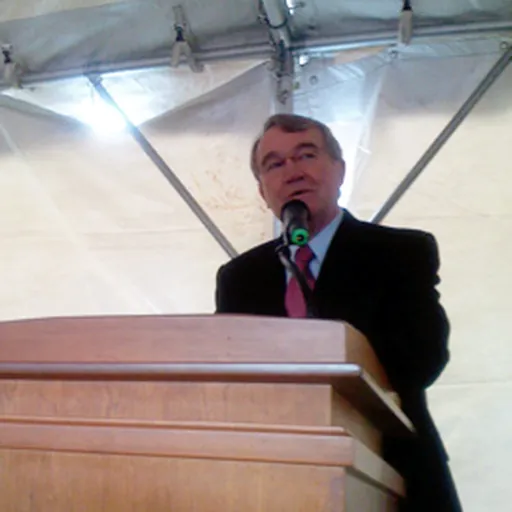
About Roger Fouts
Born 1943. Roger Fouts is an American anthropologist, university teacher and psychologist.
Roger S. Fouts (born June 8, 1943) is a retired American primate researcher. He was co-founder and co-director of the Chimpanzee and Human Communication Institute (CHCI) in Washington, and a professor of psychology at the Central Washington University. He is best known for his role in teaching Washoe the chimpanzee to communicate using a set of signs adapted from American sign language.
Fouts is an animal rights advocate, citing the New Zealand Animal Welfare Act as a model for legal rights for the Great Apes (Hominidae), He is also an adviser to the Oxford Centre for Animal Ethics.
He is married to Deborah Fouts, who was the co-director and co-founder of CHCI.
Early life Fouts was born in Sacramento, California and grew up on a family farm, surrounded by animals. He received his B.A. in child psychology from the college that became California State University, Long Beach a few years later. In 1964, he married Deborah Harris, who became his life-time collaborator. Fouts earned his Ph.D. from the University of Nevada, Reno.
Career In 1967, Fouts' future took a decisive turn when he interviewed for a half-time assistantship position at the University of Nevada. Fouts had intended on a career working with nonverbal children and needed this job—teaching sign language to a chimp—to pay for graduate school.
In Norman, Oklahoma The Gardners initially used operant conditioning to teach Washoe signs from American Sign Language (ASL). Fouts, as their employee, was to reward Washoe with praise and treats and use a step-by-step process to get Washoe to sign correctly. But Fouts found more success by catering to Washoe's desire to imitate and socially connect. When introducing a new sign, he would gently guide the chimp toward making the proper gesture (manipulating her hands into the required shapes) while emphasizing social connection over "training."
Fouts' method proved to be more effective in Washoe's acquisition of new signs, and the Gardners adopted it in future chimp studies. Conditioning practices, they found, inhibited a primate's natural curiosity and desire to learn. During this period, Fouts also worked with nonverbal Autistic children and found that teaching sign language helped the children interact with others and in some cases even prompted speaking.
The chimpanzees who survived into adulthood were housed in small cages and, in most cases, ultimately since to medical labs. Fouts, unable to control their circumstances, began drinking heavily and became, in his words, “an absent father and a lousy husband.” In 1981, the Gardners sent Fouts two more chimps that they had finished working with, 4-year-old Dar and 5-year-old Tatu, bringing the total to five. As the ape communication studies progressed, they found that the animals used signs to communicate with each other. The apes created phrases from combinations of signs to denote new things that were brought into their environment.
In 1986, an animal rights group called True Friends broke into a National Institute of Health (NIH) lab in Rockville, Maryland. The group videotaped AIDS-infected primates held in unfavorable conditions and mailed tapes to Jane Goodall, Roger Fouts and major media outlets. In 1991, Fouts partnered with the Animal Legal Defense Fund and sued the USDA for its treatment of captive chimpanzees, arguing that it violated the Animal Welfare Act. The U.S. District Court ruled in their favor, but the decision was overruled on appeal.
Roger Fouts has served as a consultant for the Animal Legal Defense Fund, the Natural Resources Defense Council, and the film Greystoke: The Legend of Tarzan.
Retirement In June tired 2011, the Fouts' retired and promoted Mary Lee Jensvold to director of CHCI. Two years later, Tatu and Loulis, the two surviving chimps, were sent to Fauna Foundation and CHCI was closed. A 2023 study found that over an eight-year period at the Fauna sanctuary, used signs to communicate with staff and each other.
Don’t just read it —
keep it.
Full-length biographies made to live with: read them, listen on the way to work, watch them tonight.
- E-book
- Audio
- Video
Instant download · yours to keep · every purchase keeps this site free
Important facts
People in Roger Fouts's life
Named in this biography and alive at the same time
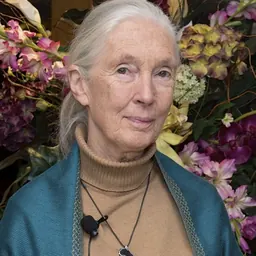

Related people
Same field, nearest in time



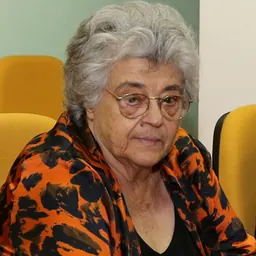
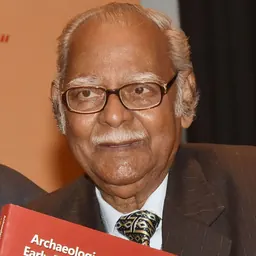
Contemporaries
People whose lives overlapped Roger Fouts's

Frequently asked questions
Who is Roger Fouts?
American primate researcher
When was Roger Fouts born?
Roger Fouts was born on 8 June 1943 in Sacramento.
What is Roger Fouts's occupation?
Roger Fouts is an anthropologist, university teacher and psychologist.
What nationality is Roger Fouts?
Roger Fouts is American.
Sources & further reading
Cite this page
APA: Biography.guide. (2026). Roger Fouts. https://biography.guide/roger-fouts/
MLA: "Roger Fouts." Biography.guide, https://biography.guide/roger-fouts/.
Chicago: "Roger Fouts." Biography.guide. https://biography.guide/roger-fouts/.
Data last updated: 2026-09-22 · Spot an error? Report a correction.
Portrait: Wikimedia Commons · author & licence
Page generated 2026-09-27 05:02 UTC