
About Roger A. Freeman
Lived 1904 – 1991 (aged 86–87). Roger A. Freeman was an Austrian economist.
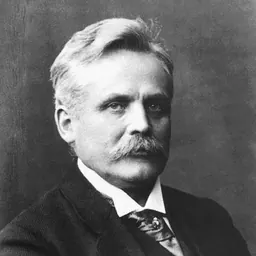
Roger Adolf Freeman (born Roger Adolf Freimann; September 2, 1904 – December 25, 1991) was an Austrian-American economist. He served as an advisor to Dwight D. Eisenhower, a senior fellow at the Hoover Institution, a special assistant in the Nixon administration, and an advisor to then-California Governor Ronald Reagan. Freeman specialized in public finance within the neoclassical liberal tradition. He was a critic of the welfare state, an advocate for welfare reform, and a defender of fiscal conservatism. His criticism of desegregation and his advocacy for reducing federal funding for education received attention for its impact on public policy and student loan debt in the United States.
Biography Freeman began his career working for governor Arthur B. Langlie (pictured) Early life Roger Adolf Freimann was born in Vienna, Austria-Hungary, on September 2, 1904. His father, Samuel Freimann, was a banker who died in 1921. Vienna was suffering from post-WWI inflation, leaving Freimann and his mother in poverty. They rented rooms out in their house and Freimann worked odd jobs while his mother went back to work. Things began to improve in 1924. The young Freimann studied and received his degree from Vienna University of Economics and Business (1927), and spent more than a decade working for Delka, an Austrian shoe retailer. After Adolf Hitler annexed Austria in March 1938, Freimann emigrated to Great Britain (1939) and then to the United States (1940). where he served as an assistant to Governor Arthur B. Langlie.
Eisenhower administration
Freeman was brought to Washington, D.C. in 1953 In 1955, he became an assistant to the White House.
Hoover Institution, Nixon administration In 1961, Freeman was research director at the Institute for Studies in Federalism at what was then known as Claremont Men's College. He was made a senior fellow at the Hoover Institution at Stanford University (1962-1975), Prior to his departure, journalist Holmes Alexander promoted Freeman as a candidate for United States Commissioner of Education under Nixon. Alexander speculates that Freeman left the White House due to Daniel Patrick Moynihan, who was then Counselor to the President. Moynihan's influence, writes Alexander, may have led to Freeman's removal from a school policy task force, and ultimately Freeman's resignation.
Reagan gubernatorial aide In the 1970 California gubernatorial election, Freeman advised incumbent Governor Ronald Reagan during his campaign for re-election. At a press conference for Reagan on October 29, 1970, Freeman spoke on the issue of cutting funding for education:
Freeman disputed statistics that showed the benefits of a college degree, denied that it was the great equalizer, and believed that college should be reserved for a select few. As early as 1961, Freeman was openly promoting the idea of raising tuition fees so that state and local treasuries would no longer have to cover the costs of education.
He believed that the countercultural movements of the 1960s, which led to campus protests and racial riots, were caused by an increase in welfare benefits. Freeman blamed what he perceived as a left-wing intelligentsia working within the U.S. government who he believed were aligned with those who received welfare benefits, leading to larger and larger government budgets.efn-lg|name=co|group=note|Seiter 1999: [Freeman believed that the decline in free market forces was due to] "the influence of intellectuals working within government advisory teams, where they have opportunities for power...these intellectuals, who were often left-leaning by American standards [had ideals that] align well with the interests of welfare beneficiaries, leading to an alliance [that drives] rising government budgets. The provision of social benefits...also fosters a demand for even more subsidies...the student and racial unrest of the 1960s in the United States did not arise [according to Freeman] despite the expansion of welfare benefits, but rather because of it...Keynesian economics thus served not only as a tool to address cyclical economic problems [by redistributing purchasing power from higher to lower-income groups] but also as a convenient justification for the expansion of the welfare state. [For Freeman, a] consequence of the policies of the 1960s and 1970s...was the transformation of the principle of 'equal opportunity for all' into 'equal results for all.'" Economist Gordon Lafer found that Freeman's position on reducing federal funding for education originated with the fears of the elite in the 1960s and 1970s who believed that educating the working class in hard times could be dangerous. Lafer argued that in periods of sustained stagnation, the elite wanted to avoid having "a lot of well-educated poor people". They viewed cuts to public education as a strategy that prevented unrest, but also increased inequality.
Sociologist Britain Hopkins studied higher education policy and analyzed Freeman's contributions as part of her work on the origins of the student loan industry in the United States from 1953 to 1973. She found that Freeman was one of the key players in the development of the Guaranteed Student Loan Program, which is today known as the Federal Direct Student Loan Program.efn-lg|name=hop|group=note|Hopkins argues that this relationship resulted in a system of "market-based finance and individualized debt", where student loans were "commodified and made profitable through their securitization via Sallie Mae from the early 1970s", which offered "the promise—an illusion—of class mobility through attainment of higher [education] while at the same time tethering borrowers to an increasingly precarious labor market through debt repayment." In her research, Hopkins found that Freeman's work for USAF and the ABA helped restrict people's ability to have their student loans forgiven by declaring bankruptcy. Journalist Jon Schwarz points to Freeman's work as one of the ways of understanding why U.S. conservatives have attacked academia since the 1960s and how over time Americans came to owe trillions in student debt.
Group Research Inc. classified Freeman as a "right-wing activist" in their archival research on right-wing politics in the United States.
Selected works School Needs in the Decade Ahead. Washington, DC, 1958 Socialism and private enterprise in Equatorial Asia: the case of Malaysia and Indonesia. Stanford, Calif. Hoover Inst. on War, Revolution and Peace, Stanford Univ., 1968 Welfare reform and the family assistance plan. Washington: Gov.Print.Off., 1972 Tax loopholes: the legend and the reality. Washington, DC: American Enterprise Institute for Public Policy Research, 1973 The Growth of the American Government. A Morphology of the Welfare State. Hoover Institution Press, 1975 The Wayward Welfare State. Hoover Institution Press, 1981 Soziale Sicherheit im defekten Wohlfahrtsstaat, Übersetzung H. Hoffmann, in: Zeitschrift für Wirtschaftspolitik, 1982, S. 97–109
Don’t just read it —
keep it.
Full-length biographies made to live with: read them, listen on the way to work, watch them tonight.
- E-book
- Audio
- Video
Instant download · yours to keep · every purchase keeps this site free
Important facts
People in Roger A. Freeman's life
Named in this biography and alive at the same time


Related people
Same field, nearest in time


Contemporaries
People whose lives overlapped Roger A. Freeman's





Frequently asked questions
Who was Roger A. Freeman?
American economist (1904-1991)
When was Roger A. Freeman born?
Roger A. Freeman was born in 1904 in Vienna.
When did Roger A. Freeman die?
Roger A. Freeman died in 1991 in Stanford.
What was Roger A. Freeman's occupation?
Roger A. Freeman was an economist.
What nationality was Roger A. Freeman?
Roger A. Freeman was Austrian.
Sources & further reading
· DBpedia: Roger A. Freeman (economist)
Cite this page
APA: Biography.guide. (2026). Roger A. Freeman. https://biography.guide/roger-a-freeman/
MLA: "Roger A. Freeman." Biography.guide, https://biography.guide/roger-a-freeman/.
Chicago: "Roger A. Freeman." Biography.guide. https://biography.guide/roger-a-freeman/.
Data last updated: 2026-09-20 · Spot an error? Report a correction.
Page generated 2026-09-27 05:32 UTC