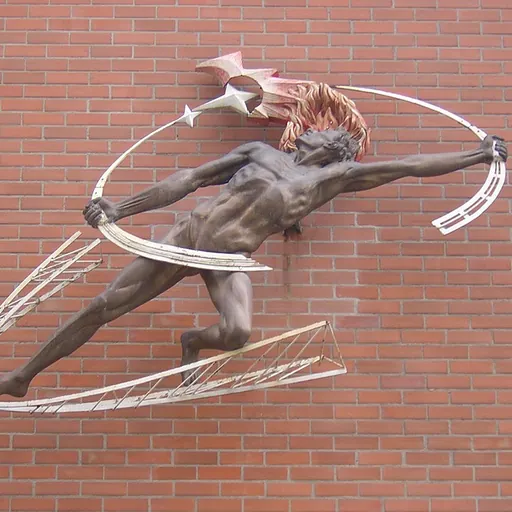
About Rodrigo Arenas Betancourt
Lived 1919 – 1995 (aged 75). Rodrigo Arenas Betancourt was a Colombian sculptor, painter, writer and artist.
Rodrigo Arenas Betancourt (23 October 1919 – 14 May 1995 ) was a Colombian sculptor. At the time of his death in 1995 he was recognized as one of the most important sculptors in Colombia and Latin America.
Biography Early life Arenas was the son of a peasant couple from Antioquia. As a child, he helped his parents with farming in Fredonia, his hometown. After completing his primary education, he briefly attended the Yarumal Seminary of Missions between 1931 and 1932. Around 1938, he began developing his skills as a sculptor, carving wooden Christ figures and assisting other sculptors and muralists, such as Pedro Nel Gómez and Bernardo Vieco Ortiz, in the construction of their works.
Career Arenas studied at the Institute of Fine Arts in Medellín and at the School of Fine Arts of the National University of Colombia in Bogotá between 1939 and 1941. In 1944, Arenas decided to settle in Mexico to pursue studies at the Academy of San Carlos and the La Esmeralda Free Art Association. During his time in Mexico, Arenas combined his studies in visual arts with work related to his artistic side. Also Arenas was a set design assistant at Azteca Estudios, a writer and columnist for print media, a sculptor, and an art photographer. Arenas was an art teacher at the Ciudadela School of Crafts in Mexico City, which he also co-founded.
Between 1959 and 1966, Arenas worked in the United States and then traveled to Europe, where he lived until the end of 1966. Upon returning to Colombia permanently in early 1967, he established his art studio in the municipality of Caldas (Antioquia), where he employed both novice and experienced artists. He also served as an artistic advisor to the University of Antioquia in his home country.
Throughout his career, he worked with a variety of materials, from drawings, portraits, and watercolors to monumental works that combined steel and concrete. He was also a skilled sculptor, utilizing plaster, wood, basalt, stone, bronze, and terracotta, among others. From the early 1950s onward, he began creating his larger works, generally commissioned by government entities and private companies, and some simply undertaken for his personal enjoyment. Additionally to sculpture, Arenas Betancourt worked in printmaking and book illustration.
Examples of his artwork are: Nude Bolívar in Pereira
Cuauhtémoc, one of his great sculptures created between 1953 and 1954, 18 meters high and made of bronze and basalt, which was expressly commissioned by the Mexican government to be installed in the Building of the Ministry of Communications and Public Works (SCOP) of Mexico City, was irreparably damaged in the Mexico earthquake of 1985.
On 18 October 1987, Arenas was kidnapped by the FARC in Caldas (Antioquia), while traveling with his wife and children. He was released on 1 January 1988, after 81 days in captivity, after his family paid a large sum of money demanded by his kidnappers for his release, he dedicated himself to drawing in a notebook and writing about his experiences in captivity, which later formed the basis for his book, 'The Steps of the Condemned' (es:Los pasos del condenado).
Death Arenas Betancourt died on 14 May 1995 in El Rosario Clinic in Medellín in 1995 from liver cancer. His remains rest in Fredonia. His ashes rest at the base of the torch of liberty carried on the right hand of the sculpture of the Nude Bolívar.
Personal life Arenas Betancourt was married twice. Celia Calderón de la Barca Olvera was his wife, a Mexican artist whom he married in 1950 and who was known for her engravings, oil paintings and watercolors, although their relationship ended tragically with her suicide in Mexico, an event that deeply impacted him.
Gallery His bronze statues are characterized by their enormous proportions and dramatic expression.
Among his most outstanding works, which are currently on public display, are the following:
ScultureImageDate of constructionHeighCountryLocation Prometheus (and Quetzalcoátl) 125px 1951–1952 7,7 M. Faculty of Exact Sciences of the National Autonomous University of Mexico (UNAM) Mexico CityThe Prayer to the Outlaw 125px 1957 3,6 M. El Dorado International Airport Bogotá, ColombiaPrometheus Bound 125px 1957 2,5 M. Facade of the Alternate Headquarters of the Museum of Antioquia Medellín (Antioquia)The Wounded Macaw 125px 1959 2,5 M. Concrete sculpture. Lomas de Cuernavaca subdivision Cuernavaca (Morelos) MéxicoMonumental heads of the heroes of the Mexican Revolution: Moreno, Hidalgo, Juárez and Zapata 1959–1960 2,5 M. each one Different places Mexico City Nude Bolívar 125px 1956–1962 10 M. Bolivar Square Pereira Pereira, Risaralda Department, Colombia Tribute to General José María Córdova 125px 1957–1964 6 M. Main park, Rionegro Rionegro, Antioquia, Colombia Prometheus 125px 1966 10 M. Carrera 13 con Calle 13, Avenida Circunvalar Pereira (Risaralda) Long Journey from the Womb to the Heart of Fire 1964–1966 Two panels, each 3 x 8.5 m Facade of the Antioquia Beneficence tower, Av. Sucre with Ayacucho, Medellín (Antioquia) Medellín, ColombiaChrist Falling (Christ Prometheus) 125px 1965–1968 6 M. Central Courtyard of Block 16 of the University of Antioquia, Medellín (Antioquia) Medellín, ColombiaPrometheus Bound 1967–1968 6 M. Main Plaza of the Technological University of Pereira Pereira, ColombiaThe Flue player and the Dog 125px 1969 1,6 M. Concrete and plaster San Ignacio tower, University of Antioquia Medellín, ColombiaMan, creator of Energy 125px 1968–1970 18 M. Bronze, steel and concrete, 18 m height, located in University of Antioquia, Medellín (Antioquia) Medellín, ColombiaVargas Swamp Lancers 125px 1968–1971 33 M. Bronze, steel and concrete, 33 m height, Paipa, Boyacá. It is the largest monument and/or sculpture in Colombia. It was declared a National Monument by Decree 1744 1 September 1975. Paipa, ColombiaMonument to life 125px 1971–1974 14 M. Tower's square Suramericana de Seguros. Medellín, ColombiaMonument in homage to Cacica Gaitana 125px 1974 21 M. Av. Circunvalar con Calle 4, Neiva (Huila Neiva, ColombiaThe Prometheus of Freedom (Monument to the Banana Plantations) 1974–1978 14 M. This artwork was designed to be installed in Curaçao. It was ultimately installed in the Plaza de los Mártires, Ciénaga Magdalena Ciénaga, ColombiaMonument to Effort 125px 1978 12 M. bronze, steel and concrete, 28 m height, Armenia, Colombia, Quindío Department Armenia, ColombiaThe Race Challenge 125px 1980 18 M. Headquarters of Banco Popular, Parque Berrío, Medellín (Antioquia) Medellín, Colombia The Creation 125px 1981–1983 18 M. Av. La Playa (Cl. 52) con Av. Oriental (Cr. 46) Edificio Vicente Uribe Rendón, Medellín (Antioquia) Medellín, ColombiaNaked John Lennon 1981–1982 2,8 M. This work was commissioned, and three original casts were made. One was located at the Posada Alemana in Salento, Quindío, commissioned by Carlos Lehder. Its whereabouts have been unknown since 2003, although it is believed to be in the possession of María Elena Quintero, Arenas' widow. Another is held in the family's private collection, and the last one is located at the entrance of the Hotel Nebraska in Doradal, a district of Puerto Triunfo, Antioquia. Salento, ColombiaMonument to Porfirio Barba Jacob 125px 1982–1983 5,5 M. Main park, Santa Rosa de Osos, (Antioquia) Antioquia, ColombiaThe Family (The New Life) 125px 1984 9 M. Bronze and steel. It was originally designed to be part of the main park in Fredonia (Antioquia), but this idea never materialized. From 1986, it was located in the Monaco Tower in Medellín (Antioquia), a former residence owned by Pablo Escobar. It was dismantled in 2018, a few months before the building's demolition and its whereabouts have been unknown since 2025. Medellín, ColombiaChrist the Liberator of Latin America or Liberty Christ 125px 1978–1985 15 M. Queen Mary Cathedral, Barranquilla Barranquilla, Atlántico Department, ColombiaMonumento a la Raza 125px 1988 38 M. La Alpujarra Administrative Center Medellín, ColombiaBrother Horse 125px 1988 1,7 M. without a pedestal La Alpujarra Administrative Center, El Poblado neighborhood, opposite the Vegas de Zúñiga housing development, Avenida Las Vegas con Calle 18C Sur, Medellín (Antioquia) Medellín, ColombiaBolívar Cóndor 125px 1991 17 M. Bronze and concrete, located in the main square of Manizales (Caldas) Manizales, ColombiaThe Revolution in Progress 125px 1994 6,5 M. Alfonso López square, Valledupar (Cesar Department) Valledupar, ColombiaMonument to the Founders 125px 1995 22 M. Parque de los Fundadores, Villavicencio (Meta) Villavicencio, ColombiaGod Mercury 125px 1997 1,5 M. San Antonio station (Medellín), Medellín Metro Medellín, ColombiaGod Mercury 125px 5 M. Mercurio Plaza, between 5th and 6th Streets with 9th and 10th Avenues, in front of the Fenalco tower, Cali. Identical to the one located in Medellín except for its copper-colored finish and being mounted on a pedestal. Cali, ColombiaThe foals 125px 1997 4 M. Homage to José Eustasio Rivera. Av. La Toma con Carrera 2, Neiva (Huila) Neiva, ColombiaThe flute player and the Dancer 125px 1997 Municipal Administrative Center, Itagüí (Antioquia) Itagüí, ColombiaThe flute player and the Dancer 125px 3,5 M Lleras Park, corner of the Calle 9A with Carrera 40, Medellín (Antioquia) Itagüí, ColombiaThe God PanColombiaEl JuárezMéxicoPueblaChrist without the CrossColombiaPereiraEl Águila que CaeMéxicoIn front of the communications tower, México CityCristo MorenoColombiaSan Benito Abad, Sucre
Don’t just read it —
keep it.
Full-length biographies made to live with: read them, listen on the way to work, watch them tonight.
- E-book
- Audio
- Video
Instant download · yours to keep · every purchase keeps this site free
Important facts
People in Rodrigo Arenas Betancourt's life
Named in this biography and alive at the same time


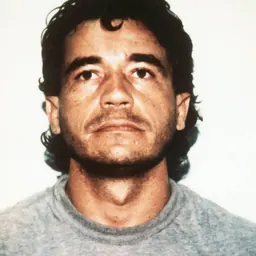


Related people
Same field, nearest in time

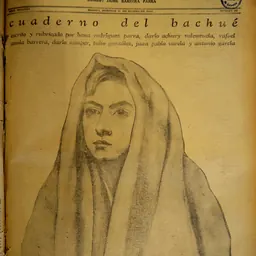


Contemporaries
People whose lives overlapped Rodrigo Arenas Betancourt's


Frequently asked questions
Who was Rodrigo Arenas Betancourt?
Colombian sculptor (1919–1995)
When was Rodrigo Arenas Betancourt born?
Rodrigo Arenas Betancourt was born on 23 October 1919 in Fredonia.
When did Rodrigo Arenas Betancourt die?
Rodrigo Arenas Betancourt died on 12 May 1995 in Medellín.
What was Rodrigo Arenas Betancourt's occupation?
Rodrigo Arenas Betancourt was a sculptor, painter, writer and artist.
What nationality was Rodrigo Arenas Betancourt?
Rodrigo Arenas Betancourt was Colombian.
Sources & further reading
· Wikipedia: Rodrigo Arenas Betancourt
· DBpedia: Rodrigo Arenas Betancourt
Cite this page
APA: Biography.guide. (2026). Rodrigo Arenas Betancourt. https://biography.guide/rodrigo-arenas-betancourt/
MLA: "Rodrigo Arenas Betancourt." Biography.guide, https://biography.guide/rodrigo-arenas-betancourt/.
Chicago: "Rodrigo Arenas Betancourt." Biography.guide. https://biography.guide/rodrigo-arenas-betancourt/.
Data last updated: 2026-09-20 · Spot an error? Report a correction.
Portrait: Wikimedia Commons · author & licence
Page generated 2026-09-27 04:58 UTC