
About Rodger Young
Lived 1918 – 1943 (aged 25). Rodger Young was an American military personnel.
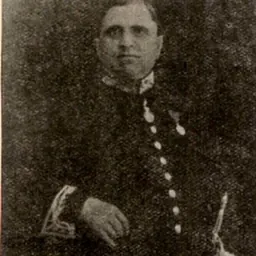
Rodger Wilton Young (April 28, 1918 – July 31, 1943) was a United States Army infantryman from Ohio during World War II. Born in the small town of Tiffin, Ohio, in 1918, Young suffered a sports injury in high school that led to his becoming nearly deaf and blind. Despite this, he was able to pass the exams necessary to enter the Ohio National Guard. Soon after the United States entered World War II, Young's company was activated as part of the U.S. Army. Soon after his activation, in 1943, Young was killed on the island of New Georgia in Solomon Islands while helping his platoon withdraw from a Japanese ambush. For his actions, he was posthumously awarded the United States' highest military decoration, the Medal of Honor.
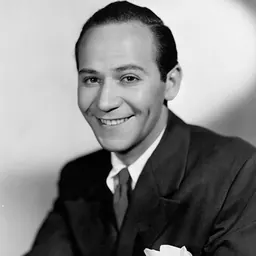
In remembrance of Young, the songwriter Frank Loesser wrote "The Ballad of Rodger Young", a war song based on Young's Medal of Honor citation. The night infiltration course at Fort Benning is named for Young, as is a small arms firing range at Camp Perry. Rodger Young Village was a veteran's living community set up near Laguna, California (now paved over as a freeway).
Early life and education Young was born on April 28, 1918, in Tiffin, Ohio, to Nicholas and Ester Young. He had four siblings; three brothers and one sister. For much of his early life, Young lived in the town of Green Springs, Ohio, but later in his childhood he and his family moved to Clyde, Ohio. Throughout his childhood, Young enjoyed hunting, which improved his marksmanship skills. Although Young was the shortest man in his company
When Young submitted his request to the company commander, the commander initially thought Young was malingering in order to avoid combat; however, a medical examination carried out soon after determined that Young was nearly deaf, which convinced the commander to demote him. Young, ignoring the order to withdraw and his wound, began crawling towards the Japanese position. Another machine gun burst wounded Young a second time, but he continued his advance, drawing the enemy fire away from his squad. As Young drew closer to the machine gun pit, he began responding with rifle fire and by throwing hand grenades at the nest, wounding or killing most of the soldiers inside. Young was soon hit by enemy fire and killed.
Young's body was transferred to the United States in July 1949 and is now buried in McPherson Cemetery in Clyde, Ohio.
Legacy
At the U.S. Army Infantry School at Fort Benning in Georgia, the night infiltration course is named for Young. A passing grade in the course is a prerequisite for graduation; soldiers crawl through sandy and muddy terrain while live gunfire from M60 or M240B machine guns passes overhead. Fort Benning's Recreation Center has a plaque in recognition of his bravery.
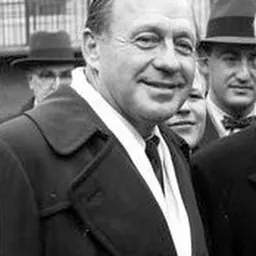
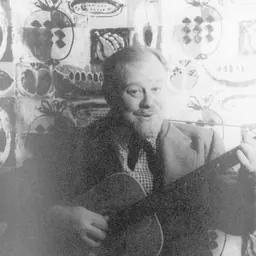
In 1945, songwriter Frank Loesser wrote "The Ballad of Rodger Young". The Life article, together with the 1949 repatriation of Young's body to the United States, boosted the song's popularity. Best-selling recordings were made by Burl Ives and Nelson Eddy by the end of 1949. On March 31, 1946, "The Ballad of Rodger Young" was sung by tenor Dennis Day on the Jack Benny Program on the radio. After the song, Jack Benny gave a speech in Young's honor.
In 1946, a veterans' housing project was established in Los Angeles, California. This was known as the Rodger Young Village until the mid-1950s when it was destroyed. At the Ohio National Guard Training Site in Camp Perry, there is a small arms firing range named in honor of Young. Camp Perry hosts the National Rifle & Pistol Championships.
Young is briefly mentioned in Robert A. Heinlein's 1949 short story "The Long Watch" and in his novel The Rolling Stones, a mountain range on the moon is named for Young. In Heinlein's novel Starship Troopers, for which he was awarded the Hugo in 1959, the troop transport TFCT Rodger Young is named for him. Loesser's ballad also features on several occasions in the book. Heinlein also included a "Historical Note" in which he quoted Young's Medal of Honor citation. The starship is also featured in Paul Verhoeven's adaption of the novel, named the "No. 176 Rodger Young; in the movie the character Sgt. Zim pays a loose homage to Young's history by asking to be demoted so he can join the front lines.
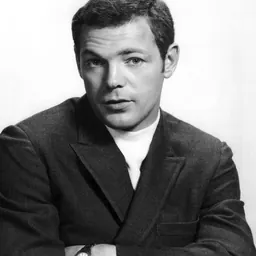
In January 1964, Young's story was featured in the 15th episode of the TV historical series The Great Adventure, in which he was portrayed by James MacArthur.
Don’t just read it —
keep it.
Full-length biographies made to live with: read them, listen on the way to work, watch them tonight.
- E-book
- Audio
- Video
Instant download · yours to keep · every purchase keeps this site free
Important facts
People in Rodger Young's life
Named in this biography and alive at the same time

Related people
Same field, nearest in time



Contemporaries
People whose lives overlapped Rodger Young's


Frequently asked questions
Who was Rodger Young?
Medal of Honor recipient (1918–1943)
When was Rodger Young born?
Rodger Young was born on 28 April 1918 in Tiffin.
When did Rodger Young die?
Rodger Young died on 31 July 1943 in New Georgia.
What was Rodger Young's occupation?
Rodger Young was a military personnel.
What nationality was Rodger Young?
Rodger Young was American.
Sources & further reading
Cite this page
APA: Biography.guide. (2026). Rodger Young. https://biography.guide/rodger-young/
MLA: "Rodger Young." Biography.guide, https://biography.guide/rodger-young/.
Chicago: "Rodger Young." Biography.guide. https://biography.guide/rodger-young/.
Data last updated: 2026-09-20 · Spot an error? Report a correction.
Page generated 2026-09-27 05:26 UTC