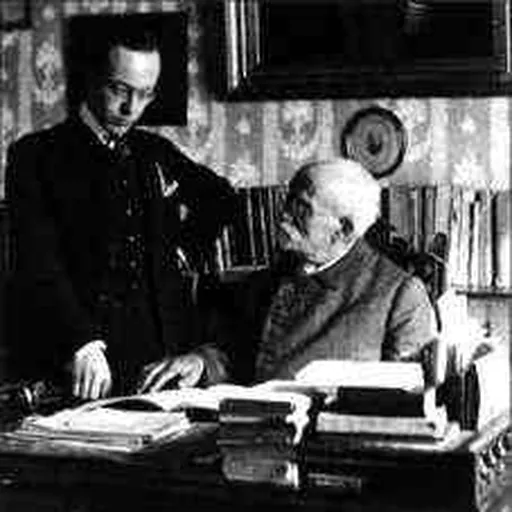
About Roberto Gerhard
Lived 1896 – 1970 (aged 73). Roberto Gerhard was a Spanish and British composer.
Robert Gerhard i Ottenwaelder (; 25 September 1896 – 5 January 1970) was a Spanish and British composer, musical scholar, and writer, generally known outside his native region of Catalonia as Roberto Gerhard.
Early life Gerhard was born in Valls, near Tarragona, Spain. His father was of German and Swiss ancestry; his mother was from Alsace-Lorraine.
He studied piano with Enrique Granados and composition with scholar-composer Felip Pedrell, teacher of Isaac Albéniz, Granados and Manuel de Falla. Gerhard visited Falla in Granada, but dismissed him as a possible teacher and decided to shut himself away in a Catalan farmhouse to reflect on his professional future and concentrate on his work. Seeking systematicity, he turned his gaze to German avant-garde music and decided to send a long letter to the composer Arnold Schoenberg, enclosing his compositions, on 21 October 1923, begging to be accepted as his pupil.
After the latter's acceptance, Gerhard immediately left for Vienna. He was Schoenberg's only Spanish pupil. Gerhard studied with Schoenberg in Vienna and Berlin between 1923 and 1928, and the teacher-pupil relationship became a lifelong friendship, as is shown in the complete correspondence published between the two composers.
Career In 1928, Gerhard returned to Barcelona. He devoted his energies to new music through concerts and journalism, in conjunction with the flourishing literary and artistic avant-garde of Catalonia. He befriended Joan Miró and Pablo Casals, brought Schoenberg and Anton Webern to Barcelona, and was the principal organizer of the 1936 ISCM Festival. He also collected, edited, and performed folksongs and Spanish music from the Renaissance to the eighteenth century.
During the 1950s, the legacy of Schoenbergian serialism, a background presence in these overtly national works, engendered an increasingly radical approach to composition which, by the 1960s, placed Gerhard firmly in the ranks of the avant-garde.
Death From the early 1950s Gerhard suffered from a heart condition which would eventually end his life. He died in Cambridge in 1970 and is buried at the Parish of the Ascension Burial Ground in Cambridge, with his wife Leopoldina 'Poldi' Feichtegger Gerhard (1903–1994). Yet dazzling as their scoring is, his last works are in no sense a mere succession of sonic events. Their forms are meticulously organized and several make use of his special development of serialism where a twelve-tone pitch series, governing intervallic relations, interacts with a twelvefold time series governing the music's duration and proportions.
Selected list of works
Gerhard's most significant works, apart from those already mentioned, include four symphonies (the Third, Collages, for orchestra and tape), the Concerto for Orchestra, concertos for violin, piano and harpsichord, the cantata The Plague (after Albert Camus), the ballets Pandora and Ariel, and pieces for a wide variety of chamber ensembles, including Sardanas for the indigenous Catalan street band, the cobla. He was perhaps the first important composer of electronic music in Britain; his incidental music for the 1955 Stratford-on-Avon King Lear – one of many such commissions for the Royal Shakespeare Company – was the first electronic score for the British stage.
Symphonies Symphony Homenaje a Pedrell (1941) Symphony No. 1 (1952–53) Symphony No. 2 (1957–59); recomposition as Metamorphosis, unfinished (1967–68) Symphony No. 4 New York (1967) Symphony No. 5 (fragment only) (1969) (for Chamber Symphony Leo see "Chamber music")
Stage works Ariel, ballet (1934) Soirées de Barcelone, ballet in three tableaux (1937–39; edited and orchestration completed by Malcolm MacDonald, 1996) Don Quixote, ballet (original version 1940–41, rev. 1947–49) Alegrias, Divertissement flamenco (1942) El barberillo de Lavapies, arrangement and orchestration of the zarzuela (1874) by Francisco Barbieri (1954) Lamparilla, German-language Singspiel loosely based on El barberillo de Lavapies with additional music and original overture by Gerhard (1955–56)
Concertos Concertino for string orchestra (1929) Violin Concerto (1942–43)
Orchestral works Albada, Interludi i Dansa (1936) Dances from Don Quixote (1940-41) Trio No. 2 for violin, cello and piano (1918) Dos Apunts, piano (1921–22) Andantino, clarinet, violin and piano (period 1928–29) String Quartet No. 1 (1950–55) Sonata, viola and piano (1948; recomposed 1956 as sonata for cello and piano) Capriccio, solo flute (1949) 3 Impromptus, piano (1950) Secret People (study for the film score) for clarinet, violin and piano (1951–52) Nonet (1956–57) Fantasia, guitar (1957) String Quartet No. 2 (1961–62)
Don’t just read it —
keep it.
Full-length biographies made to live with: read them, listen on the way to work, watch them tonight.
- E-book
- Audio
- Video
Instant download · yours to keep · every purchase keeps this site free
Important facts
People in Roberto Gerhard's life
Named in this biography and alive at the same time



Related people
Same field, nearest in time



Contemporaries
People whose lives overlapped Roberto Gerhard's


Frequently asked questions
Who was Roberto Gerhard?
Catalan composer and musical scholar and writer (1896–1971)
When was Roberto Gerhard born?
Roberto Gerhard was born on 25 September 1896 in Valls.
When did Roberto Gerhard die?
Roberto Gerhard died on 5 January 1970 in Cambridge.
What was Roberto Gerhard's occupation?
Roberto Gerhard was a composer.
What nationality was Roberto Gerhard?
Roberto Gerhard was Spanish and British.
Sources & further reading
Cite this page
APA: Biography.guide. (2026). Roberto Gerhard. https://biography.guide/roberto-gerhard/
MLA: "Roberto Gerhard." Biography.guide, https://biography.guide/roberto-gerhard/.
Chicago: "Roberto Gerhard." Biography.guide. https://biography.guide/roberto-gerhard/.
Data last updated: 2026-09-20 · Spot an error? Report a correction.
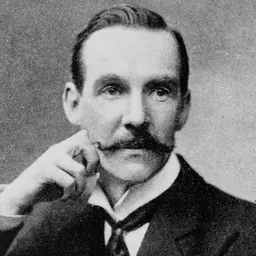
Portrait: Wikimedia Commons · author & licence
Page generated 2026-09-27 04:58 UTC