
About Robert Zajonc
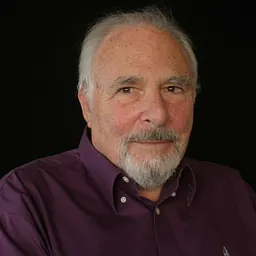
Lived 1923 – 2008 (aged 85). Robert Zajonc was an American and Polish psychologist and university teacher, known for Social psychology.
Robert Bolesław Zajonc (/ˈzaɪ.ənts/ ZY-ənts; Zajonc also conducted research in the areas of social facilitation, and theories of emotion, such as the affective neuroscience hypothesis.
He also made contributions to comparative psychology.
Biography
Early life Zajonc, born in Łódź, Poland on November 23, 1923, was the only child of the family. In 1939, before the German invasion of Poland reached Łódź, his family fled to Warsaw. During their short stay, the building they were living in was hit by an air raid. Both of Zajonc's parents were killed, and he was seriously injured. The rest of his time in Warsaw was dedicated to studying at an underground university in Warsaw until he was sent to a German labor camp. He escaped from the work camp, got recaptured, and then sent to a political prison in France. After escaping for the second time, he joined the French Resistance, continuing his studies at the University of Paris. In 1944, he moved to England where he became a translator for the American forces during their European Campaign.
Career After the end of World War II, he immigrated to the United States, where he applied for undergraduate admission at the University of Michigan. Under probation, he was accepted. In 1955, he received his Ph.D. from the University of Michigan, where he was a professor for nearly four decades, until 1994. During his time there, he held the positions of Director for the Research Center of Group Dynamics in the 1980s and Director of the Institute for Social Research in the 1990s. He then became Professor Emeritus of Psychology at Stanford University. He focused on processes involved in social behavior, with an emphasis on the relationship between affect, or emotion, and cognition.
Social facilitation Another contribution that Zajonc made to psychology was through demonstrating social facilitation. Social facilitation is the improvement of performance around the presence of others. Zajonc was able to provide support for social facilitation through a variety of experiments. In one experiment he sought to see if individuals would change their decisions depending on the presence of an audience. He found that in the presence of an audience, the dominant preference would be enhanced.
In another experiment on social facilitation, Robert Zajonc gave participants associations to 184 words alone and in the presence of an audience. Half of the participants worked alone, then with an audience, and vice versa. Zajonc found that participants were affected by the presence of an audience, and fewer unique responses were given when with an audience. The audience acts as a general drive energizer, in the presence of an audience there would be an increased probability of the dominant response.
Preferences need no inferences In 1980, a speculative and widely debated paper entitled "Feeling and Thinking: Preferences Need No Inferences," invited in honor of his receipt of the 1979 Distinguished Scientific Contribution Award from the American Psychological Association, made the argument that affective and cognitive systems are largely independent, and that affect is more powerful and comes first. This paper stimulated a great deal of interest in affect in psychology, and was one of a number of influences that brought the study of emotion and affective processes back into the forefront of American and European psychology. The nature of affective judgments can be perceived as independent of, and precede in time of, the perceptual and cognitive operations often thought of as constituting the basis of these affecting judgments. His proposals were presented to be contrary to the widely considered belief in most contemporary psychology theories that affective judgment is post-cognitive.
(a) Diet, husbands and wives eat the same type of food, hence the fat consumed is similar and this might lead to similar facial features.
(b) Regional similarities, married couples usually live in the same region, hence experience similar weather conditions which might lead to facial similarities.
(c) People marry individuals who look like them or will eventually look like them.
(d) The theory of emotional efference (Waynbaum, 1907), one of the implications of this theory is that the similarity in facial features could be attributed to the feeling of empathy. When you are being empathetic towards someone you unknowingly mimic their expression which then leads you to feel similar emotions. So the involvement of facial motor muscles in empathy might result in similar facial features among people who have lived together for a long period of time.
These findings, according to Zajonc, tell us that social contact with others might have an effect on our facial features.
Confluence model Zajonc, along with Greg Markus, developed the Confluence Model (1975), which provided a mathematical model of the effect of birth order and family size on IQ scores quantifying the relationship between in-family dynamics variability and intellectual ability. In forming this quantitative value, the confluence forms an averages of the absolute intellectual capacities of the entire family environment. As families increase in size, the overall IQ of the family drops; children from larger families do have slightly lower IQs. The last child in the family is denied the opportunity to tutor younger children, and there is a slight "extra" detriment for being the youngest child in a family. These effects are theoretically important, but the size of the effects is fairly small (amounting to a range of about 3 IQ points), thus, birth order is not an absolute determining factor for IQ although its influence is apparent.
Zajonc won the award for the Distinguished Scientific Contribution on September 2, 1979 at the meeting of the American Psychological Association. His Award address, published in American Psychologist as work on "Feeling and Thinking: Preferences Need No Inferences," was highly influential in re-focusing interest on affective processes in psychology.
Works This is a partial bibliography of Zajonc's works in English.
1965. Social facilitation. Science, 149, 269–274. 1966. Social facilitation of dominant and subordinate responses. Journal of Experimental Social Psychology, 2(2), 160–168. 1968. Attitudinal effects of mere exposure. Journal of Personality and Social Psychology, 9(2, Pt. 2), 1–27. 1975. Birth Order and Intellectual Development, with G. Markus. Psychological Review, 82, 74–88. 1980. Feeling and thinking: Preferences need no inferences. American Psychologist, 35(2), 151–175. 1980. The Confluence Model: Parameter Estimation for Six Divergent Data Sets on Family Factors and Intelligence. INTELLIGENCE, 4, 349–361. 1982. Affective and cognitive-factors in preferences, with H. Markus. Journal of Consumer Research, 9(2), 123–131. 1983. Validating the Confluence Model. Psychological Bulletin, 93(3), 457–480. 1984. On the primacy of affect. American Psychologist, 39(2), 117–123. 1993. The confluence model: Differential or difference equation European Journal of Social Psychology, 23, 211–215.
Don’t just read it —
keep it.
Full-length biographies made to live with: read them, listen on the way to work, watch them tonight.
- E-book
- Audio
- Video
Instant download · yours to keep · every purchase keeps this site free
Important facts
Related people
Same field, nearest in time




Contemporaries
People whose lives overlapped Robert Zajonc's


Frequently asked questions
Who was Robert Zajonc?
American psychologist (1923–2008)
When was Robert Zajonc born?
Robert Zajonc was born on 23 November 1923 in Łódź, Poland.
When did Robert Zajonc die?
Robert Zajonc died on 3 December 2008 in Stanford.
What was Robert Zajonc's occupation?
Robert Zajonc was a psychologist and university teacher.
What was Robert Zajonc known for?
Robert Zajonc was known for Social psychology.
What nationality was Robert Zajonc?
Robert Zajonc was American and Polish.
Sources & further reading
Cite this page
APA: Biography.guide. (2026). Robert Zajonc. https://biography.guide/robert-zajonc/
MLA: "Robert Zajonc." Biography.guide, https://biography.guide/robert-zajonc/.
Chicago: "Robert Zajonc." Biography.guide. https://biography.guide/robert-zajonc/.
Data last updated: 2026-09-20 · Spot an error? Report a correction.
Page generated 2026-09-27 05:19 UTC