
About Robert Wyndham Ketton-Cremer
Lived 1906 – 1969 (aged 63). Robert Wyndham Ketton-Cremer was a British historian, biographer and poet.
Robert Wyndham Ketton-Cremer, (2 May 1906 – 12 December 1969) was an English landowner, biographer and historian. He bequeathed his family seat, Felbrigg Hall, to the National Trust.
Early life Robert Wyndham Cremer was born in Plympton, Devon, on 2 May 1906 to Wyndham Cremer Ketton-Cremer and his wife Emily Bayly. While at Oxford he published poetry.
Life at Felbrigg
Ketton-Cremer never married. He was a closet homosexual, at a time when homosexual acts were still criminalised though close friends were aware of his sexuality. With regard to intimate relationships, the novelist and critic Anthony Powell, who dedicated his novel The Kindly Ones to Ketton-Cremer (who read proofs of Powell's books and suggested improvements, up to the time of his death) wrote in 1988, questioning the appropriateness of Ketton-Cremer's name being included in a "list of homosexual undergraduates" in Bevis Hillier's Young Betjeman, "I knew Ketton-Cremer... and never heard a suggestion that he had physical relations with another human being, then [at Oxford] or throughout his life." He stood godfather to the children of his friends, including Tristram Powell, son of Anthony Powell. Norfolk Portraits, 1944 A Norfolk Gallery, 1948 Country Neighbourhood. Faber and Faber, London, 1951. Thomas Gray, 1955 Norfolk Assembly, 1957 Forty Norfolk Essays, 1961 Felbrigg: The Story of a House, 1962 Norfolk in the Civil War: A portrait of a society in conflict. Faber and Faber, London, 1969.
Honours In 1968, Ketton-Cremer was elected a Fellow of the British Academy (FBA).
Death and legacy
Ketton-Cremer died on 12 December 1969. He bequeathed Felbrigg Hall to the National Trust. Three of Ketton-Cremer's godchildren criticised the decision, claiming that a public outing would have been against Ketton-Cremer's wishes and accusing the Trust of using their godfather's private life to generate publicity. Fry defended the Trust's decision, justifying it by stating that in his view Ketton-Cremer had only kept his sexuality a secret because of pervasive homophobia and fear of prosecution during his lifetime. Catherine Bennett, in The Guardian, considered it "unfortunate" that the Trust attached the "ambiguous" Ketton-Cremer, who "had neither, his family says, come out nor moved... in circles where homosexuality was unconcealed" to the Prejudice and Pride campaign, as opposed to a figure such as the openly gay James Lees-Milne, "who more or less assembled the Trust's collection of historic houses"; the "dire" short film featuring "someone silently [impersonating] Ketton-Cremer" was considered "undeniably ambitious in imagining how [Ketton-Cremer] must have felt about his sexuality" in light of the fact that "unhelpfully, the squire appears to have left no records." Fry's stance – that objection to the dubiously-accurate "outing" of Ketton-Cremer must be attributed to homophobia – was also criticised as lacking nuance.
Don’t just read it —
keep it.
Full-length biographies made to live with: read them, listen on the way to work, watch them tonight.
- E-book
- Audio
- Video
Instant download · yours to keep · every purchase keeps this site free
Important facts
People in Robert Wyndham Ketton-Cremer's life
Named in this biography and alive at the same time
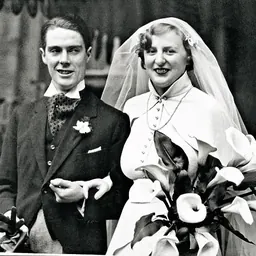
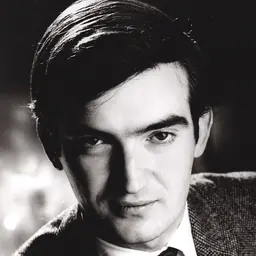

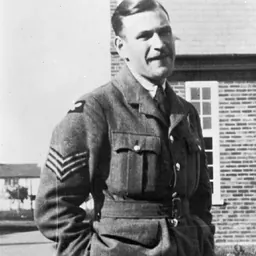


Related people
Same field, nearest in time
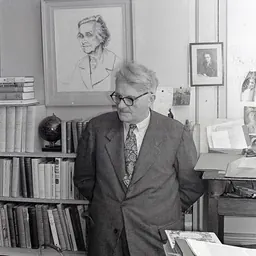

Contemporaries
People whose lives overlapped Robert Wyndham Ketton-Cremer's



Frequently asked questions
Who was Robert Wyndham Ketton-Cremer?
British historian (1906-1969)
When was Robert Wyndham Ketton-Cremer born?
Robert Wyndham Ketton-Cremer was born on 2 May 1906 in Plympton.
When did Robert Wyndham Ketton-Cremer die?
Robert Wyndham Ketton-Cremer died on 12 December 1969.
What was Robert Wyndham Ketton-Cremer's occupation?
Robert Wyndham Ketton-Cremer was a historian, biographer and poet.
What nationality was Robert Wyndham Ketton-Cremer?
Robert Wyndham Ketton-Cremer was British.
Sources & further reading
· Wikipedia: Robert Wyndham Ketton-Cremer
· DBpedia: R. W. Ketton-Cremer
Cite this page
APA: Biography.guide. (2026). Robert Wyndham Ketton-Cremer. https://biography.guide/robert-wyndham-ketton-cremer/
MLA: "Robert Wyndham Ketton-Cremer." Biography.guide, https://biography.guide/robert-wyndham-ketton-cremer/.
Chicago: "Robert Wyndham Ketton-Cremer." Biography.guide. https://biography.guide/robert-wyndham-ketton-cremer/.
Data last updated: 2026-09-20 · Spot an error? Report a correction.
Page generated 2026-09-27 05:25 UTC