
About Robert Williams
Lived 1848 – 1918 (aged 70). Robert Williams was a British architect, writer, social reformer and politician.
Robert Williams (27 January 1848 – 16 October 1918) was a Welsh architect and social campaigner. Born in South Wales, he studied architecture in London and established a practice there in 1887. Williams' work showed a Gothic Revival influence and included public and educational buildings in Wales and London including the Wheatsheaf Hall and Cowbridge Girls School. From 1914 he practised in Egypt, constructing Cairo's largest shop for the Davies Bryan Company, as well as a number of other commercial and public buildings.
Williams was a member of the Independent Labour Party and sat on the executive committees of the Land Nationalisation Society and the London Reform Union. He was elected a London County Council councillor in 1901 and advocated for more stringent housing standards. Williams wrote several books on housing and advocated for internal toilets at a time when outdoor privies were the norm. His daughter Margaret Travers Symons was also a social campaigner and suffragette.
Early life and British architecture Williams was born in Ystradowen, Glamorgan, on 27 January 1848. He was the second son of a carpenter, Rees Williams, and his wife Mary (née Evans). He was educated at the Eagle Academy, a private school on Eagle Lane, Cowbridge. Rather than being articled to an architect's design office Williams took the unusual route into the profession of becoming a site-based clerk of works. He worked for James Piers St Aubyn and then for Maurice Bingham Adams, including on the improvements to Blickling Hall made for Schomberg Kerr, 9th Marquess of Lothian in the 1880s and 1890s. Afterwards he worked for Waller, Son & Wood of Gloucester. |group=nb and Pontypool and District Hospital (1903). Works in London include the Wheatsheaf Hall, Vauxhall (1896) and the People's Hall, West Kensington (1901). His work shows a Gothic Revival influence, though with a particular focus on comfort, convenience and sanitation. He was successful in winning a seat at Lambeth North in the 1901 London County Council election, representing the Progressive Party. As a councillor Williams pressed for the LCC to adopt more stringent housing standards, including adopting the Fabian Society's "three rooms and a scullery" minimum. The LCC did not agree with all his proposals but did undertake to reject one-room tenements in favour of multi-roomed, self-contained flats. Williams' cottage designs were unusual for the time in showing internal toilets, at a time when outdoor privies were the norm.
Egypt
By the 1910s Williams was spending at least some of his time in Egypt. The Dictionary of Welsh Biography says he established an architecture practice there in 1914, having accepted a commission to design a shop in Cairo for the Welsh-owned Davies Bryan Company, however architectural historian Milva Giacomelli dates this construction to 1911 and 20th Century Architecture to 1912. The Cairo shop, also known as the St. David’s building, Williams also refurbished one of the Davies Bryan Company's shops in Alexandria.
Williams died on 16 October 1918 in Cairo and is buried in the city's Protestant Cemetery. Williams was widely travelled in Europe, Asia and North Africa. His collection of rare books forms an important part of the architecture library at Cardiff University.
Don’t just read it —
keep it.
Full-length biographies made to live with: read them, listen on the way to work, watch them tonight.
- E-book
- Audio
- Video
Instant download · yours to keep · every purchase keeps this site free
Important facts
People in Robert Williams's life
Named in this biography and alive at the same time
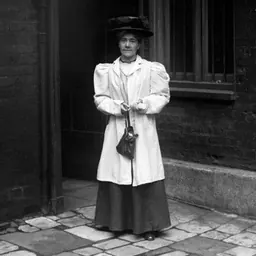
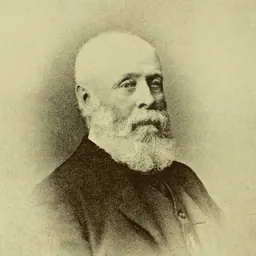


Related people
Same field, nearest in time

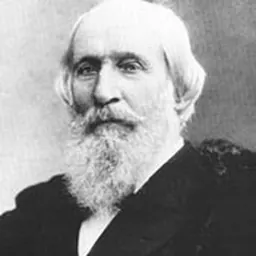

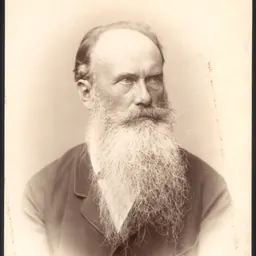
Contemporaries
People whose lives overlapped Robert Williams's



Frequently asked questions
Who was Robert Williams?
Welsh architect, author and social reformer (1848–1918)
When was Robert Williams born?
Robert Williams was born on 27 January 1848 in Ystradowen.
When did Robert Williams die?
Robert Williams died on 16 October 1918 in Cairo.
What was Robert Williams's occupation?
Robert Williams was an architect, writer, social reformer and politician.
What nationality was Robert Williams?
Robert Williams was British.
Sources & further reading
· DBpedia: Robert Williams (architect)
Cite this page
APA: Biography.guide. (2026). Robert Williams. https://biography.guide/robert-williams-architect/
MLA: "Robert Williams." Biography.guide, https://biography.guide/robert-williams-architect/.
Chicago: "Robert Williams." Biography.guide. https://biography.guide/robert-williams-architect/.
Data last updated: 2026-09-20 · Spot an error? Report a correction.
Page generated 2026-09-27 05:05 UTC