
About Robert van 't Hoff
Lived 1887 – 1979 (aged 91). Robert van 't Hoff was a Dutch architect and furniture designer.
Robert van 't Hoff (November 5, 1887 – April 25, 1979), born Robbert van 't Hoff, was a Dutch architect and furniture designer. His Villa Henny, designed in 1914, was one of the earliest modernist houses and one of the first to be built out of reinforced concrete. From 1917 he was an influential member of the De Stijl movement.
Although he was born to a comfortable middle-class background, married a wealthy heiress, and for a while was able to subsidise the publication of the De Stijl journal, van 't Hoff was a member of the Communist Party of the Netherlands in the years following World War I. Following the failure of Pieter Jelles Troelstra's call for a socialist revolution in the Netherlands in 1919, van 't Hoff split from De Stijl'''s founder Theo van Doesburg and withdrew from artistic activity, declaring himself an "ex-architect" in 1922, and spending much of the rest of his life promoting experimental anarchist communities.
Life
Early life and education Van 't Hoff was born in Rotterdam, the son of an eminent bacteriologist, and grew up in comfortable and cultured middle class circumstances. His mother had an interest in the visual arts and was a friend of the painter Willem Witsen (Willem Arnoldus Witsen), while his father was a friend of the psychiatrist Frederik van Eeden. From 1898 Robert accompanied his parents on visits to van Eeden's utopian Walden commune near Bussum.
The family moved to Bilthoven in 1904. The following year Robert assisted with the building of a house for one of his aunts and decided to train as an architect.
In 1906, on the advice of an architect friend of his father's, Studying under William Bidlake, he came under the influence of the theories of William Lethaby and the work of the Glasgow School, and worked in the progressive architectural practice of Herbert Tudor Buckland.
In 1913 van 't Hoff was given a copy of a German translation of Frank Lloyd Wright's Wasmuth Portfolio by his father. This made a profound impression and in June 1914 he travelled to the United States to see Wright's work in person, visiting the Unity Temple, Taliesin, Midway Gardens, the Larkin Administration Building and Wright's suburban houses in Oak Park, Illinois. Van 't Hoff and Wright discussed collaborating on a project for an art gallery on Long Island, New York that van 't Hoff had become involved with through his relationship with Augustus John, but the project did not progress and van 't Hoff returned to Europe.
Van 't Hoff's first work on returning from the United States was the Villa Verloop – a summer house in Huis ter Heide whose design bore the influence of Wright's Prairie Houses. His next work – the Villa Henny – which was an idealistic and experimental house in both design and execution. One of the earliest houses to be built entirely out of reinforced concrete, the Villa Henny used the freedom he had received to create a house with a flat roof, overhangs, receding walls and a geometrical outline that presented an modern profile compared to his earlier designs. The Villa Henny established van 't Hoff with the international avant-garde as a major figure in the emerging modern movement, gaining an influential and appreciative review from the architect Huib Hoste in De Telegraaf and attracting the attention of the emerging De Stijl group.
The range of van 't Hoff's design work also broadened around this time: he published designs for banister posts and chairs, and in 1918 designed a houseboat, which he christened De Stijl and in which he and his wife lived shortly after their marriage in July. This was conceived as an attempt to "further the new direction" and he was involved in every aspect of the interior and exterior design including the furniture and fittings. Van 't Hoff's preference for Bart van der Leck over van Doesburg for the painting of the interior was the first sign of tension between the two, but a commission for van Doesburg from van 't Hoff for a colour scheme for the interior of a house he was designing for the pacifist and anarchist Bartholomeus (Bart) de Ligt in Lage Vuursche suggested that there was no serious split. In 1928 he was invited by the American radical philanthropist Charles Garland to redesign the buildings on his utopian commune in Coopersburg, Pennsylvania. The two disagreed over the proposed designs, however, and within nine months the van 't Hoff family had returned to Laren.
Van 't Hoff retained some links with De Stijl during this period – continuing his correspondence with J. J. P. Oud, meeting Piet Mondrian in Paris in 1931 and financing the final issue of the De Stijl'' journal in 1932.
Don’t just read it —
keep it.
Full-length biographies made to live with: read them, listen on the way to work, watch them tonight.
- E-book
- Audio
- Video
Instant download · yours to keep · every purchase keeps this site free
Important facts
People in Robert van 't Hoff's life
Named in this biography and alive at the same time
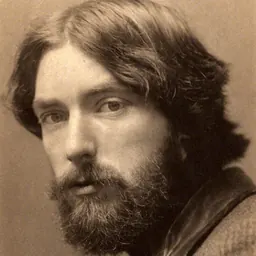


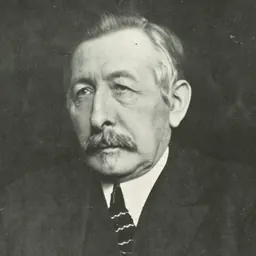

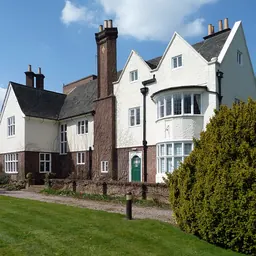
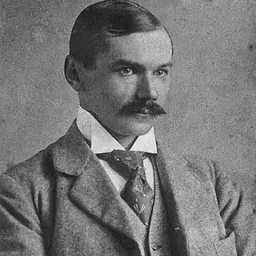
Related people
Same field, nearest in time


Contemporaries
People whose lives overlapped Robert van 't Hoff's




Frequently asked questions
Who was Robert van 't Hoff?
Dutch architect (1887–1979)
When was Robert van 't Hoff born?
Robert van 't Hoff was born on 5 November 1887 in Rotterdam.
When did Robert van 't Hoff die?
Robert van 't Hoff died on 25 April 1979 in New Milton.
What was Robert van 't Hoff's occupation?
Robert van 't Hoff was an architect and furniture designer.
What nationality was Robert van 't Hoff?
Robert van 't Hoff was Dutch.
Sources & further reading
· Wikipedia: Robert van 't Hoff
Cite this page
APA: Biography.guide. (2026). Robert van 't Hoff. https://biography.guide/robert-van-t-hoff/
MLA: "Robert van 't Hoff." Biography.guide, https://biography.guide/robert-van-t-hoff/.
Chicago: "Robert van 't Hoff." Biography.guide. https://biography.guide/robert-van-t-hoff/.
Data last updated: 2026-09-20 · Spot an error? Report a correction.
Page generated 2026-09-27 05:20 UTC