
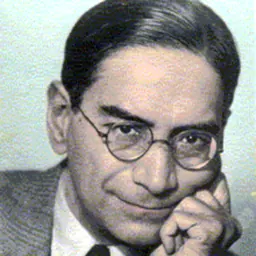
About Robert V. Gentry
Lived 1933 – 2020 (aged 86). Robert V. Gentry was an American physicist, known for Young Earth creationist.
Robert Vance Gentry (July 9, 1933 – January 28, 2020) was an American young Earth creationist and nuclear physicist, known for his claims that radiohalos provide evidence for a young age of the Earth.
Thesis Gentry noted that the 218 polonium radio halos only formed at temperatures below 300 degrees and were visible for less than 3 minutes, thus requiring the Precambrian granites where they are to have formed by a quick process yet "mysterious" cold, highlighting the singularities of the continental crust in relation to the oceanic crust. When questioned in debates that defended the thermal paradigm in the formation of the earth's rocks, Gentry challenged them to then reproduce Precambrian granites containing the same, in miniature, since such a process should then be able to imitate the formation of granites containing halos. After unanswered decades, Australian geologist Andrew Snelling proposed a model "in which hydrothermal fluids separated 222 Rn and their parents' Po isotopes 238 U in zircons and transported them over very short distances along cleavage planes in the host and adjacent, biotites until 222 Rn decays and the Po isotopes were chemically concentrated in radiocentres, to later produce the Po radiohalos."
Career Gentry received a master's degree in physics from the University of Florida, and then worked in the defense industry in nuclear weapons research.
By this time he was convinced that radiohalos might be the key to determining the age of the Earth, and might be capable of vindicating flood geology. He continued to work on the subject at home using a small microscope and attempted to publish his results (minus his creationist conclusions) in one or more peer reviewed scientific journals. In 1969, while Gentry was affiliated with an Adventist college in Maryland, Oak Ridge National Laboratory invited him to use their facilities, as a guest scientist in the hope that his work on radiohalos might lead to discovering super-heavy elements. This relationship was terminated as a result of his participation in McLean v. Arkansas. A number of creationists, including fellow Seventh-day Adventists, have criticised his work. Act 590 was ruled to be unconstitutional (a verdict that was upheld by the Supreme Court in Edwards v. Aguillard).
Gentry has devised his own creationist cosmology and filed a lawsuit in 2001 against Los Alamos National Laboratory and Cornell University after personnel deleted ten of his papers about his cosmology from the public preprint server arXiv. On 23 March 2004, Gentry's lawsuit against arXiv was dismissed by a Tennessee court on the grounds that it lacked territorial jurisdiction, as neither defendant in the case was considered to have a significant presence in the state of Tennessee.
His self-published book Creation's Tiny Mystery was reviewed by geologist Gregg Wilkerson, who said that it has several logical flaws and concluded that "the book is a source of much misinformation about current geologic thinking and confuses fact with interpretation." Wilkerson also noted that the book contains considerable autobiographical material and he observed that "n general I don't think educators will find it's worth their time to tread through this creationist's whining." This criticism of Gentry's "frequent whining about discrimination" has also been made by fellow creationists, who concluded that "his scientific snubs resulted more from his own abrasive style than from his peculiar ideas", according to critic Ronald L. Numbers, a historian of science.
Selected publications
Robert V. Gentry, (1986). Creation's Tiny Mystery. (Knoxville, Tenn.: Earth Science Associates) Page 66
Don’t just read it —
keep it.
Full-length biographies made to live with: read them, listen on the way to work, watch them tonight.
- E-book
- Audio
- Video
Instant download · yours to keep · every purchase keeps this site free
Important facts
People in Robert V. Gentry's life
Named in this biography and alive at the same time

Related people
Same field, nearest in time


Contemporaries
People whose lives overlapped Robert V. Gentry's




Frequently asked questions
Who was Robert V. Gentry?
American Christian creationist (1933-2020)
When was Robert V. Gentry born?
Robert V. Gentry was born on 9 July 1933 in Chattanooga.
When did Robert V. Gentry die?
Robert V. Gentry died on 28 January 2020 in Loma Linda.
What was Robert V. Gentry's occupation?
Robert V. Gentry was a physicist.
What was Robert V. Gentry known for?
Robert V. Gentry was known for Young Earth creationist.
What nationality was Robert V. Gentry?
Robert V. Gentry was American.
Sources & further reading
Cite this page
APA: Biography.guide. (2026). Robert V. Gentry. https://biography.guide/robert-v-gentry/
MLA: "Robert V. Gentry." Biography.guide, https://biography.guide/robert-v-gentry/.
Chicago: "Robert V. Gentry." Biography.guide. https://biography.guide/robert-v-gentry/.
Data last updated: 2026-09-20 · Spot an error? Report a correction.
Page generated 2026-09-27 05:30 UTC